


 Home
Home
Is Cl2 a polar molecule? How does the molecular structure of Cl2 affect its polarity? Why is polarity important for molecules like Cl2? Can the polarity of Cl2 influence its behavior in everyday uses or chemical reactions? What makes some molecules polar and others nonpolar, and where does Cl2 fit in this? How can we tell if Cl2 is polar or not just by looking at it?
Is Cl2 Polar or Nonpolar? Understanding the Polarity of Chlorine Gas
Related Encyclopedia

- 22537-15-1
- Cl
- 35.45300
- All (0)
- China (0)
- (0)
- 32745-17-8
- Cl2
- 71.93480
- All (3)
- China (3)
- (3)

- 7782-50-5
- Cl2
- 70.91
- All (3)
- China (3)
- (3)
- 39705-20-9
- Cl2
- 73.93180
- All (3)
- China (3)
- (3)
- 30680-79-6
- Cl2
- 69.93770
- All (3)
- China (3)
- (3)

- 13932-10-0
- ClO3
- 83.45120
- All (0)
- China (0)
- (0)
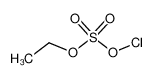
- 104184-87-4
- C2H5ClO4S
- 160.57700
- All (0)
- China (0)
- (0)

- 12133-63-0
- ClO4
- 99.45060
- All (0)
- China (0)
- (0)
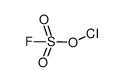
- 13997-90-5
- ClFO3S
- 134.51500
- All (0)
- China (0)
- (0)
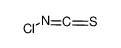
- 16681-13-3
- CClNS
- 93.53540
- All (0)
- China (0)
- (0)
Related Products More >

- USD 35.0000
- 25kg
- 7782-50-5
- Request For Quotation
- 1ton
- 7782-50-5
- Request For Quotation
- 25kg
- 7782-50-5
- Request For Quotation
- 25kg
- 7782-50-5
- Request For Quotation
- 1ton
- 10049-04-4
- Request For Quotation
- 1ton


Think of it like a tug-of-war between two people who are equally strong—neither side pulls harder, so the rope stays centered. In the case of Cl2, because both chlorine atoms pull equally, there’s no overall charge difference. This lack of charge difference means Cl2 doesn’t mix well with things that are polar, like water. Instead, it behaves more like oils or other nonpolar substances.
So when you see chlorine gas, it’s not polar. It’s pretty balanced and symmetrical, which affects how it interacts with other chemicals and where it dissolves best. That’s why Cl2 is usually found as a gas rather than in watery solutions.
This symmetry in electron distribution is key to understanding the molecule’s polarity. In polar molecules, such as HCl, the difference in electronegativity between atoms leads to an uneven sharing of electrons, resulting in a dipole moment—a separation of positive and negative charges. In Cl₂, however, the absence of electronegativity difference means there is no dipole moment, making the molecule nonpolar. This distinction is crucial in fields like physical chemistry, where molecular polarity influences properties such as solubility, boiling points, and intermolecular forces.
A common misconception arises from confusing the polarity of a bond with the polarity of the molecule. While some molecules with polar bonds can still be nonpolar due to symmetric geometry (e.g., CO₂), Cl₂ simplifies this further by having both nonpolar bonds and a symmetric linear structure. This lack of polarity explains why Cl₂ is insoluble in polar solvents like water but dissolves readily in nonpolar solvents such as hexane, a behavior that impacts its use in industrial processes and chemical synthesis.
Understanding the nonpolar nature of Cl₂ also has implications in environmental chemistry. For instance, its inability to interact strongly with polar molecules affects how it persists in certain environments, influencing its transport and reactivity in atmospheric or aquatic systems. This contrasts with polar gases, which may form hydrogen bonds or ionic interactions, altering their behavior and impact in similar contexts.
In practical terms, the nonpolar nature of Cl2 influences its physical and chemical behavior. For instance, it has low solubility in polar solvents like water but dissolves better in nonpolar organic solvents. This property is exploited in industrial processes, such as water purification, where chlorine’s limited solubility allows controlled disinfection. Another example is its use as a reagent in organic synthesis, where its nonpolarity facilitates reactions with nonpolar hydrocarbons, like the chlorination of methane to produce chloromethanes.
The interplay between Cl2’s nonpolarity and its reactivity underscores its role in diverse applications. While it doesn’t exhibit dipole-dipole interactions, its strong covalent bond and high electronegativity make it a powerful oxidizing agent. This duality is evident in bleach production, where Cl2 reacts with sodium hydroxide to form sodium hypochlorite, a polar compound. The transition from nonpolar Cl2 to polar products highlights how molecular polarity shapes chemical transformations.
From a chemical perspective, the nonpolar nature of Cl₂ significantly influences its behavior and reactivity. Being nonpolar, Cl₂ is insoluble in polar solvents like water but readily dissolves in nonpolar organic solvents. This property is important for its industrial handling and applications. Chlorine gas is widely used as a disinfectant, bleaching agent, and in the production of various chemicals including plastics and solvents. Its physical behavior as a nonpolar molecule affects how it diffuses through the environment and interacts with cell membranes, which is relevant in toxicology and medical exposure scenarios.
Physically, the nonpolarity also contributes to Cl₂’s phase behavior; it exists as a gas under standard conditions because the weak intermolecular forces—mainly London dispersion forces—do not hold the molecules closely together. This influences storage and transport requirements, as chlorine gas needs to be kept under pressure or at low temperatures to liquefy. In environmental science, Cl₂’s nonpolar character impacts its dispersion in air and water systems and its ability to react with various pollutants.
Interdisciplinary applications extend to medicine and public health, where chlorine’s role as a disinfectant is crucial. Understanding its nonpolar nature helps predict how it interacts with biological membranes and how exposure routes might affect human tissues. In industrial chemistry, the nonpolar characteristic guides how Cl₂ is used safely and effectively in synthesis reactions. Therefore, grasping the polarity, or lack thereof, of Cl₂ gives insight not only into its molecular structure but also into its practical implications across multiple fields.