


 Home
Home
Many people wonder if taking vitamin E supplements can improve erectile dysfunction symptoms. Since vitamin E is known for its antioxidant properties, could it help with blood flow or reduce oxidative stress related to erectile problems? Is there any evidence that vitamin E alone can actually boost erectile function? Or should it be combined with other treatments or lifestyle changes? What role does vitamin E really play in managing or preventing erectile dysfunction?
Can Vitamin E Help Erectile Dysfunction? Exploring the Facts
Related Encyclopedia
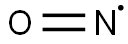
- 10102-43-9
- NO*
- 30.01
- All (1)
- China (1)
- (1)
- 51006-61-2
- ArNO
- 69.95410
- All (1)
- China (1)
- (1)

- 15917-79-0
- NO
- 32.99930
- All (1)
- China (1)
- (1)
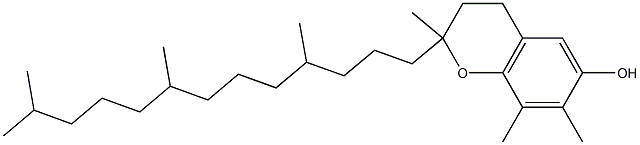
- 1406-66-2
- C28H48O2
- 416.67952
- All (0)
- China (0)
- (0)
- 1406-18-4
- C29H50O2
- 430.71
- All (0)
- China (0)
- (0)
![α-Tocopherol-[D6] (Vitamin E-[D6])](https://chemcloud-1304660855.cos.ap-shanghai.myqcloud.com/compound/202502120400270246.gif?imageMogr2/format/webp)
- 113892-08-3
- C29H50O2
- 430.72
- All (0)
- China (0)
- (0)
- 67629-40-7
- C30H49ClO3
- 493.16100
- All (38)
- China (12)
- (38)

- 59-02-9
- C29H50O2
- 430.71
- All (38)
- China (12)
- (38)

- 79434-83-6
- C29H50O2
- 430.70600
- All (38)
- China (12)
- (38)

- 2074-53-5
- C29H50O2
- 430.71
- All (38)
- China (12)
- (38)
Related Products More >

- CNY Request For Quotation
- CNY Request For Quotation
- CNY Request For Quotation
- 2074-53-5
- CNY 30.0000
- 25kg
- 30999-06-5
- Request For Quotation
- 50kg
- 30999-06-5
- Request For Quotation
- 1kg
- 991-84-4
- Request For Quotation
- 991-84-4
- Request For Quotation


In the context of vascular health, vitamin E supports the integrity of endothelial cells, which regulate blood vessel tone. A breakdown in endothelial function is a common contributor to erectile issues, as it impairs the release of nitric oxide, a molecule critical for relaxing blood vessels. By protecting these cells, vitamin E helps maintain nitric oxide production, creating a more favorable environment for adequate blood flow. For instance, individuals with conditions like diabetes or atherosclerosis often experience oxidative stress and endothelial damage; incorporating vitamin E might alleviate some of this strain, though it cannot replace targeted treatments for these underlying issues.
Another angle is vitamin E’s anti-inflammatory properties. Chronic inflammation can stiffen blood vessels and reduce their flexibility, making it harder to achieve and sustain an erection. By dampening inflammatory responses, vitamin E may help preserve vascular elasticity. Consider someone with mild erectile difficulties linked to lifestyle factors like poor diet or moderate stress—supplementing with vitamin E, alongside other antioxidants and lifestyle changes, could support overall vascular health, potentially improving erectile function over time. It’s important to note, however, that vitamin E works best as part of a holistic approach, not as a standalone solution, and its effects vary based on individual health status.
Erectile dysfunction (ED) often arises from complex physiological and biochemical interactions, with endothelial dysfunction and impaired blood flow being central factors. The vascular endothelium regulates nitric oxide (NO) production, a critical molecule for vasodilation and penile erection. Oxidative stress can reduce NO bioavailability by promoting its degradation, leading to compromised vasodilation. Given vitamin E's capacity to counteract oxidative damage, it can theoretically help preserve endothelial function and NO signaling, which are essential for erectile physiology.
From a biochemical perspective, vitamin E stabilizes lipid membranes by preventing lipid peroxidation, thus maintaining cellular integrity in blood vessels and penile tissue. This effect can improve microcirculation and overall vascular responsiveness. Furthermore, vitamin E’s anti-inflammatory properties may reduce vascular inflammation, which contributes to endothelial impairment in ED. Such mechanisms suggest that vitamin E could have adjunctive benefits in managing erectile dysfunction, especially when oxidative stress and vascular inflammation are predominant contributors.
Beyond individual health, the role of vitamin E spans various fields, including nutrition, pharmacology, and even industrial applications like food preservation due to its antioxidative capacity. In medicine, vitamin E supplementation has been explored not only for cardiovascular and neurodegenerative diseases but also as a supportive agent in conditions related to endothelial health. However, its effectiveness depends on appropriate dosing, bioavailability, and the presence of co-factors such as other antioxidants or lifestyle modifications.
In daily life, the intake of vitamin E through diet or supplements might contribute to overall vascular health, potentially influencing conditions like erectile dysfunction indirectly. Yet, the multifactorial nature of ED means vitamin E alone rarely suffices as a treatment. It works best as part of a broader strategy addressing lifestyle factors like diet, exercise, and control of metabolic disorders. Understanding vitamin E’s biochemical roles helps clarify why it holds promise in vascular-related dysfunctions, although it remains one piece within a complex therapeutic puzzle.
Unlike other antioxidants such as vitamin C, which operates primarily in aqueous environments, vitamin E’s lipophilicity enables it to target lipid-rich regions like cell membranes and low-density lipoproteins (LDL). This specificity is crucial because endothelial dysfunction often originates from oxidative modifications of LDL, which promote inflammation and impair vascular reactivity. By contrast, water-soluble antioxidants cannot penetrate lipid membranes effectively, limiting their protective effects on endothelial integrity. Additionally, vitamin E’s role in modulating platelet aggregation and inhibiting smooth muscle cell proliferation further supports vascular health, distinguishing it from agents like L-arginine, which directly enhance NO synthesis but lack antioxidant properties.
A common misconception is that high-dose vitamin E supplementation can universally reverse ED. While its antioxidant effects are beneficial, excessive intake may paradoxically increase oxidative stress due to pro-oxidant activity at elevated concentrations. Furthermore, ED is multifactorial, often involving psychological, hormonal, or neurological components that vitamin E alone cannot address. For instance, testosterone deficiency or anxiety-related performance issues require targeted interventions beyond antioxidant therapy. Clinicians emphasize that vitamin E should be viewed as a complementary approach within a broader treatment strategy, rather than a standalone solution.
Another point of confusion lies in distinguishing vitamin E from synthetic analogs like tocopheryl acetate, which exhibit lower bioavailability and antioxidant efficacy. Natural forms, such as alpha-tocopherol, are preferentially absorbed and retained in tissues, underscoring the importance of source selection in supplementation. Moreover, vitamin E’s interaction with other nutrients, such as selenium, which regenerates its antioxidant capacity, highlights the need for balanced micronutrient intake. Patients often overlook these nuances, assuming that isolated supplementation will yield optimal results without considering dietary synergies or individual deficiencies.
In engineering terms, the delivery of vitamin E to target tissues resembles optimizing drug pharmacokinetics. Liposomal formulations or nanocarriers could enhance its bioavailability and tissue-specific accumulation, addressing challenges like poor solubility and rapid metabolism. Such innovations might amplify its therapeutic potential in ED management, particularly in cases where oral absorption is compromised. However, these approaches remain experimental and require rigorous validation to confirm their superiority over conventional supplementation.
Ultimately, while vitamin E’s role in supporting endothelial function and reducing oxidative stress provides a rational basis for its use in ED, its efficacy depends on precise dosing, formulation, and integration with other therapeutic modalities. Overemphasis on its benefits without acknowledging limitations risks perpetuating unrealistic expectations, underscoring the need for evidence-based guidance in clinical practice.