


 Home
Home
Many people wonder if applying vitamin E oil on their skin can lead to breakouts or acne. Since vitamin E oil is often praised for its moisturizing and antioxidant benefits, some might think it’s good for all skin types. But can it actually clog pores or cause skin irritation? Is it safe to use on acne-prone or sensitive skin? What factors might make vitamin E oil cause pimples for some but not others? How common is this reaction?
Can Vitamin E Oil Cause Breakouts? What You Need to Know
Related Encyclopedia
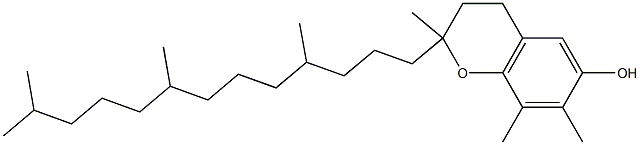
- 1406-66-2
- C28H48O2
- 416.67952
- All (0)
- China (0)
- (0)
- 1406-18-4
- C29H50O2
- 430.71
- All (0)
- China (0)
- (0)
![α-Tocopherol-[D6] (Vitamin E-[D6])](https://chemcloud-1304660855.cos.ap-shanghai.myqcloud.com/compound/202502120400270246.gif?imageMogr2/format/webp)
- 113892-08-3
- C29H50O2
- 430.72
- All (0)
- China (0)
- (0)
- 67629-40-7
- C30H49ClO3
- 493.16100
- All (38)
- China (12)
- (38)

- 59-02-9
- C29H50O2
- 430.71
- All (38)
- China (12)
- (38)

- 79434-83-6
- C29H50O2
- 430.70600
- All (38)
- China (12)
- (38)

- 2074-53-5
- C29H50O2
- 430.71
- All (38)
- China (12)
- (38)
- 142386-74-1
- C38H67N2O3P
- 630.92400
- All (38)
- China (12)
- (38)

- 83376-94-7
- C29H49O2
- 429.69800
- All (0)
- China (0)
- (0)
- 1261156-27-7
- C30H52O4S
- 508.79600
- All (0)
- China (0)
- (0)
Related Products More >

- CNY Request For Quotation
- CNY Request For Quotation
- CNY Request For Quotation
- 2074-53-5
- CNY 30.0000
- 25kg
- 30999-06-5
- Request For Quotation
- 50kg
- 30999-06-5
- Request For Quotation
- 1kg
- 96702-03-3
- Request For Quotation
- 9002-96-4
- Request For Quotation


In contrast to water-soluble antioxidants like vitamin C, which penetrate the skin more readily without leaving a greasy residue, vitamin E's lipophilicity makes it prone to accumulating in the stratum corneum. This accumulation can alter the skin's microbiome balance, particularly by promoting the overgrowth of Propionibacterium acnes, a bacterium implicated in acne pathogenesis. Furthermore, the comedogenic potential of vitamin E oil varies depending on its concentration and formulation. Pure, undiluted vitamin E oil has a higher likelihood of clogging pores compared to formulations that incorporate non-comedogenic carriers like squalane or jojoba oil, which mimic the skin's natural sebum composition and facilitate better absorption.
A common misconception is that all antioxidants benefit acne-prone skin uniformly. While antioxidants generally reduce inflammation, their delivery method and chemical properties significantly influence their efficacy and safety. For instance, niacinamide, a water-soluble vitamin B3 derivative, regulates sebum production and strengthens the skin barrier without occluding pores, making it a more suitable alternative for acne-prone individuals. Similarly, retinoids, though not antioxidants, promote cell turnover and prevent comedone formation by binding to retinoic acid receptors in the skin. These distinctions highlight the importance of selecting skincare ingredients based on their molecular behavior and interaction with skin physiology rather than their antioxidant category alone.
Another point of confusion arises from the use of vitamin E in combination products. Some formulations pair vitamin E with vitamin C to enhance photoprotection, as vitamin E regenerates oxidized vitamin C, prolonging its antioxidant activity. However, such combinations may still irritate sensitive or acne-prone skin if the base formulation is too emollient. Additionally, oral supplementation with vitamin E does not carry the same comedogenic risk as topical application, as systemic absorption distributes the antioxidant throughout the body rather than concentrating it on the skin's surface. This differentiation underscores the need to evaluate the route of administration when assessing potential side effects.
It is also worth noting that individual skin types react differently to vitamin E oil due to genetic variations in sebum composition and skin barrier function. For example, individuals with filaggrin gene mutations, which compromise the skin's barrier integrity, may experience heightened irritation or breakouts from occlusive ingredients like vitamin E oil. Conversely, those with dry or mature skin might benefit from its emollient and wound-healing properties, as vitamin E accelerates epidermal repair by stimulating fibroblast proliferation and collagen synthesis. This duality emphasizes the importance of personalized skincare approaches, where ingredient selection is tailored to an individual's specific skin concerns and tolerance levels.
Lastly, the purity and source of vitamin E oil can influence its comedogenic potential. Synthetic vitamin E (dl-alpha-tocopherol) is less bioavailable than its natural counterpart (d-alpha-tocopherol) and may contain impurities that exacerbate skin irritation. Similarly, vitamin E derived from wheat germ oil, a common natural source, might trigger allergic reactions in individuals with gluten sensitivities, indirectly contributing to skin inflammation. Opting for pharmaceutical-grade, naturally sourced vitamin E oil and performing a patch test before widespread application can help mitigate these risks. By understanding these nuances, consumers can make informed decisions about incorporating vitamin E oil into their skincare routines without inadvertently causing breakouts.
The key lies in understanding skin type and application dosage. Those with dry or sensitive skin might tolerate vitamin E oil well, as it helps reinforce the skin barrier and reduce transepidermal water loss. However, someone with combination skin might find that using it on drier cheeks is manageable, while the same product triggers breakouts on the forehead or chin. For example, a teenager using a heavy vitamin E-infused moisturizer daily might notice more frequent breakouts around the nose and jawline, where pores are easily clogged by the oil’s viscosity.
Balancing its benefits with potential risks involves moderation. Diluting vitamin E oil with a lighter carrier oil, such as jojoba or squalane, can reduce its occlusivity, making it less likely to block pores. Alternatively, opting for products with vitamin E in a non-comedogenic base ensures the antioxidant’s effects are delivered without the added risk of congestion. A person with mild acne who switches from a pure vitamin E oil serum to a water-based lotion containing the same nutrient may see fewer breakouts while still reaping its protective benefits against environmental damage.
From a biochemical and physiological perspective, vitamin E oil’s occlusive nature can influence skin physiology by forming a barrier that traps moisture, which is beneficial for dry skin but potentially problematic for others. This occlusion can create a microenvironment conducive to the accumulation of sebum and dead skin cells in the pilosebaceous units (hair follicles and associated sebaceous glands). The resulting pore blockage is a primary factor in the pathogenesis of acne vulgaris. Moreover, the comedogenic potential of vitamin E oil varies with its formulation and purity; oils with a higher molecular weight and thicker consistency tend to have a greater chance of clogging pores, thereby promoting comedone formation in susceptible skin types.
Beyond its biochemical interactions, the response to topical vitamin E oil is modulated by individual skin microbiota and immune factors. Certain bacterial populations residing on the skin, such as Cutibacterium acnes, thrive in sebum-rich environments, and the occlusive film formed by vitamin E oil can exacerbate this condition, leading to inflammation and pustule formation. Furthermore, vitamin E oil’s antioxidant activity can influence the local inflammatory response, potentially attenuating or exacerbating acne lesions depending on the skin’s state and the balance of oxidative stress.
In practical applications, vitamin E oil is utilized not only for its protective antioxidant role but also for its capacity to support skin barrier repair and reduce scar formation through collagen synthesis enhancement. Industrially, vitamin E is incorporated into cosmetics, sunscreens, and anti-aging products, leveraging its photoprotective properties. However, in individuals with oily or acne-prone skin, the lipophilic nature of vitamin E oil may complicate skin homeostasis, leading to adverse dermatological effects such as breakouts.
Overall, while vitamin E oil holds significant therapeutic and cosmetic benefits due to its antioxidative and moisturizing properties, its physicochemical traits and interaction with skin physiology can contribute to pore occlusion and subsequent acne development in certain populations. The variability in individual responses underscores the importance of considering skin type, formulation, and application method when integrating vitamin E oil into skincare routines.