


 Home
Home
How can chemical engineers develop a nanofiltration membrane that is entirely plant-based, without relying on fossil-fuel-derived polymers or toxic organic solvents? Traditional membrane manufacturing has always depended on petroleum-based materials and hazardous chemicals, which not only harm the environment but also make recycling difficult. This new approach claims to use cellulose and lignin—two renewable materials—to create a high-performance membrane for water purification and wastewater treatment. But how does it achieve comparable efficiency to conventional membranes while remaining stable and durable? And could this innovation truly replace existing commercial membranes, reducing carbon emissions and aligning with upcoming regulations that aim to ban fluorinated polymers?
Could Plant-Derived Nanofiltration Membranes End the Era of Toxic Solvents in Water Treatment?
Related Encyclopedia
- 9005-53-2
- unspecified
- 0
- All (8)
- China (7)
- (8)
- 8068-05-1
- C30H25ClN6
- 505.01
- All (0)
- China (0)
- (0)
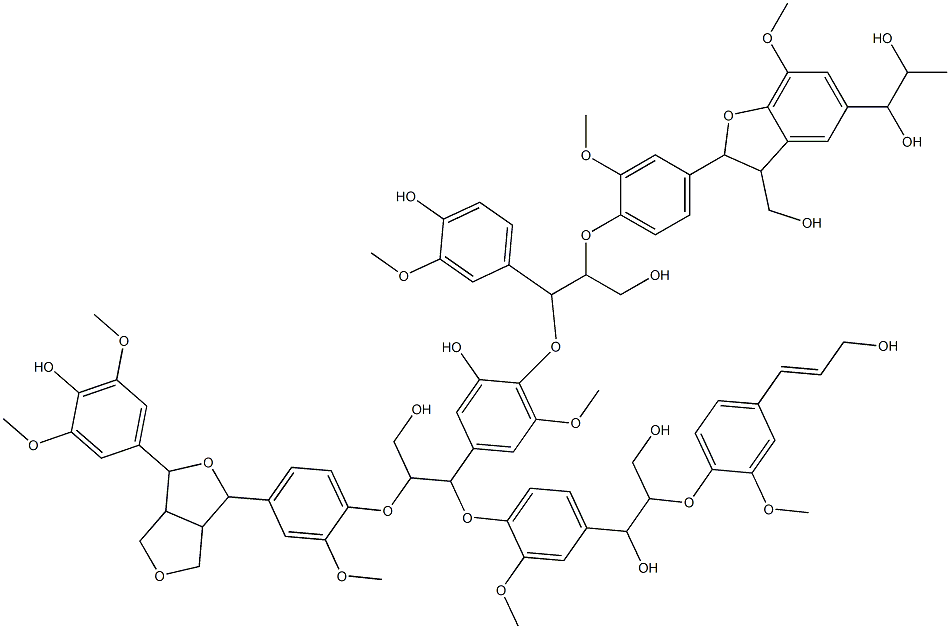
- 8068-03-9
- C81H92O28
- 1513.58038
- All (0)
- China (0)
- (0)
- 42613-30-9
- 0
- All (4)
- China (4)
- (4)

- 9004-64-2
- C3H7O*
- 59.08708
- All (22)
- China (9)
- (22)
- 9004-62-0
- C29H52O21
- 0
- All (59)
- China (31)
- (59)
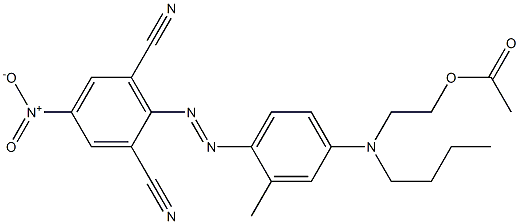
- 9004-57-3
- C23H24N6O4
- 448.47446
- All (21)
- China (2)
- (21)
- 9013-34-7
- C20H23NO5
- 0
- All (4)
- China (4)
- (4)
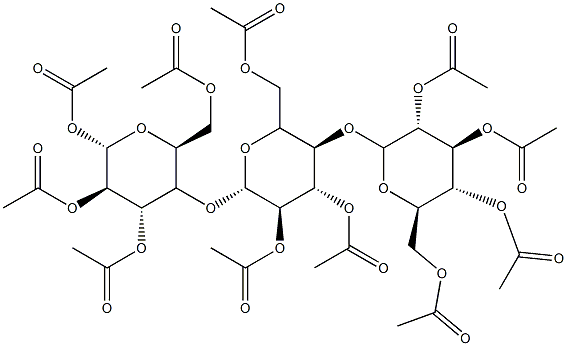
- 9012-09-3
- C40H54O27
- 966.84056
- All (3)
- China (0)
- (3)

- 9004-41-5
- C6H8N2O
- 124.14052
- All (1)
- China (1)
- (1)
Related Products More >

- CNY Request For Quotation
- CNY Request For Quotation
- CNY Request For Quotation
- 9004-62-0
- Request For Quotation
- 9004-62-0
- Request For Quotation
- 9004-65-3
- Request For Quotation
- 9004-65-3
- USD 361.6000
- 25kg
- 9004-57-3
- USD 580.0000
- 25kg


What’s impressive is that it stays stable and works well even after soaking in water for 30 days, proving it’s durable. If this approach scales up, it could cut carbon emissions from membrane manufacturing and meet new regulations banning toxic solvents and fluorinated polymers.
Stability and durability are ensured by cross-linking lignin’s aromatic groups, which resist hydrolysis and microbial degradation. The membrane’s thickness can be precisely controlled during fabrication, enabling customization for specific applications (e.g., removing small-molecule dyes in wastewater). Its 30-day aqueous stability matches conventional membranes, addressing a critical industry concern.
Practically, this technology could disrupt sectors like water treatment, where traditional membranes rely on fluorinated polymers (e.g., PVDF), which are persistent environmental pollutants. For instance, in textile wastewater treatment, the plant-based membrane could filter reactive dyes without leaching microplastics. Regulatory alignment is another advantage—the EU’s impending ban on fluoropolymers and toxic solvents (e.g., NMP) positions this innovation as a compliant alternative. However, scalability challenges remain, such as optimizing lignin purity and large-scale casting processes. If commercialized, it could reduce the carbon footprint of membrane production by up to 50%, aligning with circular economy principles.
The membrane achieves comparable efficiency through tailored structural design. By controlling thickness, engineers adjust porosity and selectivity, enabling effective filtration of contaminants with various molecular weights, as demonstrated in dye filtration tests. Its stability stems from the inherent chemical resilience of cellulose and lignin—after 30 days of water immersion, it retains performance, addressing durability concerns.
This innovation differs from conventional membranes, which rely on petroleum-based polymers like polyamides, requiring toxic solvents (e.g., dimethylformamide) in production. These fossil-derived membranes have high carbon footprints, are non-recyclable, and often use fluorinated polymers soon to be banned. In contrast, the plant-based membrane reduces carbon emissions via renewable feedstocks and avoids toxic inputs, complying with upcoming EU regulations.
Its potential to replace commercial membranes is significant. Membrane technology is critical for energy-efficient separations, accounting for a large portion of global energy use. Shifting to sustainable membranes cuts both production and disposal impacts. Future work on PFAS removal could expand its applications, making it a viable, eco-friendly alternative.