


 Home
Home
Hi, I'd like to ask—is calcium chloride considered a strong electrolyte in chemistry? How does it dissociate in water, and why does that affect its electrolyte properties? What factors determine whether a substance is a strong or weak electrolyte, and how does calcium chloride fit into this classification? Are there real-world applications where calcium chloride's electrolyte strength is crucial? Thanks!
Is Calcium Chloride Identified as a Strong Electrolyte in Aqueous Solutions?
Related Encyclopedia

- 10043-52-4
- CaCl2
- 110.98
- All (479)
- China (34)
- (479)
- 99886-95-0
- CaClI
- 202.43500
- All (0)
- China (0)
- (0)
- 14031-58-4
- CaClHO
- 92.53830
- All (0)
- China (0)
- (0)
- 127886-77-5
- CaClHO
- 92.53830
- All (0)
- China (0)
- (0)
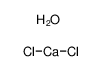
- 22691-02-7
- CaCl2H2O
- 128.99900
- All (0)
- China (0)
- (0)
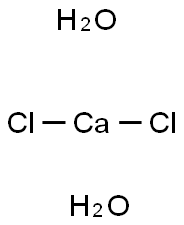
- 10035-04-8
- CaCl2H4O2
- 147.01
- All (116)
- China (17)
- (116)
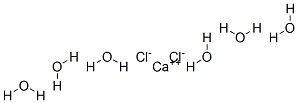
- 7774-34-7
- CaCl2H12O6
- 219.08
- All (16)
- China (1)
- (16)
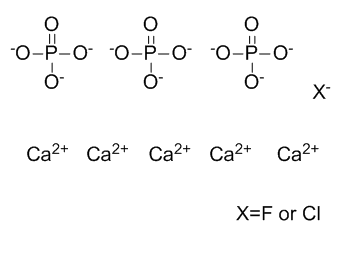
- 75535-31-8
- CaClFH4O4P-3
- 193.53000
- All (0)
- China (0)
- (0)
- 135732-52-4
- C4H12CaCl2O
- 187.12100
- All (0)
- China (0)
- (0)
- 20280-08-4
- C12H24CaCl2N8
- 391.35700
- All (0)
- China (0)
- (0)
Related Products More >

- 10035-04-8
- CNY 110.0000
- 25kg
- 10043-52-4
- USD 4.8000
- 25kg
- USD 35.0000
- 25kg
- 7774-34-7
- Request For Quotation
- 25kg
- 7774-34-7
- Request For Quotation
- 1ton
- 10035-04-8
- Request For Quotation
- 10g
- 10035-04-8
- Request For Quotation
- 500g
- 10035-04-8
- Request For Quotation
- 100g


The dissociation process occurs because water molecules, being polar, surround and separate the calcium and chloride ions. The positive ends of water molecules attract Cl– ions, while the negative ends attract Ca2+, overcoming the ionic bonds holding the compound together. This complete ionization is why calcium chloride enhances electrical conductivity— the higher concentration of free ions allows for better charge transport.
Substances are classified as strong or weak electrolytes based on their degree of dissociation in water. Ionic compounds like calcium chloride, which dissociate entirely, fall under strong electrolytes, while covalent compounds that only partially ionize (e.g., acetic acid) are weak electrolytes. Solubility also plays a role, but even highly soluble covalent compounds are weak if they don’t fully break into ions.
In real-world applications, calcium chloride’s strong electrolyte properties are crucial. For example, it’s used in de-icing agents not only for its low freezing point but also because its ions conduct electricity, helping melt ice faster. In industrial settings, it acts as an electrolyte in some batteries and electroplating processes, where efficient ion movement is essential.
The classification of a substance as a strong or weak electrolyte depends on its degree of dissociation in solution. Strong electrolytes, like calcium chloride, dissociate completely, producing a high concentration of ions. This includes most salts, strong acids, and strong bases. Weak electrolytes, in contrast, only partially dissociate, resulting in a lower ion concentration. Examples include weak acids and weak bases. Calcium chloride fits into the strong electrolyte category because of its complete dissociation in water.
In real-world applications, the strong electrolyte properties of calcium chloride are essential. In the food industry, calcium chloride is used as a firming agent in canned vegetables and as an electrolyte in sports drinks. Its complete dissociation ensures it provides the necessary ions to maintain vegetable texture or replenish electrolytes lost during physical activity. In industrial processes, calcium chloride is used in the production of calcium salts and as a drying agent due to its hygroscopic nature. In these applications, the complete dissociation of calcium chloride into ions is crucial for its effectiveness.
Moreover, calcium chloride's strong electrolyte properties are also leveraged in the field of environmental science. For instance, in water treatment plants, calcium chloride can be used to adjust the hardness of water. The complete dissociation of calcium chloride ensures that the calcium ions are available to react with carbonate ions in the water, forming calcium carbonate precipitate, which can be removed to soften the water. This process is critical for preventing scale buildup in pipes and improving the efficiency of water heaters and other appliances.
The complete dissociation of calcium chloride in water directly contributes to its strong electrolyte properties. Since nearly all the dissolved CaCl₂ separates into free-moving ions, the solution conducts electricity very efficiently. This high ionic conductivity is a hallmark of strong electrolytes and is essential for many of its applications. The mobility of these ions allows the solution to carry electrical current effectively, which is why calcium chloride solutions are often used in electrochemical processes.
Several factors determine whether a substance qualifies as a strong or weak electrolyte. The key considerations include the nature of the bonding (ionic versus covalent), the degree of ionization in water, and the stability of the resulting ions in solution. Ionic compounds like calcium chloride, which consist of positively and negatively charged ions held together by strong electrostatic forces, typically dissociate completely in water because water molecules effectively solvate and separate these ions. In contrast, weak electrolytes, such as acetic acid (CH₃COOH), only partially ionize because their covalent bonds are more resistant to breaking, and the equilibrium favors the undissociated form.
Calcium chloride's classification as a strong electrolyte makes it invaluable in numerous real-world applications where high ionic conductivity or rapid ice melting is required. For example, it is widely used in deicing roads and sidewalks because its dissolved ions lower the freezing point of water more effectively than sodium chloride (NaCl). Additionally, it serves as a drying agent in laboratories due to its hygroscopic nature, absorbing moisture from the air. In the food industry, calcium chloride is used as a firming agent in canned vegetables and as an electrolyte in sports drinks, where its complete dissociation helps maintain proper ion balance. Its role in chemical synthesis, particularly in processes requiring high ionic strength, further highlights its importance.
Whether a substance is a strong or weak electrolyte depends on its degree of dissociation in water. Strong electrolytes, like soluble ionic compounds and strong acids/bases, break down entirely into ions. CaCl₂, an ionic compound, dissociates fully because water’s polar molecules disrupt its ionic bonds. Weak electrolytes only partially dissociate.
This property matters in real-world uses. For example, as a deicer, CaCl₂’s ions lower water’s freezing point effectively. It’s also used in concrete accelerators to speed up curing and in some industrial processes where high electrical conductivity in solutions is needed. Its strong electrolyte nature makes these applications possible.