


 Home
Home
Hi, I'd like to ask—can calcium chloride cause rust on metal roofs? Does it degrade asphalt shingles or tile sealants? How does its moisture absorption affect roof insulation? Are there weight limitations when using it as a de-icer? What protective measures should I take before application? Thanks!
Is Calcium Chloride Safe for Roofing Materials? Corrosion Risks Explored
Related Encyclopedia

- 10043-52-4
- CaCl2
- 110.98
- All (479)
- China (34)
- (479)
- 99886-95-0
- CaClI
- 202.43500
- All (0)
- China (0)
- (0)
- 14031-58-4
- CaClHO
- 92.53830
- All (0)
- China (0)
- (0)
- 127886-77-5
- CaClHO
- 92.53830
- All (0)
- China (0)
- (0)
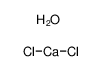
- 22691-02-7
- CaCl2H2O
- 128.99900
- All (0)
- China (0)
- (0)
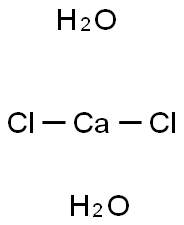
- 10035-04-8
- CaCl2H4O2
- 147.01
- All (116)
- China (17)
- (116)
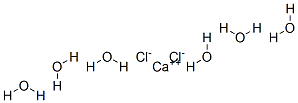
- 7774-34-7
- CaCl2H12O6
- 219.08
- All (16)
- China (1)
- (16)
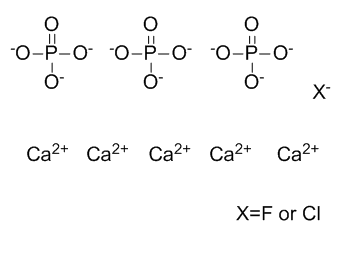
- 75535-31-8
- CaClFH4O4P-3
- 193.53000
- All (0)
- China (0)
- (0)
- 135732-52-4
- C4H12CaCl2O
- 187.12100
- All (0)
- China (0)
- (0)
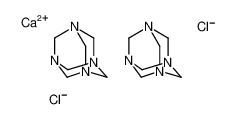
- 20280-08-4
- C12H24CaCl2N8
- 391.35700
- All (0)
- China (0)
- (0)
Related Products More >
- 10035-04-8
- CNY 110.0000
- 25kg
- 10043-52-4
- USD 4.8000
- 25kg
- USD 35.0000
- 25kg
- 7774-34-7
- Request For Quotation
- 25kg
- 7774-34-7
- Request For Quotation
- 1ton
- 10035-04-8
- Request For Quotation
- 10g
- 10035-04-8
- Request For Quotation
- 500g
- 10035-04-8
- Request For Quotation
- 100g


The compound’s moisture absorption affects roof insulation by saturating materials like fiberglass, reducing their thermal resistance. Wet insulation loses up to 90% of its R-value, increasing energy loss and fostering mold growth. As a de-icer, weight limitations are key: apply no more than 1–2 pounds per 100 square feet, and consider that wet calcium chloride is heavier. Always check the roof’s load-bearing capacity.
Before application, pre-treat metal roofs with anti-corrosive coatings, use pellet-form calcium chloride to minimize moisture absorption, apply thin even layers, remove excess product after use, and consider less corrosive alternatives like magnesium chloride for sensitive roofs. Regular inspection for rust spots, shingle damage, or insulation dampness helps mitigate long-term issues.
About roof insulation, calcium chloride’s moisture absorption is an issue. If it gets into insulation, it pulls in water vapor, making the insulation conduct heat better and work worse. Wet insulation also gets heavier, which could stress the roof.
As a de-icer, there’s no set weight limit, but using too much is bad. Concentrated solutions can build up and overload weak roof parts. To protect your roof, coat metal areas with anti-corrosion material, use calcium chloride sparingly on sealed surfaces, and rinse the roof after de-icing to remove leftover salt. It’s better to use chloride-free de-icers on sensitive materials when you can.
In addition to its effects on metal, calcium chloride can also degrade asphalt shingles and tile sealants. The hygroscopic nature of calcium chloride can cause these materials to absorb moisture, leading to swelling, cracking, and eventual deterioration. This can reduce the lifespan of roofing materials and necessitate more frequent repairs or replacements.
The moisture absorption properties of calcium chloride can also impact roof insulation. When calcium chloride is applied to a roof, it can attract moisture, which can then become trapped in the insulation. This can reduce the effectiveness of the insulation, leading to increased energy costs and potential moisture-related issues such as mold and mildew growth.
When using calcium chloride as a deicer, it is important to consider the weight limitations. The additional weight of the calcium chloride and the resulting melted ice can place significant strain on the roof structure, particularly in areas with heavy snowfall. This can lead to sagging or even collapse if the roof is already compromised.
To mitigate these risks, several protective measures should be taken before applying calcium chloride. First, it is important to choose a deicing product that is specifically formulated for use on roofs. These products often contain additives that reduce the risk of corrosion and degradation. Additionally, it is crucial to follow the manufacturer’s instructions for application rates and methods to avoid over-application. Applying a corrosion inhibitor to metal components can also help prevent rust and corrosion. After application, it is recommended to rinse the roof and gutters thoroughly to remove any residual calcium chloride. Regular inspections and maintenance of the roof, including cleaning gutters and checking for signs of corrosion or damage, can help identify and address issues before they become severe.
Regarding asphalt shingles and tile sealants, calcium chloride poses a moderate risk of degradation. While it doesn’t directly dissolve asphalt, its prolonged exposure to moisture can soften shingle binders over time, leading to cracking or loss of flexibility. Tile sealants, particularly those made from latex or acrylic, may also weaken when repeatedly exposed to salt-laden water runoff. The brine created by calcium chloride’s dissolution can seep into microscopic cracks, freeze, and expand, further stressing roofing materials. Over repeated winters, this cycle can significantly shorten the lifespan of asphalt and tile roofs.
The moisture absorption properties of calcium chloride directly impact roof insulation. As it draws water from the air and melting ice, the resulting brine can seep into insulation layers, reducing their thermal efficiency by displacing air pockets. Wet insulation loses its ability to resist heat transfer, leading to increased energy costs for heating or cooling. In severe cases, prolonged moisture exposure can foster mold growth or structural rot in wooden roof components beneath the insulation.
Weight limitations are a critical consideration when using calcium chloride as a de-icer on roofs. A single pound of calcium chloride can attract and hold nearly four pounds of water as it dissolves, meaning even small applications can add significant weight to snow-covered surfaces. Roofs, especially older or flat ones, may not be engineered to handle this additional load, increasing the risk of collapse. Local building codes often specify maximum de-icer application rates to mitigate this hazard, typically ranging from 1 to 3 pounds per square foot, depending on roof design and snow accumulation.
Protective measures should always be taken before applying calcium chloride to roofs. First, verify that the roofing material is compatible—metal roofs may require a protective sealant, while asphalt or tile roofs should be inspected for pre-existing damage. Use targeted application methods, such as calcium chloride tablets or flakes placed in gutters or downspouts, rather than broadcasting it evenly across the surface, to minimize contact with roofing materials. Installing drip edges or flashing can help direct brine away from vulnerable areas. Finally, consider alternative de-icers like magnesium chloride, which is less corrosive, or mechanical snow removal to reduce reliance on chemical treatments.