


 Home
Home
Hi, I'd like to ask—does ethyl acetate form hydrogen bonds with other molecules? Why do some solvents have hydrogen bonding and others don't? How does the absence or presence of hydrogen bonding affect its boiling point? Is it related to its polarity? Thanks!
Does Ethyl Acetate Have Hydrogen Bonding: Analyzing Its Molecular Structure?
Related Encyclopedia
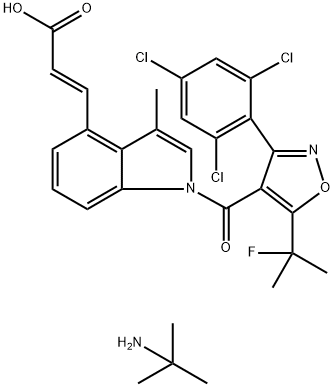
- 1898207-64-1
- C29H29Cl3FN3O4
- 608.92
- All (0)
- China (0)
- (0)
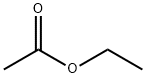
- 141-78-6
- C4H8O2
- 88.11
- All (39)
- China (31)
- (39)
- 114554-35-7
- C10H13ClO2
- 200.66200
- All (0)
- China (0)
- (0)
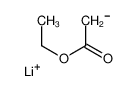
- 189811-59-4
- C4H7LiO2
- 94.03820
- All (0)
- China (0)
- (0)
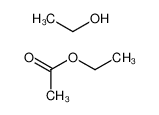
- 117204-61-2
- C6H14O3
- 134.17400
- All (0)
- China (0)
- (0)
- 62018-65-9
- C5H9Cl3O2
- 207.48300
- All (0)
- China (0)
- (0)
- 914771-42-9
- C5H12O3
- 120.14700
- All (0)
- China (0)
- (0)
- 75234-34-3
- C31H38O8
- 538.62900
- All (0)
- China (0)
- (0)
- 84508-45-2
- C4H8O2
- 90.12000
- All (0)
- China (0)
- (0)
- 90691-33-1
- C4H5D3O2
- 91.12360
- All (0)
- China (0)
- (0)
Related Products More >

- 141-78-6
- Request For Quotation
- 79-20-9
- CNY 4500.0000
- 1ton
- 141-78-6
- CNY 5000.0000
- 1ton
- 165668-41-7
- Request For Quotation
- 5kg
- 165668-41-7
- Request For Quotation
- 1kg
- 165668-41-7
- Request For Quotation
- 100g
- 165668-41-7
- Request For Quotation
- 10kg
- 165668-41-7
- Request For Quotation
- 10g


Hydrogen bonding occurs in solvents when they have H atoms directly attached to electronegative elements (e.g., O-H in water, N-H in ammonia). Solvents without such bonds—like ethyl acetate, which has C-H bonds—can’t donate hydrogen bonds. The key is the electronegativity difference: O, N, or F pull electrons strongly, making the attached H atom partially positive and able to bond with another electronegative atom’s lone pair.
The presence of hydrogen bonding significantly raises a solvent’s boiling point because these bonds are strong intermolecular forces. For example, water (which forms hydrogen bonds) boils at 100°C, while non-hydrogen-bonding solvents like ethane (similar molecular weight) boil at -89°C. Ethyl acetate’s boiling point (77°C) is moderate because it relies on weaker dipole-dipole interactions and van der Waals forces, lacking the extra “sticking power” of hydrogen bonds.
Hydrogen bonding is closely linked to polarity, but not all polar solvents form hydrogen bonds. Polarity arises from electronegativity differences, but hydrogen bonding requires specific structural features (H attached to O, N, or F). Ethyl acetate is polar due to its carbonyl group, but without O-H bonds, it can’t donate hydrogen bonds, illustrating that polarity is necessary but not sufficient for hydrogen bonding.
The presence or absence of hydrogen bonding in solvents fundamentally alters their physical properties. Solvents capable of both donating and accepting hydrogen bonds, like water or ethanol, exhibit significantly higher boiling points due to the strong intermolecular forces these bonds create. In contrast, ethyl acetate's boiling point of 77.1°C is considerably lower than that of water (100°C) because its intermolecular forces rely primarily on dipole-dipole interactions and van der Waals forces rather than the much stronger hydrogen bonds. This difference becomes particularly relevant in solvent selection for processes like extraction or distillation, where boiling point differentials drive separation efficiency.
The relationship between hydrogen bonding and polarity is direct but not identical. While all hydrogen bond donors and acceptors are polar, not all polar molecules can participate in hydrogen bonding. Ethyl acetate's moderate polarity arises from its polar carbonyl group and ester linkage, which create a significant dipole moment. However, its inability to form extensive hydrogen bonding networks results in lower viscosity and surface tension compared to protic solvents like methanol. This combination of moderate polarity and limited hydrogen bonding makes ethyl acetate an excellent solvent for applications requiring moderate solvency power without the complications of strong hydrogen bonding interactions.
The ability of a solvent to form hydrogen bonds depends on its molecular structure. Some solvents can form hydrogen bonds because they contain hydrogen atoms bonded to highly electronegative elements. For example, water (H2O) and ethanol (C2H5OH) can form hydrogen bonds because they have hydrogen atoms bonded to oxygen atoms. These hydrogen bonds are relatively strong intermolecular forces that significantly influence the physical properties of the molecules. In contrast, solvents like ethyl acetate, which lack hydrogen bonding, rely on weaker intermolecular forces such as dipole-dipole interactions or van der Waals forces.
The absence or presence of hydrogen bonding affects the boiling point of a substance. Hydrogen bonds are stronger than other types of intermolecular forces, such as van der Waals forces or dipole-dipole interactions. When hydrogen bonds are present, more energy is required to break these strong intermolecular forces, resulting in a higher boiling point. For example, water has a relatively high boiling point of 100 degrees Celsius due to the extensive hydrogen bonding between its molecules. In contrast, ethyl acetate, which lacks hydrogen bonding, has a lower boiling point of around 77 degrees Celsius. This difference is primarily due to the weaker dipole-dipole interactions in ethyl acetate compared to the stronger hydrogen bonds in water.
The ability to form hydrogen bonds is related to the polarity of molecules. Polarity arises from differences in electronegativity within a, molecule leading to the formation of partial charges. While polarity is a prerequisite for hydrogen bonding, not all polar molecules can form hydrogen bonds. For example, ethyl acetate is polar due to its carbonyl group but cannot form hydrogen bonds because it lacks the necessary hydrogen atoms bonded to electronegative atoms. On the other hand, polar molecules like water and ethanol can form hydrogen bonds due to their specific molecular structures. Therefore, while polarity is related to hydrogen bonding, it is not the sole determining factor.
Hydrogen bonding significantly raises boiling points because these interactions are strong intermolecular forces requiring more energy to break. Since ethyl acetate can only accept hydrogen bonds (not donate), its boiling point (77°C) is lower than solvents like ethanol (78°C), which both donates and accepts H-bonds. Polarity is related but distinct: ethyl acetate is polar due to its dipole moment from the carbonyl group, but polarity alone doesn’t guarantee hydrogen bonding. Hydrogen bonding is a specific type of polar interaction, while general polarity involves overall charge separation in a molecule.