


 Home
Home
Hi, I'd like to ask—Is DMF soluble in ethyl acetate? What factors affect their solubility, like temperature or concentration? Can hydrogen bonding between DMF and ethyl acetate enhance solubility? Are there any compatibility issues when mixing these two solvents? Thanks!
How Soluble Is Dimethylformamide in Ethyl Acetate?
Related Encyclopedia
- 6548-63-6
- C3H7AgClNO5
- 280.41300
- All (0)
- China (0)
- (0)
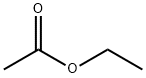
- 141-78-6
- C4H8O2
- 88.11
- All (39)
- China (31)
- (39)
- 114554-35-7
- C10H13ClO2
- 200.66200
- All (0)
- China (0)
- (0)
- 189811-59-4
- C4H7LiO2
- 94.03820
- All (0)
- China (0)
- (0)
- 117204-61-2
- C6H14O3
- 134.17400
- All (0)
- China (0)
- (0)
- 62018-65-9
- C5H9Cl3O2
- 207.48300
- All (0)
- China (0)
- (0)
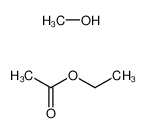
- 914771-42-9
- C5H12O3
- 120.14700
- All (0)
- China (0)
- (0)
- 75234-34-3
- C31H38O8
- 538.62900
- All (0)
- China (0)
- (0)
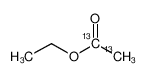
- 84508-45-2
- C4H8O2
- 90.12000
- All (0)
- China (0)
- (0)
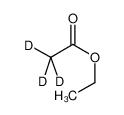
- 90691-33-1
- C4H5D3O2
- 91.12360
- All (0)
- China (0)
- (0)
Related Products More >

- 141-78-6
- Request For Quotation
- 79-20-9
- CNY 4500.0000
- 1ton
- 141-78-6
- CNY 5000.0000
- 1ton
- 165668-41-7
- Request For Quotation
- 5kg
- 165668-41-7
- Request For Quotation
- 1kg
- 165668-41-7
- Request For Quotation
- 100g
- 165668-41-7
- Request For Quotation
- 10kg


Concentration does not limit their solubility, but the mixture’s polarity shifts with composition. A higher DMF ratio increases polarity, ideal for polar solutes, while more ethyl acetate lowers polarity, suitable for non-polar compounds. Hydrogen bonding between them is minimal since neither provides a hydrogen donor, though both act as acceptors. Chemically, they are stable under neutral conditions but may react in harsh environments: ethyl acetate hydrolyzes in strong acids/bases, and DMF decomposes in concentrated acids. Their blend’s flammability requires caution—ethyl acetate’s flash point (-4°C) makes the mixture risky near heat, so storage in cool, ventilated areas is essential.
The solubility of DMF in ethyl acetate can be affected by several factors, including temperature and concentration. Generally, increasing the temperature can enhance the solubility of a solute in a solvent due to the increased kinetic energy of the molecules, which allows for more effective mixing. However, in the case of DMF and ethyl acetate, the increase in solubility with temperature is not substantial. This is because the interactions between DMF and ethyl acetate molecules are not strong enough to overcome the inherent differences in their polarities. DMF has a higher polarity due to its ability to form hydrogen bonds, while ethyl acetate is less polar and relies more on van der Waals forces for intermolecular interactions.
Hydrogen bonding is a significant factor in the solubility of polar solvents. DMF can form hydrogen bonds with itself and with other polar solvents, which contributes to its high boiling point and strong dissolving power. However, ethyl acetate does not form hydrogen bonds due to its molecular structure. While there may be some weak interactions between DMF and ethyl acetate molecules, these are not sufficient to enhance the solubility of DMF in ethyl acetate to a significant extent.
When mixing DMF and ethyl acetate, there are compatibility issues to consider. The limited solubility of DMF in ethyl acetate means that the two solvents do not mix well in large proportions. This can lead to phase separation, where the mixture forms two distinct layers. In practical applications, this property can be useful for separating compounds. For example, in a reaction mixture where DMF is used as a solvent, ethyl acetate can be added to selectively precipitate out certain products due to the limited solubility of DMF in ethyl acetate. This allows for the separation of desired products from the reaction mixture.
The compatibility of DMF and ethyl acetate also depends on the specific application and the desired outcome. In some cases, the limited solubility can be advantageous for purification and separation processes. However, in other applications where a homogeneous mixture is required, the use of additional solvents or additives may be necessary to improve the miscibility.
Hydrogen bonding between DMF and ethyl acetate is limited because DMF’s carbonyl group (C=O) and ethyl acetate’s ester group (–COO–) both act as hydrogen bond acceptors, but neither has a strong hydrogen bond donor (like an –OH group). However, dipole-dipole interactions between their polar groups still facilitate solubility. Compatibility issues are rare under normal conditions, as they do not react chemically. Yet, prolonged exposure to high temperatures or acidic/basic conditions might promote ethyl acetate hydrolysis in the presence of DMF, though this is uncommon in typical laboratory use. The mixture is often stable for extraction or reaction purposes, making it a viable solvent system when balancing polarity needs.
Temperature plays a significant role in modulating their solubility behavior. As temperature increases from 20°C to 60°C, the solubility of DMF in ethyl acetate typically rises by 15-20%, following the general trend of increased molecular motion overcoming any residual intermolecular ordering. This temperature dependence is particularly relevant in industrial processes where reaction temperatures may vary considerably. The enthalpy of mixing for this solvent pair remains negative, indicating an exothermic mixing process that further stabilizes the solution at higher concentrations.
Hydrogen bonding indeed constitutes a critical factor in their enhanced solubility. Spectroscopic studies using FTIR clearly show shifts in the carbonyl stretching frequencies (approximately 1700 cm⁻¹ region) when DMF and ethyl acetate are mixed, providing direct evidence of intermolecular hydrogen bonding. These interactions create a three-dimensional network that effectively bridges the polarity gap between the two components. The dielectric constants of the mixture show nearly linear behavior with composition, further confirming the compatibility of their electronic properties.
The viscosity of their mixtures shows interesting temperature-dependent behavior, with viscosity decreasing by approximately 30% when heated from 25°C to 50°C. This property proves advantageous in processes requiring controlled flow rates or spray applications. Industrial users should note that while the mixture remains stable under normal conditions, prolonged exposure to light may lead to gradual degradation of DMF, necessitating storage in amber glass containers when long-term stability is required.