


 Home
Home
Hi, I'd like to ask—is caffeine easily soluble in ethyl acetate? Are there specific solubility data? Will temperature changes affect solubility? Can pH value or other additives change the solubility of caffeine? What is the principle of using ethyl acetate to extract caffeine? What should be paid attention to in practical applications? Thanks!
What Is the Solubility of Caffeine in Ethyl Acetate and What Are the Influencing Factors?
Related Encyclopedia
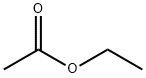
- 141-78-6
- C4H8O2
- 88.11
- All (39)
- China (31)
- (39)
- 114554-35-7
- C10H13ClO2
- 200.66200
- All (0)
- China (0)
- (0)
- 189811-59-4
- C4H7LiO2
- 94.03820
- All (0)
- China (0)
- (0)
- 117204-61-2
- C6H14O3
- 134.17400
- All (0)
- China (0)
- (0)
- 62018-65-9
- C5H9Cl3O2
- 207.48300
- All (0)
- China (0)
- (0)
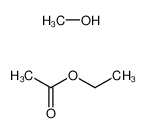
- 914771-42-9
- C5H12O3
- 120.14700
- All (0)
- China (0)
- (0)
- 75234-34-3
- C31H38O8
- 538.62900
- All (0)
- China (0)
- (0)
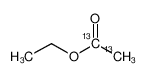
- 84508-45-2
- C4H8O2
- 90.12000
- All (0)
- China (0)
- (0)
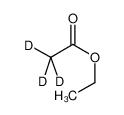
- 90691-33-1
- C4H5D3O2
- 91.12360
- All (0)
- China (0)
- (0)
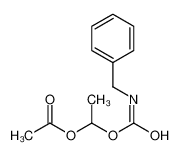
- 112613-77-1
- C12H15NO4
- 237.25200
- All (0)
- China (0)
- (0)
Related Products More >

- 141-78-6
- Request For Quotation
- 79-20-9
- CNY 4500.0000
- 1ton
- 141-78-6
- CNY 5000.0000
- 1ton
- 165668-41-7
- Request For Quotation
- 5kg
- 165668-41-7
- Request For Quotation
- 1kg
- 165668-41-7
- Request For Quotation
- 100g
- 165668-41-7
- Request For Quotation
- 10kg
- 165668-41-7
- Request For Quotation
- 10g


The extraction principle relies on liquid-liquid partition. Ethyl acetate’s low miscibility with water (8.3 grams per 100 milliliters at 20°C) and a partition coefficient of 2 to 5 for caffeine mean it efficiently pulls the compound from aqueous solutions. In practice, safety is critical: ethyl acetate is highly flammable, with a flash point of -4°C, so operations need to avoid heat and sparks. Emulsions can form during shaking, which can be resolved by adding salt or stirring gently. Maintaining neutral to basic pH with agents like sodium carbonate boosts extraction, and low-temperature distillation is key for solvent recovery to prevent caffeine degradation. Always use proper PPE due to the solvent’s volatility and irritant properties.
In practice, note that ethyl acetate is highly flammable, so avoid open flames and ensure ventilation. Its volatility requires sealed containers during extraction to prevent solvent loss. Emulsions may form during shaking, which can be resolved by gentle mixing or adding a salt (like NaCl) to break water-in-oil mixtures. After extraction, ethyl acetate is typically removed by distillation at low temperatures to preserve caffeine’s integrity, as high heat can degrade the compound. Always verify solvent purity and follow safety protocols to avoid contamination or exposure risks.
Temperature variations significantly impact caffeine's solubility in ethyl acetate. As with most organic compounds, solubility increases with rising temperature. Practical extraction processes often employ heated ethyl acetate solutions to enhance caffeine dissolution, followed by controlled cooling to promote crystallization during the recovery phase. This temperature-dependent solubility behavior is quantitatively described by the van't Hoff equation, which relates solubility changes to temperature through the compound's enthalpy of solution.
pH conditions and additives play crucial roles in modulating caffeine's solubility characteristics. Caffeine exists predominantly in its protonated form under acidic conditions, enhancing water solubility while reducing organic solvent miscibility. Conversely, alkaline environments deprotonate caffeine, increasing its affinity for ethyl acetate. Industrial extraction processes frequently utilize buffered systems or mild bases like sodium carbonate to optimize caffeine partitioning between aqueous and organic phases.
The extraction principle relies on differential solubility partitioning. Ethyl acetate selectively dissolves caffeine while leaving behind many water-soluble contaminants such as sugars and tannins. This selectivity stems from caffeine's intermediate polarity and the solvent's ability to form favorable dipole-dipole interactions with the xanthine molecule. Practical applications require careful attention to solvent purity, moisture content, and extraction efficiency metrics. Safety considerations mandate proper ventilation and explosion-proof equipment due to ethyl acetate's flammability, while environmental regulations may restrict solvent disposal methods. Industrial-scale operations often implement continuous extraction systems to maximize yield while minimizing solvent consumption.
Temperature plays a significant role in influencing the solubility of caffeine. As is typical for many substances, the solubility of caffeine increases with rising temperatures. For instance, in water, the solubility of caffeine jumps from 22 milligrams per milliliter at 25 degrees Celsius to 670 milligrams per milliliter at 100 degrees Celsius. This same principle applies to ethyl acetate, where higher temperatures enhance the solubility of caffeine, thereby improving the efficiency of extraction processes.
The solubility of caffeine can also be affected by pH levels and the presence of additives. Caffeine is a weakly basic compound, and its solubility in water can be increased by the addition of dilute acids such as hydrochloric acid or citric acid. These acids protonate the caffeine molecules, thereby increasing their solubility in aqueous solutions. In organic solvents like ethyl acetate, the addition of co-solvents or other chemicals can similarly impact solubility. For example, the presence of ethanol as a co-solvent can enhance the solubility of caffeine in ethyl acetate, making the extraction process more effective.
The principle behind using ethyl acetate to extract caffeine is rooted in its ability to selectively dissolve caffeine over other components in a mixture. Ethyl acetate is more polar than some other organic solvents, which allows it to effectively capture polar caffeine molecules from a solution. The partition coefficient between ethyl acetate and water is around 2.1, indicating that caffeine is about 2.1 times more soluble in ethyl acetate than in water. This property makes ethyl acetate an effective solvent for extracting caffeine from aqueous solutions, such as those derived from tea or coffee extracts.
In practical applications, several considerations should be kept in mind when using ethyl acetate for caffeine extraction. Multiple extractions using smaller volumes of ethyl acetate are generally more efficient than a single extraction with a larger volume, as this approach maximizes the yield of caffeine. Additionally, the handling of ethyl acetate requires caution due to its volatility and potential health hazards. Proper ventilation and the use of personal protective equipment are essential to ensure safety. After extraction, the ethyl acetate must be removed, typically through evaporation or distillation, to isolate pure caffeine.