


 Home
Home
Hi, I'd like to ask—what are common methods to dry ethyl acetate, like using desiccants or distillation? Which desiccants work best (e.g., magnesium sulfate, molecular sieves)? How do I know when it's fully dry? Are there steps to prevent rehydration during drying? Thanks!
How to Dry Ethyl Acetate: Effective Dehydration Techniques?
Related Encyclopedia
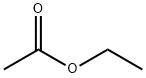
- 141-78-6
- C4H8O2
- 88.11
- All (39)
- China (31)
- (39)
- 114554-35-7
- C10H13ClO2
- 200.66200
- All (0)
- China (0)
- (0)
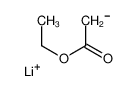
- 189811-59-4
- C4H7LiO2
- 94.03820
- All (0)
- China (0)
- (0)
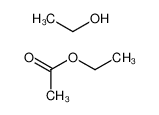
- 117204-61-2
- C6H14O3
- 134.17400
- All (0)
- China (0)
- (0)
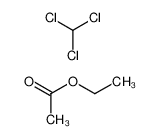
- 62018-65-9
- C5H9Cl3O2
- 207.48300
- All (0)
- China (0)
- (0)
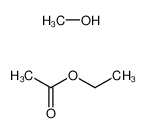
- 914771-42-9
- C5H12O3
- 120.14700
- All (0)
- China (0)
- (0)
- 75234-34-3
- C31H38O8
- 538.62900
- All (0)
- China (0)
- (0)
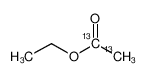
- 84508-45-2
- C4H8O2
- 90.12000
- All (0)
- China (0)
- (0)
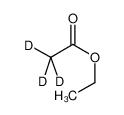
- 90691-33-1
- C4H5D3O2
- 91.12360
- All (0)
- China (0)
- (0)
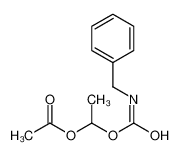
- 112613-77-1
- C12H15NO4
- 237.25200
- All (0)
- China (0)
- (0)
Related Products More >

- 141-78-6
- Request For Quotation
- 79-20-9
- CNY 4500.0000
- 1ton
- 141-78-6
- CNY 5000.0000
- 1ton
- 165668-41-7
- Request For Quotation
- 5kg
- 165668-41-7
- Request For Quotation
- 1kg
- 165668-41-7
- Request For Quotation
- 100g
- 165668-41-7
- Request For Quotation
- 10kg
- 165668-41-7
- Request For Quotation
- 10g


To determine if ethyl acetate is fully dry, check the desiccant: magnesium sulfate should flow freely without clumping, and the solvent should appear clear. For precision, use Karl Fischer titration to measure trace water or infrared spectroscopy to monitor water’s characteristic O-H stretch peaks. During distillation, a stable boiling point around 77°C signals dryness, as water forms a low-boiling azeotrope at ~70.4°C.
Preventing rehydration involves removing bulk water first, using oven-dried glassware, and sealing containers with desiccant. For sensitive applications, dry under nitrogen and distill immediately before use, storing the solvent over molecular sieves. These steps maintain anhydrous conditions, crucial for reactions like Grignard syntheses, by balancing practical drying methods with purity requirements.
For larger-scale operations or when very high purity is needed, distillation is the preferred method. Ethyl acetate can be distilled under reduced pressure to minimize thermal decomposition, as it has a relatively low boiling point of 77.1°C. However, distillation alone may not remove all traces of water, especially if an azeotrope forms with water. In such cases, a preliminary drying step with a desiccant followed by distillation is recommended.
Determining the completeness of drying can be done through various methods. Visual inspection for cloudiness is a quick but imprecise check. More reliable techniques include Karl Fischer titration, which quantitatively measures water content, or the cracking test, where the solvent is heated in a dry test tube to check for bubble formation indicating residual water.
To prevent rehydration, dried ethyl acetate should be stored under an inert atmosphere, such as nitrogen or argon, in tightly sealed containers. Adding molecular sieves to the storage vessel can help maintain dryness by continuously adsorbing any moisture that enters. Proper handling, including using dry glassware and minimizing exposure to air, is also essential to preserve the dryness of the solvent.
To know when ethyl acetate is fully dry, observe if the desiccant stops clumping (for MgSO₄, it should flow freely without sticking together) or if the solvent no longer forms a separate aqueous layer. Another method: after adding desiccant, let it stand for 15–30 minutes, then filter and check for cloudiness—clear solvent indicates dryness. For distillation, collect the fraction at ethyl acetate’s boiling point (77°C) after discarding the initial few milliliters, as water has a higher boiling point.
To prevent rehydration, store the dried ethyl acetate in a sealed container with fresh desiccant (like molecular sieves) and ensure all glassware is pre-dried. Avoid exposing the solvent to humid air; use a drying tube filled with anhydrous calcium chloride if transferring or storing it, as this minimizes moisture absorption during handling.
Desiccants are substances that absorb water from the solvent. One of the most commonly used desiccants for drying ethyl acetate is anhydrous magnesium sulfate. Magnesium sulfate is effective because it forms a hydrated compound when it absorbs water, and this process is irreversible under normal conditions. It is also relatively inexpensive and easy to use. Another desiccant that works well is molecular sieves. These are porous materials that can adsorb water molecules selectively based on their size. Molecular sieves are highly effective and can be regenerated by heating, making them reusable. Anhydrous sodium sulfate is another option, though it is less commonly used for ethyl acetate because it is less efficient than magnesium sulfate or molecular sieves.
To determine when ethyl acetate is fully dry, there are a few indicators to look for. When using magnesium sulfate, the desiccant will clump together as it absorbs water. Once the clumping stops and the desiccant remains as fine particles, it suggests that the solvent is dry. For molecular sieves, the drying process is usually complete when the solvent no longer shows signs of water content, such as cloudiness or a change in viscosity. In some cases, a more precise method like Karl Fischer titration can be used to measure the water content accurately. This technique involves adding a reagent to the solvent and measuring the amount of water through a titration process.
Preventing rehydration during the drying process is crucial to ensure the solvent remains dry. One way to do this is to minimize exposure to moisture. This can be achieved by using dry glassware and equipment and working in a low-humidity environment. A desiccator can be helpful in maintaining a dry atmosphere around the solvent. After drying, it is important to transfer the ethyl acetate to a tightly sealed container to prevent it from reabsorbing moisture from the air. Using a desiccant with a high capacity for water absorption, such as molecular sieves, can also help reduce the risk of rehydration.
The steps for drying ethyl acetate using desiccants typically involve adding the desiccant to the solvent and allowing it to sit for a period of time. For magnesium sulfate, the desiccant is added until it no longer clumps, indicating that the solvent is dry. For molecular sieves, the solvent is allowed to sit over the desiccant for about 12 hours, and the process may be repeated if necessary. After drying, the desiccant is filtered out, and the ethyl acetate is transferred to a dry, sealed container for storage.