


 Home
Home
I'm really curious about the nature of NaNO₃ bonds. Is it ionic or covalent? I've heard different opinions and I'm not sure which one is correct. Can anyone explain the difference and how it applies to NaNO₃? Appreciate any help!!!
Is NaNO₃ ionic or covalent?
Related Encyclopedia
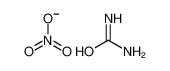
- 17687-37-5
- CH4N3O4
- 122.06000
- All (0)
- China (0)
- (0)
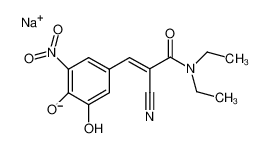
- 1047659-02-8
- C14H14N3NaO5
- 327.26800
- All (0)
- China (0)
- (0)
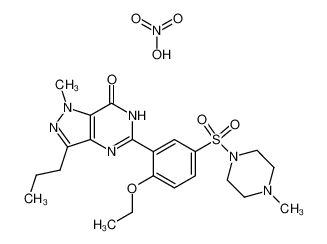
- 252951-59-0
- C22H31N7O7S
- 537.58900
- All (0)
- China (0)
- (0)
- 257612-88-7
- C13H22N2O6
- 302.32400
- All (0)
- China (0)
- (0)
- 257626-05-4
- C4H14N2O10P2
- 312.10900
- All (0)
- China (0)
- (0)
- 257613-04-0
- C5H6N4O4
- 186.12600
- All (0)
- China (0)
- (0)
- 252951-60-3
- C24H30N6O6
- 498.53200
- All (0)
- China (0)
- (0)
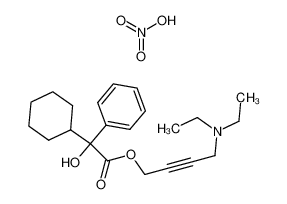
- 329976-40-1
- C22H32N2O6
- 420.49900
- All (0)
- China (0)
- (0)
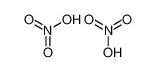
- 204575-95-1
- H2N2O6
- 126.02600
- All (0)
- China (0)
- (0)
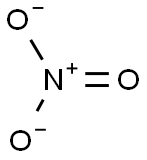
- 14797-55-8
- NO3-
- 62
- All (0)
- China (0)
- (0)
Related Products More >

- 13927-77-0
- CNY Request For Quotation
- 3030-80-6
- CNY Request For Quotation
- 55310-46-8
- CNY Request For Quotation
- 136-30-1 DibutylCarbamodithioic acid sodium salt
- CNY Request For Quotation
- 68890-66-4
- CNY Request For Quotation
- 68890-66-4
- CNY Request For Quotation
- 863-57-0
- Request For Quotation
- 35807-85-3
- Request For Quotation


Nano3, which is actually NaNO3 (Sodium Nitrate), is an ionic compound. Ionic compounds are formed when there is a transfer of electrons between metals and non-metals. In the case of NaNO3, sodium (Na) is a metal that tends to lose an electron to achieve a stable electron configuration. Nitrate (NO3-) is a polyatomic ion that gains this electron. This transfer of electrons results in the formation of positive and negative ions that are held together by strong electrostatic forces.
Classification and Analysis
To further elaborate, let's break down the components. Sodium (Na) has one valence electron in its outer shell. When it loses this electron, it forms a positively charged ion (Na+). The nitrate ion (NO3-) consists of nitrogen and oxygen atoms. Nitrogen has five valence electrons and oxygen has six. Together, they share electrons to form covalent bonds within the nitrate ion. However, the overall nitrate ion has a negative charge due to the extra electron it gains from sodium. This combination of a positive sodium ion and a negative nitrate ion results in an ionic bond.
Case Study and Application
In practical applications, the ionic nature of NaNO3 is significant. For instance, in the food industry, sodium nitrate is used as a preservative. Its ionic structure allows it to dissolve easily in water, which is crucial for its function. The ions can interact with other substances in the food, helping to inhibit the growth of bacteria and extend the shelf life of products. Understanding whether a compound is ionic or covalent is essential for predicting its behavior in various chemical reactions and applications.
Solution and Conclusion
In summary, NaNO3 is an ionic compound due to the transfer of electrons between sodium and the nitrate ion. This ionic bond is responsible for its unique properties and wide range of applications. Whether you are studying chemistry or working in an industry that uses sodium nitrate, knowing its ionic nature is fundamental.
Nano3, more accurately known as NaNO3 (Sodium Nitrate), is classified as an ionic compound. To understand why, we must first define the key concepts. Ionic bonds occur when there is a transfer of electrons between atoms, resulting in the formation of ions that are held together by electrostatic forces. Covalent bonds, on the other hand, involve the sharing of electrons between atoms.
Analyzing the Structure of NaNO3
In the case of NaNO3, sodium (Na) is a metal that readily loses its one valence electron to achieve a stable electron configuration. This results in the formation of a positively charged sodium ion (Na+). The nitrate ion (NO3-) consists of nitrogen and oxygen atoms. Within the nitrate ion, nitrogen and oxygen atoms share electrons to form covalent bonds. However, the nitrate ion as a whole has a negative charge because it gains the electron lost by sodium. This interaction between the positively charged sodium ion and the negatively charged nitrate ion is what forms the ionic bond in NaNO3.
Practical Considerations and Health Implications
From a practical standpoint, the ionic nature of NaNO3 has several implications. In industrial applications, such as in the production of fertilizers and explosives, the ionic structure allows for easy dissolution in water, facilitating its use in various chemical processes. In the context of health, sodium nitrate is used as a preservative in food. Its ionic properties enable it to inhibit the growth of bacteria, thereby extending the shelf life of food products. However, it is important to note that excessive consumption of sodium nitrate can have potential health risks, such as contributing to the formation of nitrosamines, which are carcinogenic compounds.
Conclusion and Recommendations
To conclude, NaNO3 is an ionic compound due to the transfer of electrons between sodium and the nitrate ion. Understanding this ionic nature is crucial for predicting its behavior in chemical reactions and its applications in various industries. When using sodium nitrate in food or industrial processes, it is essential to consider both its benefits and potential health risks. Proper handling and regulation are necessary to ensure its safe use.