


 Home
Home
Hi, I'd like to ask—what is dental resin made of, and does it contain urethane or methacrylate? What are its main uses in dental restoration, such as fillings or veneers? How does it compare to other dental materials in terms of durability? Is it biocompatible with oral tissues? Thanks!
What is dental resin, including components like urethane or methacrylate, and what are its uses in dental restoration?
Related Encyclopedia
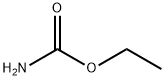
- 51-79-6
- C3H7NO2
- 89.09
- All (22)
- China (0)
- (22)
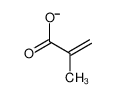
- 18358-13-9
- C4H5O2
- 85.08130
- All (0)
- China (0)
- (0)
![3-[(E)-4,6-dimethylhept-2-enyl]oxolane-2,5-dione,2-[3-(oxiran-2-ylmethoxy)propoxymethyl]oxirane,4-(oxiran-2-yl)-7-oxabicyclo[4.1.0]heptane](https://chemcloud-1304660855.cos.ap-shanghai.myqcloud.com/compound/bbb16ce2863d42899585d90674283a10.png?imageMogr2/format/webp)
- 52368-54-4
- C30H48O9
- 552.69700
- All (0)
- China (0)
- (0)
- 2043-25-6
- C6H9NO3
- 143.14100
- All (0)
- China (0)
- (0)
- 98025-56-0
- C3H6N2O3
- 118.09100
- All (0)
- China (0)
- (0)
- 108636-68-6
- C3H5NO3
- 103.07700
- All (0)
- China (0)
- (0)
- (C14H13NO)n
- 211.26000
- All (0)
- China (0)
- (0)
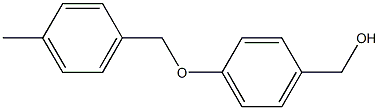
- 201058-08-4
- C15H16O2
- 228.28634
- All (0)
- China (0)
- (0)
- 28931-47-7
- C6H14N2O3
- 162.19
- All (0)
- China (0)
- (0)

- 11041-12-6
- C27H47N
- 385.66878
- All (0)
- China (0)
- (0)
Related Products More >

- 9002-86-2
- CNY Request For Quotation
- CNY Request For Quotation
- CNY Request For Quotation
- CNY Request For Quotation
- 465-42-11
- CNY Request For Quotation
- 465-42-10
- CNY Request For Quotation
- 465-42-9
- CNY Request For Quotation
- Request For Quotation


In dental restoration, dental resin serves several key purposes. It is commonly used for fillings, particularly in visible areas like front teeth, because it can be color-matched to natural teeth, providing a more aesthetically pleasing result. It is also utilized in the creation of veneers—thin shells that cover the front of teeth to improve their appearance—and as a bonding agent to secure crowns, bridges, or orthodontic brackets in place.
When compared to other dental materials, dental resin has moderate durability. It is less brittle than porcelain, reducing the risk of cracking under normal biting forces, but it is not as strong as amalgam (silver fillings) or metal alloys, which can withstand greater chewing pressure over extended periods. Resin may show signs of wear more quickly with long-term use, especially in back teeth that handle heavy biting, and it is more prone to staining from substances like coffee, tea, or tobacco.
Dental resin is generally considered biocompatible with oral tissues. Most formulations are designed to minimize irritation to gums, cheeks, and other soft tissues in the mouth. However, some individuals may experience mild allergic reactions to certain components, such as methacrylates, which can cause sensitivity or inflammation.
In dental restoration, resins are widely used for fillings, veneers, and bonding procedures. For fillings, composite resins offer a tooth-colored alternative to traditional amalgam, allowing for more conservative tooth preparation and better aesthetic outcomes. Veneers made from dental resin provide a less invasive option compared to porcelain veneers, requiring minimal tooth reduction and offering significant cosmetic improvements. Additionally, dental resins are used for core build-up in endodontically treated teeth and for orthodontic bracket bonding.
When comparing dental resins to other materials, their durability has improved significantly with advancements in formulation. Modern composite resins can withstand the forces of mastication, making them suitable for both anterior and posterior restorations. While amalgam has historically been favored for its durability in larger restorations, composite resins now offer comparable longevity, lasting up to eight years or more for small to moderate fillings. Compared to glass ionomer cements, composite resins exhibit greater strength and resistance to wear, making them a preferred choice for multisurface restorations.
Regarding biocompatibility, dental resins are designed to be safe for use in the oral environment. They form a strong bond with tooth structure, reducing the risk of microleakage and secondary caries. Unlike amalgam, which contains mercury, composite resins do not pose a risk of toxicity, making them a more biocompatible option. However, some individuals may experience sensitivity or allergic reactions to the monomers in the resin, although these occurrences are relatively rare.
Overall, dental resins represent a significant advancement in dental materials, offering a balance of aesthetics, durability, and biocompatibility that meets the needs of modern dental practice. Their versatility and improved mechanical properties make them a valuable tool for a wide range of restorative procedures.
In restorative dentistry, dental resin is primarily used for direct composite fillings, dental veneers, inlays, onlays, and as bonding agents. Composite resins have become the material of choice for anterior restorations due to their ability to match natural tooth color and translucency. The material's adaptability allows dentists to sculpt and polish it to precise anatomical forms. For posterior restorations, newer formulations with higher filler content and improved mechanical properties have expanded its use beyond traditional limitations. Dental resin also serves as an adhesive layer between tooth structure and various restorative materials, including ceramics and metals. Its chemical bonding capability helps create strong interfaces that resist microleakage and marginal breakdown.
When comparing durability, dental resin shows different performance characteristics compared to alternative materials. For anterior teeth, composite resins provide sufficient strength and excellent aesthetic integration with surrounding dentition. However, in posterior regions subjected to higher occlusal forces, resin composites generally exhibit greater wear rates than dental amalgam or ceramic restorations. Recent advancements in nanotechnology have led to the development of hybrid and bulk-fill composites that demonstrate improved fracture toughness and wear resistance. While these improvements have narrowed the performance gap, metal and ceramic restorations still surpass resin composites in long-term durability for high-stress applications.
Biocompatibility remains a critical consideration for dental materials. Most properly cured dental resins demonstrate good biocompatibility, though concerns exist regarding unreacted monomers that may leach out over time. Bis-GMA and UDMA have raised questions about potential hormonal activity, though clinical evidence suggests these risks remain minimal when materials are properly handled. The material's biocompatibility makes it suitable for various applications, including temporary crowns, periodontal splints, and orthodontic appliances that require prolonged contact with oral tissues. Proper curing techniques and material selection help minimize potential adverse reactions while maximizing the benefits of resin-based restorative dentistry.
It’s commonly used in dental work for fillings, especially where appearance matters, since it can match natural tooth color. It’s also used for veneers, as a bonding agent for crowns or bridges, and to fix chipped teeth. Its ability to stick to tooth surfaces makes it useful for these jobs.
When compared to other materials, it’s less durable than metal fillings or ceramics. It may wear down quicker, especially in areas used for heavy chewing, and can stain more easily. But it looks better and needs less healthy tooth removed during placement.
It’s generally safe for oral tissues. Most kinds are tested to avoid causing reactions, though a few people might be sensitive to components like methacrylates, which isn’t common.