


 Home
Home
Hi, I'd like to ask—should I sift color pigments like titanium dioxide before adding them to epoxy resin? How to calculate the right ratio of pigment to epoxy resin for desired color intensity? Can I mix liquid dye with powder pigment when adding to epoxy resin? What speed should the mixer be set to when blending pigment into epoxy resin? Will adding pigment affect the pot life of epoxy resin, and if so, how to adjust? Thanks!
What are the detailed steps to properly add color pigment to epoxy resin for even coloring?
Related Encyclopedia
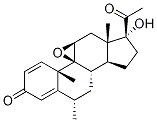
- 83873-16-9
- C22H28O4
- 356.46
- All (0)
- China (0)
- (0)

- 13463-67-7
- TiO2
- 79.8658
- All (639)
- China (108)
- (639)

- 1317-70-0
- O2Ti
- 79.87
- All (639)
- China (108)
- (639)
- 71135-14-3
- O2Ti
- 79.94670
- All (639)
- China (108)
- (639)
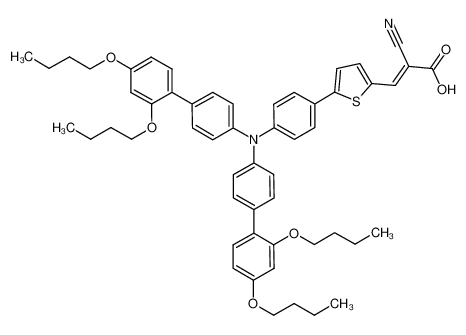
- 1197992-37-2
- C54H58N2O6S
- 863.11300
- All (0)
- China (0)
- (0)
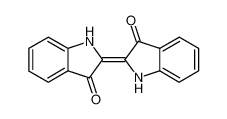
- 64784-13-0
- C16H10N2O2
- 262.26300
- All (0)
- China (0)
- (0)
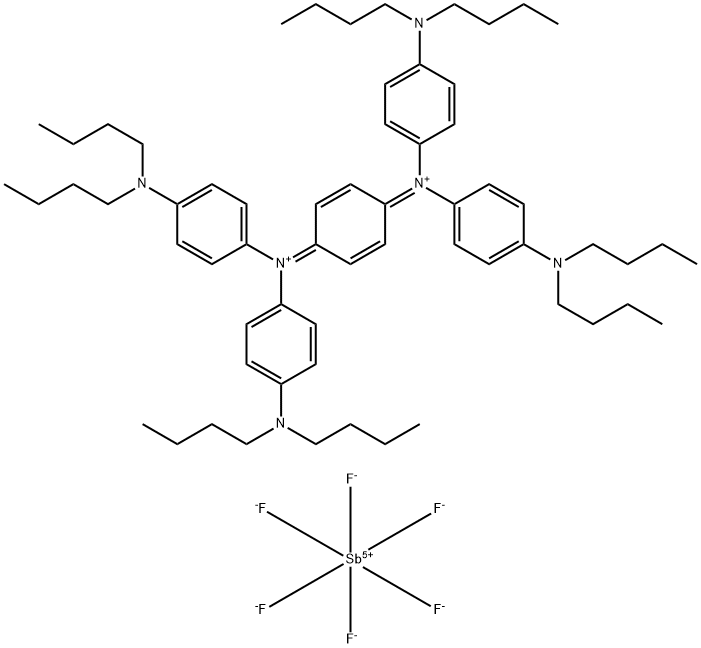
- 5496-71-9
- C62H92F6N6Sb+
- 1157.21
- All (0)
- China (0)
- (0)
- 88358-74-1
- C62H94Cl2N6O8
- 1122.35000
- All (0)
- China (0)
- (0)
- 354998-70-2
- C55H70N14O9S4
- 1199.49000
- All (0)
- China (0)
- (0)
![4-[2-[2-chloro-3-[2-(2-phenyl-2H-thiochromen-4-yl)ethenyl]cyclohex-2-en-1-ylidene]ethylidene]-2-phenylthiochromene](https://chemcloud-1304660855.cos.ap-shanghai.myqcloud.com/compound/c92fec358ab44678922e0ffdf9b96550.png?imageMogr2/format/webp)
- 76871-75-5
- C40H30Cl2O4S2
- 709.70000
- All (0)
- China (0)
- (0)
Related Products More >

- CNY Request For Quotation
- CNY Request For Quotation
- CNY Request For Quotation
- 68186-88-9
- CNY Request For Quotation
- 68186-88-9
- CNY Request For Quotation
- 68186-88-9
- CNY Request For Quotation
- 68186-88-9
- CNY Request For Quotation
- 68186-90-3
- CNY Request For Quotation


Determining the appropriate ratio of pigment to epoxy resin for achieving the desired color intensity involves a balance between achieving the intended aesthetic and maintaining the physical properties of the resin. For titanium dioxide, which imparts a white or pearlescent effect, a concentration range of 0.5% to 5% by weight is typically effective. This range allows for adjustments based on the opacity and vibrancy required. For liquid dyes, which offer more transparent coloration, a starting point of 1-2 drops per ounce of mixed resin is generally sufficient. It is important to conduct small-scale trials to fine-tune the pigment concentration, as excessive amounts can lead to issues such as reduced clarity or altered curing behavior.
Combining liquid dyes with powder pigments in epoxy resin is feasible but requires careful integration. Liquid dyes can provide a smooth, consistent base color, while powder pigments like mica or titanium dioxide can introduce additional visual effects, such as shimmer or opacity. To achieve the best results, it is recommended to first establish the desired color intensity using the liquid dye, then gradually incorporate the powder pigment.
When blending pigments into epoxy resin, the speed of the mixer plays a crucial role in achieving a uniform mixture without introducing air bubbles. A moderate mixing speed is optimal, as it ensures thorough dispersion of the pigment while minimizing the risk of entrapping air. Using a low-speed drill with a mixing paddle attachment or a manual stir stick can help maintain consistent agitation without overmixing. This technique is particularly important in industrial settings where large volumes of resin are being colored, as well as in educational laboratories where students are learning the principles of polymer chemistry and color science.
Determining the correct pigment-to-resin ratio requires some experimentation to achieve the desired color intensity. A good starting point is to use about 0.5% to 2% of the total resin weight in pigment. For example, with 100 grams of epoxy resin, you would begin by adding 0.5 to 2 grams of pigment. It's crucial to add the pigment gradually, mixing thoroughly between additions, to avoid over-saturating the resin which can negatively impact its curing properties. Some pigments, particularly titanium dioxide, are very concentrated and may require significantly less than other colorants. Keeping detailed notes about your mixing ratios will help replicate successful results in future projects.
Combining liquid dyes with powder pigments is possible but requires careful consideration. Liquid dyes already have a carrier medium that helps with dispersion, while powder pigments need proper mixing to avoid clumping. When using both, start with a small amount of liquid dye (typically 0.1% to 0.5% of the resin weight) and add powdered pigment gradually. The liquid dye can help wet the powder particles, making them easier to disperse evenly throughout the resin. Always test this combination on a small sample first, as some pigments and dyes may interact in unexpected ways that affect the final color or curing process.
The mixing speed plays a critical role in achieving proper pigment dispersion without introducing problems. For most epoxy resin applications, a mixing speed between 100 and 500 RPM is ideal. This range provides enough agitation to thoroughly mix the pigment without creating excessive air bubbles or generating too much heat through friction. High-speed mixing might seem faster, but it often leads to foaming that can be difficult to remove before the resin cures. Using a slow, consistent stirring motion while scraping the container's sides and bottom ensures complete color distribution without compromising the resin's quality.
Adding pigment does affect the pot life of epoxy resin, though the extent varies depending on the pigment type and quantity used. Generally, pigments absorb some of the exothermic heat generated during curing, which can slightly alter the reaction rate. This means the resin might cure marginally faster than when used unpigmented. To compensate, work with smaller batches when using highly pigmented mixtures, or consider switching to a slower-curing epoxy formulation.
Figuring out how much pigment to use depends on how intense you want the color. Start with 1 to 3 percent by weight for a soft look, and go up to 5 to 8 percent for brighter shades. Try small mixes first—like 1 gram of pigment in 100 grams of resin—to see what happens, then tweak from there. Opaque ones need more than transparent types.
Mixing liquid dye with powder pigment is okay, but take it slow. Add the liquid first, stir it in well, then put in the powder little by little. That way, the color spreads evenly instead of being patchy.
When using a mixer, keep the speed low—around 200 to 400 RPM. High speeds trap air bubbles, which are hard to get rid of. Use a flat paddle to scrape the sides and bottom, so no pigment gets left behind.