


 Home
Home
Hello, I’m wondering—how long does it usually take to replace an O2 sensor, and is it dangerous to delay it for a few days? Could a bad sensor make my car more toxic to ride in if I have asthma or allergies? Also, are there any signs I should look for to know it’s time to replace it?
How Long Does It Take to Change O2 Sensor, and Could Delay Affect My Health?
Related Encyclopedia
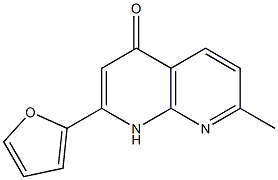
- 9008-02-0
- C13H10N2O2
- 226.2307
- All (1)
- China (0)
- (1)

- 201230-82-2
- CO
- 28.01010
- All (1)
- China (1)
- (1)

- 630-08-0
- CO
- 28.01
- All (1)
- China (1)
- (1)
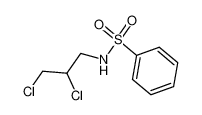
- 832-42-8
- C9H11Cl2NO2S
- 268.16014
- All (0)
- China (0)
- (0)
- 143385-86-8
- CArO
- 67.95810
- All (0)
- China (0)
- (0)

- 4906-87-0
- CH2O
- 32.02570
- All (0)
- China (0)
- (0)
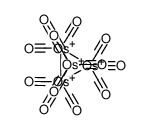
- 12375-04-1
- C12H8O12Os4
- 1101.07000
- All (0)
- China (0)
- (0)
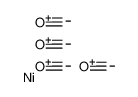
- 12612-55-4
- C4NiO4
- 170.73400
- All (0)
- China (0)
- (0)
- 35075-78-6
- CH3BO
- 42.04320
- All (0)
- China (0)
- (0)
- 158394-05-9
- CHNO4
- 91.02290
- All (0)
- China (0)
- (0)
Related Products More >

- 630-08-0
- Request For Quotation
- 1ton
- 9047-09-0
- Request For Quotation
- 9008-02-0
- Request For Quotation
- 1kg/bag;25kg/Cardboard Drum
- 9008-02-0
- Request For Quotation
- Bottle,barrel,cargo,container,etc.
- 9008-02-0
- Request For Quotation
- BAG or customized
- 670-96-2
- Request For Quotation
- 630-08-0
- Request For Quotation
- 26337-35-9
- Request For Quotation
- kg


While oxygen (O2) sensors are commonly associated with vehicles, let’s take a deeper look from a medical perspective. The term "O2 sensor" can also metaphorically relate to how our bodies detect and respond to oxygen levels—think chemoreceptors like those in the carotid body. But returning to the vehicle context (since that’s what the question refers to), the key concern is how long it takes to replace it and why that might matter to someone’s health.
If a faulty oxygen sensor causes a car engine to run inefficiently—burning too rich or too lean—it may increase tailpipe emissions of carbon monoxide (CO) or nitrogen oxides (NOx). For someone with asthma, COPD, or cardiovascular issues, prolonged exposure to these substances can worsen symptoms. High NOx emissions, for example, can lead to airway inflammation, while CO reduces the oxygen-carrying capacity of hemoglobin, stressing heart and brain function.
The process of changing an O2 sensor involves unscrewing the old sensor (often seized due to heat and corrosion) and installing a new one with anti-seize compound. It’s relatively straightforward but best done in a cool engine bay with the proper tools—most mechanics finish the job in under an hour. For patients who live in urban areas with heavy traffic, a car with a failing sensor could mean more exposure to unfiltered exhaust during idling or slow driving.
Health Recommendation:
If you have a chronic respiratory condition, it’s wise to avoid driving or riding in a car with a faulty O2 sensor. Recommend getting it fixed promptly to limit prolonged exposure to harmful gases. As an alternative, consider using a cabin air filter with activated carbon and keeping windows closed in traffic-heavy areas.
An O₂ sensor, or oxygen sensor, is a small electrochemical device that monitors the oxygen concentration in a vehicle’s exhaust gases. It plays a crucial role in maintaining the right air-fuel ratio (ideally 14.7:1), which is essential for efficient combustion and reduced emissions.
The heart of most O₂ sensors is a ceramic element made from zirconium dioxide (ZrO₂). This compound has a crystalline structure and behaves as a solid electrolyte when heated to high temperatures (~600°C). One side of the sensor is exposed to the exhaust stream, while the other is exposed to ambient air. The difference in oxygen partial pressure causes oxygen ions to migrate through the zirconia layer, generating a voltage. That voltage tells the car’s computer whether the engine is running “rich” or “lean.”
From a chemical bonding standpoint, ZrO₂ contains ionic bonds between the zirconium (a metal) and oxygen (a nonmetal). These ionic bonds give the material excellent thermal stability and high melting points, making it perfect for harsh exhaust environments. Oxygen itself (O₂) is a nonpolar covalent molecule, meaning the electrons are shared equally between the two atoms, resulting in a stable diatomic molecule.
Polarity plays a role here too — the ion movement inside the sensor depends on the charge difference across the membrane, which reflects the concept of electrochemical gradients.
So how long does it take to change one? Mechanically, about 10 to 30 minutes. But chemically, the design is decades in the making — a tiny lab of ionic reactions happening every time you start your engine.
Here’s the breakdown: The sensor itself is screwed into your exhaust system (upstream near the engine or downstream after the catalytic converter). If you’ve got basic tools (wrench, penetrating oil like WD-40) and a YouTube tutorial for your car model, you can swap it yourself in 30–60 minutes. But if the sensor is rusted or stuck (common in older cars), or you’re not comfy under the hood, a mechanic might take 1–1.5 hours (including a test drive).
Real-world analogy: It’s like changing a lightbulb—easy if the bulb isn’t stuck, but a pain if the socket is rusty. Pro tip: Spray the sensor with penetrating oil 1 hour before starting to loosen corrosion.
Simple advice: If you’re DIY-ing, label the old sensor’s location (upstream/downstream) and buy an OEM or high-quality aftermarket sensor (cheap ones fail faster). For mechanics, ask for a “sensor replacement” quote upfront—some shops charge
100–
300 total (parts + labor), depending on your car.
P.S. Fun fact: O2 sensors were first used in cars in the 1980s to cut emissions—now they’re as essential as seatbelts! ??
What affects the time? Location is key: Some sensors are easy to reach (under the car, near the exhaust manifold), while others hide behind pipes or heat shields, adding extra work. Rust is another factor—if the old sensor is stuck from years of heat and moisture, a mechanic might need time to loosen it without damaging the exhaust. DIY vs. pro: A mechanic with tools and experience can often do it in 30–60 minutes, while a first-timer might take 1–2 hours (and risk mistakes).
Who should consider what? Busy families might prefer a pro—dropping the car off in the morning could mean picking it up by lunch. If you’re handy and have a jack, wrenches, and anti-seize spray (to help the new sensor go in smoothly), DIY is doable, but set aside a free afternoon to avoid rushing.
Common myths? Myth 1: “It’s a 10-minute job.” Even easy access sensors need care—rushing can strip threads or damage the exhaust, leading to costly fixes. Myth 2: “All cars have one sensor.” Many have 2–4 (one before/after the catalytic converter), so replacing multiple adds time.
Family-friendly tips:
Ask the mechanic for a time estimate upfront—this helps plan rides for kids or errands.
If DIY, watch a tutorial first (many car brands have step-by-step videos) and gather tools the night before.
Schedule the fix on a low-key day. Avoid rushing before school or work—stress-free installation means fewer mistakes.
After replacement, reset the check engine light (most mechanics do this, or you can buy a $20 scanner to do it at home) to confirm the issue is fixed.
Changing an O₂ sensor isn’t a huge task, but a little planning keeps it from disrupting your family’s routine. Whether you DIY or hire a pro, getting it done promptly keeps your car running smoothly—so you can focus on what matters most.