


 Home
Home
Hello, I was wondering—what is a fiber optic cable made of exactly, especially the materials used in medical devices?
Are any of the components toxic or reactive in the body?
Can they break down over time or trigger allergies?
Are there safer alternatives for internal use?
What Is a Fiber Optic Cable Made Of and Is It Safe for Medical Use?
Related Encyclopedia

- 14464-46-1
- O2Si
- 60.08
- All (28)
- China (22)
- (28)
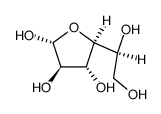
- 41846-91-7
- 0.00000
- All (28)
- China (22)
- (28)

- 7631-86-9
- O2Si
- 60.08
- All (126)
- China (40)
- (126)
- 83957-02-2
- O2Si
- 64.08380
- All (126)
- China (40)
- (126)
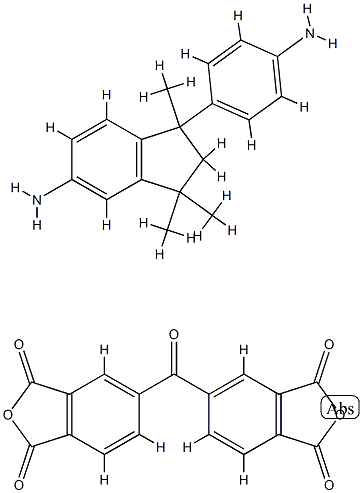
- 62929-02-6
- C35H28N2O7
- 588.60602
- All (2)
- China (2)
- (2)
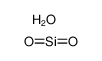
- 23382-09-4
- H2O3Si
- 78.09960
- All (1)
- China (0)
- (1)
- 444994-08-5
- ClO2Si
- 95.53730
- All (0)
- China (0)
- (0)

- 112945-52-5
- O2Si
- 60.08
- All (1)
- China (1)
- (1)
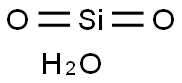
- 10279-57-9
- H2O3Si
- 78.1
- All (15)
- China (0)
- (15)

- 60676-86-0
- O2Si
- 60.0843
- All (15)
- China (0)
- (15)
Related Products More >

- 14643-87-9 Zinc acrylate
- CNY Request For Quotation
- 818-61-1
- CNY Request For Quotation
- 818-61-1
- CNY Request For Quotation
- 112945-52-5
- Request For Quotation
- 112945-52-5
- Request For Quotation
- 112945-52-5
- Request For Quotation
- 112945-52-5
- Request For Quotation
- 112945-52-5
- Request For Quotation


Understanding its composition can offer insights into potential interactions with the human body, especially in medical imaging and surgical tools.
These cables are built from ultra-thin strands of silica (SiO₂), a compound of silicon and oxygen.
Silica is biologically inert, which makes it relatively safe for medical uses, such as in endoscopy.
The core material—either pure silica or doped glass—is chosen for its high transparency and low chemical reactivity.
That means it doesn’t dissolve easily, doesn’t leach harmful ions, and is stable under a wide range of temperatures and pH levels.
Surrounding this core is a cladding layer, often made from a slightly different form of glass or a fluoropolymer, which keeps the light signal confined.
The outer coating is typically a polymer like acrylate or polyimide, which adds flexibility and protects the fiber from mechanical damage.
From a biomedical standpoint, fiber optic cables used inside the body must meet strict biocompatibility standards.
If improperly sterilized, their polymer coating may degrade and release micro-particles or toxic residues.
This could cause inflammation or allergic responses, particularly in sensitive tissues.
In extremely rare cases, fiber shedding or fragmentation during procedures might pose risks if not retrieved completely.
To minimize these risks, clinicians should always use fiber optic tools certified for medical-grade use and follow validated sterilization protocols—such as low-temperature gas plasma sterilization, which prevents polymer breakdown.
Alternatives like single-use fiber devices are increasingly common, helping avoid contamination and maintenance issues.
Here’s the breakdown:
Core: The center is a glass (silica) or plastic fiber (thinner than a human hair!) where light travels. Glass is used for long-distance, high-speed data (like internet backbones), while plastic is cheaper and used for shorter runs (like home networks).
Cladding: A reflective layer around the core that bounces light back inward, keeping it from leaking out (like a mirror-lined hallway).
Buffer coating: A plastic layer that protects the core/cladding from moisture and bending damage.
Armor: Outer layers like kevlar (for strength) and plastic jackets (for weatherproofing), especially for underground/outdoor cables.
Real-world example: Imagine a fiber optic cable is like a glow-in-the-dark garden hose. The core is the hose itself (light travels through it), the cladding is the reflective tape inside that keeps water (light) from escaping, and the armor is the tough outer layer that stops your dog from chewing it! ??
Pro tip: Never bend fiber optic cables too sharply (radius < 10x the cable’s diameter)—it can crack the glass core, killing your internet like a broken water pipe! If you’re installing them at home, use cable clips or conduits to keep them safe and straight.
P.S. Fun fact: Some fiber optic cables glow faintly blue/purple when bent (due to light escaping)—it’s like a tiny lightsaber in your walls! ?✨
1. Core Material: Glass (Silica) vs. Plastic
The core (where light travels) is usually made of silica (SiO₂), a.k.a. glass. Why? Because silica has:
Strong covalent bonds: Each silicon atom is bonded to four oxygen atoms in a tetrahedral structure (like a tiny pyramid). This creates a 3D network that’s super rigid and transparent—perfect for light to zip through without scattering.
Low optical loss: Silica’s non-polar covalent bonds (electrons are shared equally) don’t absorb visible/near-infrared light (the wavelengths used in fiber optics). Think of it like a clear highway for photons—no potholes (impurities) to slow them down!
Plastic cores (like polymethyl methacrylate, PMMA) are cheaper but have higher light loss because their carbon-based bonds (C-H, C=O) absorb some wavelengths. Still, they’re great for short-range uses (like home networks).
2. Cladding: The “Mirror” Layer
The cladding (outer layer) is also silica but doped with impurities (like germanium or boron) to lower its refractive index. This creates a total internal reflection effect—like a mirror-lined tunnel that bounces light back into the core.
Chemical stability: Silica’s covalent network is inert (doesn’t react with water or oxygen), so it won’t degrade underground or in harsh environments.
Thermal stability: It can handle -40°C to 85°C without melting or cracking—key for outdoor cables!
3. Industrial Production: High-Purity Chemistry
Making fiber optics requires ultra-pure silica (99.9999% pure!). Here’s how it’s done:
Vapor deposition: Chemicals like silicon tetrachloride (SiCl₄) are burned in oxygen to create soot (SiO₂ particles).
Melting: The soot is melted into a solid rod (the preform), then drawn into a 125-micron-wide fiber (thinner than a hair!).
Real-World Connection
Fiber optics are used in internet cables, endoscopes, and even holiday lights! Their low signal loss means data can travel 100+ km without needing a repeater—unlike copper wires, which fade after a few hundred meters.
At its core, the magic happens in tiny strands—thinner than a human hair—made of glass or sometimes plastic. These are called “optical fibers,” and they’re the part that carries light signals (which is why fiber internet is so fast). Glass is more common for long distances (like between cities) because it sends light farther without losing strength. Plastic strands are used for shorter runs, like inside your home, since they’re more flexible.
Around those tiny fibers is a layer of plastic called “cladding.” It’s like a mirror coating that keeps the light bouncing inside the core instead of leaking out—super important for keeping signals strong. Then there’s a tough outer jacket, usually made of PVC or a fire-resistant material, to protect everything from moisture, bumps, or chewing pets.
What affects the materials? Where it’s used. Outdoor cables need sturdier jackets to handle rain, sun, and cold. Indoor ones (like the ones connecting your router) can be lighter and more flexible.
Common myths? “They’re just glass tubes—easy to break.” Nope! The outer jacket makes them surprisingly tough. You can bend them gently without damaging the core. Another myth: “They’re all the same.” Glass vs. plastic matters—glass is faster for long distances, but plastic is better for home use where flexibility counts.
Family-friendly tips:
Keep fiber cables away from sharp objects (scissors, pet teeth) to avoid nicking the jacket.
If you need to move a cable, bend it gently—no tight kinks, which can block the light signal.
Show kids the cable (if it’s visible) and explain it’s like a “light pipe” for the internet—makes tech less scary!
If a cable looks damaged (chewed, cracked), call your provider—don’t try to fix it yourself.
Fiber optic cables are pretty clever—simple materials working together to keep your family connected. Treat them gently, and they’ll keep delivering fast internet for years. Easy, right?