


 Home
Home
Hello, I’m wondering—what exactly is a fiber ONT and does it have any health impact?
Could it affect sleep, vision, or brain function in the long term?
Also, are there any health precautions I should take when using devices connected through fiber ONT?
What is a fiber ONT and could it affect my health or daily habits?
Related Encyclopedia
- 8041-44-9
- C13H16N2O2
- 232.27834
- All (70)
- China (50)
- (70)
- 1123858-21-8
- C13H13N2O2T3
- 238.30300
- All (0)
- China (0)
- (0)
- 471256-70-9
- C13H16N2O3
- 248.27800
- All (0)
- China (0)
- (0)
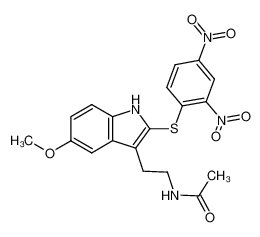
- 28772-49-8
- C19H18N4O6S
- 430.43400
- All (0)
- China (0)
- (0)
- 256345-45-6
- C19H30N2O2Si
- 346.53900
- All (0)
- China (0)
- (0)
- 650608-03-0
- C27H34N2O11
- 562.56600
- All (0)
- China (0)
- (0)
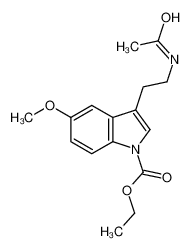
- 519186-54-0
- C16H20N2O4
- 304.34100
- All (0)
- China (0)
- (0)
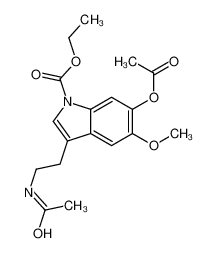
- 519186-55-1
- C18H22N2O6
- 362.38000
- All (0)
- China (0)
- (0)
Related Products More >

- 73-31-4
- CNY 130.0000
- 25kg
- 73-31-4
- 1.0000
- GlassBottlekg
- 93515-00-5
- Request For Quotation
- 8041-44-9
- Request For Quotation
- drums
- 8041-44-9
- Request For Quotation
- 8041-44-9
- Request For Quotation
- 1kg/bag,25kg/drum,25kg/bag
- 8041-44-9
- Request For Quotation
- 8041-44-9
- Request For Quotation
- 25KG BAGS


From a clinical standpoint, patients sometimes misread “fiber ONT” as something related to fiber supplementation, fiber-based imaging, or even optical nerve treatment, due to the terms “fiber” and “optic.” In reality, a Fiber ONT (Optical Network Terminal) is a hardware device used in fiber-optic internet connections, typically installed in homes to convert fiber signals into usable internet or TV signals.
That said, excessive screen time due to high-speed fiber-optic connections—especially among younger patients or elderly individuals with limited mobility—can contribute to digital eye strain, poor sleep quality, and reduced physical activity. These aren’t caused by the ONT itself, but by behavior changes that may arise from prolonged device usage enabled by fast internet.
From a preventive health standpoint, it’s important to educate patients on moderating screen use, ensuring ergonomic device placement, and taking regular breaks from digital screens. These habits can help reduce headaches, dry eyes, and posture-related issues that are indirectly associated with technology use.
For those with vision issues or sleep disturbances linked to digital use, blue light filters, scheduled device curfews, or even screen-free evenings can serve as simple but effective interventions.
Here’s how it works:
Fiber-optic cables bring light-speed data to your house, but your phone, laptop, and TV speak "electrical signals," not light. The ONT acts like a bilingual diplomat:
It receives light pulses from the fiber cable.
It converts them into Ethernet/Wi-Fi signals your gadgets understand.
It’s usually installed by your ISP (Internet Service Provider) near your router, often looking like a small, white/gray box with cables plugged in.
Real-world example: Think of the ONT as a coffee machine in a café. The fiber cable is like a coffee bean delivery truck (raw, high-speed "data beans"). The ONT grinds the beans (converts light to electrical signals) and brews them into your daily latte (Wi-Fi/Ethernet). Without it, you’d just have a pile of beans—no internet coffee! ☕?
Pro tip: If your internet drops, reboot the ONT first (unplug it for 30 seconds, then plug it back in). It’s often the simplest fix! Also, keep it in a cool, dust-free spot—overheating can slow down your speeds.
P.S. Fun fact: Some ONTs have a tiny green/red light to show if they’re working. If it’s red, call your ISP—it’s like the "check engine" light for your internet! ??
A fiber ONT uses fiber optic cables, which are mostly made from silicon dioxide (SiO₂), the same basic material as glass. But it’s not just any glass. These fibers are drawn into extremely thin strands, often thinner than a human hair, and the purity of the silicon dioxide is really important. Impurities would mess with the light transmission, so chemical structure really matters here.
Let’s talk bonding. SiO₂ in fiber optics forms a network of strong covalent bonds between silicon and oxygen atoms, giving it a highly stable lattice structure. That stability is crucial—not just for mechanical strength, but to keep it from degrading under temperature changes or light exposure. The bonds are nonpolar in terms of electronegativity difference, but due to the network structure, the material is overall quite non-conductive and non-polar, which is actually helpful when you're transmitting light signals without interference.
Now, this is all wrapped in layers. The core, where the light travels, is made of ultra-pure glass, but it’s surrounded by a cladding layer, often doped with materials like boron or germanium oxides, to create a slightly lower refractive index. This difference lets light bounce along the core without escaping—a principle called total internal reflection. None of this works if the chemical structure isn’t right.
In terms of application, fiber ONTs are used in homes for high-speed internet. Chemically, the material must resist heat, UV light, and minor mechanical stress, so polymer coatings are often applied—another layer of chemical design. If you're curious, lab experiments involving glass drawing or refractive index changes can simulate parts of this process in class.
ONT stands for Optical Network Terminal. It’s a small box (usually about the size of a thick book) that connects your home to the fiber optic cable coming from the street. It takes the light signals from the fiber cable and turns them into the electrical signals your devices (phones, laptops, TVs) can use. You’ll probably find it mounted on a wall near your router, with a few ports on the back—one for the fiber cable, and others to plug in your router or landline.
What affects how it works? Placement matters. Keep it away from heat (like radiators) or water (don’t mount it near sinks)—extremes can mess with its signal. Also, the fiber cable plugged into it is delicate—bending it too tight can slow your internet.
Common myths? “It’s the same as a router.” Nope—your router spreads Wi-Fi around the house; the ONT is the gatekeeper that lets fiber signals into your home. Another myth: “You can move it anywhere.” Better to leave it where the provider installed it—moving the fiber cable without help can break it.
Family-friendly tips:
Show kids where it is, but tell them not to touch the cables—no yanking or unplugging! It’s like the internet’s “heart” box.
If your Wi-Fi acts up, check if the ONT’s lights are on (most have a green “power” light). If not, unplug it for 10 seconds, then plug back in—that often fixes small glitches.
Keep the area around it clear—no piles of toys or clothes blocking airflow. It needs a little breathing room to work well.
A fiber ONT might sound fancy, but it’s just a hardworking little box. Treat it gently, leave it be, and it’ll keep your family’s internet running smoothly. No need to overthink it—just know it’s there to make your fiber internet work!