


 Home
Home
Hello, may I ask what is the chemical formula of hydrochloric acid, how it functions in the body, and what might happen if it is too high or too low? Are there safe ways to regulate it, and when should someone consider medical evaluation for acid-related symptoms?
What Is the Chemical Formula of Hydrochloric Acid and How Does It Affect the Human Body?
Related Encyclopedia
- 9001-75-6
- n.a.
- 0
- All (9)
- China (0)
- (9)
- 15605-36-4
- ClH2OTi
- 101.33500
- All (0)
- China (0)
- (0)
- 13760-18-4
- ClH
- 37.97380
- All (1)
- China (1)
- (1)
- 13779-43-6
- ClH
- 35.97680
- All (1)
- China (1)
- (1)
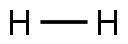
- 1333-74-0
- H2
- 2.02
- All (5)
- China (5)
- (5)
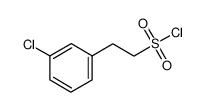
- 728919-59-3
- C8H8Cl2O2S
- 239.12000
- All (0)
- China (0)
- (0)
- 13862-15-2
- ClHHe
- 40.46350
- All (0)
- China (0)
- (0)
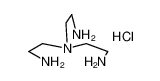
- 44905-58-0
- C6H19ClN4
- 182.69500
- All (0)
- China (0)
- (0)
- 878792-58-6
- C13H21Cl2N2O2
- 309.23200
- All (0)
- China (0)
- (0)
- 14158-33-9
- ClH
- 38.97600
- All (0)
- China (0)
- (0)
Related Products More >

- CNY Request For Quotation
- 9002-86-2
- CNY Request For Quotation
- 7447-40-9
- CNY Request For Quotation
- 7447-40-8
- CNY Request For Quotation
- 7447-40-7
- CNY Request For Quotation
- 7757-93-11
- CNY Request For Quotation
- 7757-93-10
- CNY Request For Quotation
- 7757-93-9
- CNY Request For Quotation


In the human body, hydrochloric acid is naturally secreted by parietal cells in the stomach lining. Once released, it dissociates into hydrogen ions (H⁺) and chloride ions (Cl⁻), creating a highly acidic environment with a pH around 1.5 to 3.5. This acidic condition is crucial for activating pepsinogen into pepsin, an enzyme necessary for protein digestion. It also acts as a first-line defense by neutralizing ingested pathogens.
Although HCl is essential for digestion, excess production—such as in gastric reflux disease (GERD) or peptic ulcers—can lead to mucosal erosion, esophageal irritation, and increased risk of infections like Helicobacter pylori. Conversely, hypochlorhydria (low stomach acid) may impair digestion and nutrient absorption, especially for B12, iron, and calcium.
Patients with acid-related disorders may benefit from proton pump inhibitors (PPIs) or H2 blockers, which reduce acid production. For those with low stomach acid, betaine HCl supplements might be recommended under medical supervision. Lifestyle modifications, such as avoiding trigger foods, eating smaller meals, and elevating the head while sleeping, can also support symptom control.
Hydrochloric acid forms when hydrogen chloride gas (HCl) dissolves in water. Industrially, this is done in controlled labs using specialized equipment to handle toxic fumes. At home, attempting this would require mixing strong chemicals (like sulfuric acid and salt) under high heat—reactions that release corrosive gas, burn skin, or even explode if not controlled.
Why home production is risky: Even small amounts of hydrogen chloride gas irritate lungs, eyes, and skin. Kids, pets, or anyone with asthma are especially vulnerable. The acid itself, once formed, eats through clothing, metal, and surfaces, making spills hazardous to clean up.
Common myths? Myth 1: “It’s easy with household items.” Mixing vinegar (a weak acid) and salt doesn’t make hydrochloric acid—it creates only trace amounts, not usable or safe concentrations. Myth 2: “Diluting it makes it harmless.” Even weak HCl can burn skin with prolonged contact and damage pipes if poured down drains.
When would you need it? You almost certainly don’t. Household cleaners with small amounts of HCl (like toilet bowl cleaners) are already diluted and regulated for safety. There’s no home task that requires making your own—store-bought versions, while still needing caution, are far safer than DIY attempts.
Family-friendly tips:
Never try to make it. If a project claims to need hydrochloric acid, find a safer alternative (e.g., baking soda for cleaning, citric acid for descaling).
Use store-bought HCl cleaners sparingly, following labels strictly: wear gloves, work in well-ventilated areas, and keep kids/pets away.
Store any HCl products in their original containers, locked in a high cabinet—out of reach of curious hands.
Hydrochloric acid is best left to professionals. For home use, stick to pre-made, regulated products (if necessary) and prioritize safety over DIY experiments.
Here’s the breakdown: HCl is a diatomic molecule (only two atoms) where hydrogen (the smallest, most reactive element) bonds with chlorine (a toxic green gas on its own). When dissolved in water, it splits into H⁺ (proton) and Cl⁻ (chloride ion), creating the super-acidic solution your stomach uses to digest food.
Real-life example: Think of HCl like a “chemical duo”—like salt (NaCl) but way more intense. Salt is just sodium and chlorine, but HCl is their aggressive cousin. If you tossed pure chlorine gas and hydrogen gas into a room, they’d explode to form HCl gas… which then dissolves in water to make the acidic liquid you’d find in pool cleaners or stomach acid!
Pro tip: If you’re handling diluted HCl (like muriatic acid for cleaning), always wear gloves and goggles—it can burn skin and eyes. And never mix it with bleach or ammonia—that creates toxic chlorine gas (the same stuff used in WWI!). Store it away from kids and pets, and if you spill it, neutralize it with baking soda before cleanup.
Bonus hack: Your stomach’s HCl is so strong it could dissolve a razor blade… but don’t test that! Instead, appreciate how this tiny molecule (HCl) keeps your digestion running smoothly—and handle it with care outside the body. Science is cool, but safety’s cooler! ??⚠️
At room temperature, hydrogen chloride (HCl) exists as a colorless gas. When it is dissolved in water, it becomes hydrochloric acid—a strong and widely used acid. This process involves an ionization reaction:
HCl (gas) + H2O (liquid) → H3O+ (aqueous) + Cl− (aqueous)
In this reaction, HCl donates a proton (H+) to a water molecule, forming a hydronium ion (H3O+) and a chloride ion (Cl−). This is a classic acid-base reaction based on the Brønsted-Lowry acid theory.
From a bonding perspective, the H–Cl bond is a polar covalent bond. Chlorine is significantly more electronegative than hydrogen, meaning it pulls the shared electrons closer to itself. This creates a partial negative charge (δ−) on chlorine and a partial positive charge (δ+) on hydrogen, making the molecule polar overall.
Although hydrogen chloride gas is relatively stable, once it dissolves in water, it becomes highly reactive. Hydrochloric acid is known as a strong acid because it fully dissociates into ions in water, meaning virtually every HCl molecule separates into H+ and Cl− ions.
In the lab, hydrochloric acid is used for titration, metal cleaning, and pH adjustment. Industrially, it plays a role in food processing, leather treatment, and the production of chemicals like vinyl chloride for making PVC plastics. Even at home, you can find diluted hydrochloric acid in some household cleaners.