


 Home
Home
Hello, I want to ask about hydrochloric acid and bleach. What are their chemical differences? Are they interchangeable? What health risks do they pose, especially if mixed? How can one safely handle and neutralize these substances?
What are the differences and risks associated with hydrochloric acid and is hydrochloric acid bleach?
Related Encyclopedia
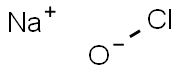
- 7681-52-9
- ClNaO
- 74.44
- All (22)
- China (20)
- (22)
- 64131-03-9
- ClH14NaO8
- 200.54900
- All (0)
- China (0)
- (0)
- 10022-70-5
- NaClO.5H2O
- 165.53
- All (0)
- China (0)
- (0)

- 7647-01-0
- ClH
- 36.46
- All (25)
- China (20)
- (25)

- 101752-05-0
- CH5ClO
- 68.50280
- All (0)
- China (0)
- (0)

- 12015-40-6
- Cl2H2
- 71.91390
- All (0)
- China (0)
- (0)
- 19400-49-8
- ClH8O3
- 90.50680
- All (0)
- China (0)
- (0)
- 42348-42-5
- ClH2+
- 38.98180
- All (0)
- China (0)
- (0)
- 64990-51-8
- C4H9ClO2
- 124.56600
- All (0)
- China (0)
- (0)
- 160208-71-9
- CH3Cl3
- 121.39400
- All (0)
- China (0)
- (0)
Related Products More >

- 7681-52-9
- CNY 450.0000
- 1ton
- 7647-01-0
- CNY 2000.0000
- 1ton
- 7681-52-9
- CNY 650.0000
- 1ton
- 7647-01-0
- Request For Quotation
- 1ton
- 7647-01-0
- Request For Quotation
- 25kg
- 7647-01-0
- Request For Quotation
- 1kg
- 7647-01-0
- Request For Quotation
- 25kg
- 7647-01-0
- Request For Quotation
- 1ton


Hydrochloric acid is not bleach; they are chemically distinct substances with very different properties and health effects. Hydrochloric acid (HCl) is a strong acid primarily used for cleaning and pH adjustment, while bleach typically contains sodium hypochlorite (NaClO), a powerful oxidizing agent used for disinfecting and whitening.
From a physiological perspective, exposure to hydrochloric acid can cause severe chemical burns, respiratory irritation, and eye damage due to its corrosive nature. It disrupts tissue proteins by denaturation and causes inflammation, pain, and potentially serious injury. In contrast, bleach’s active component, sodium hypochlorite, kills microbes through oxidative damage but can also irritate skin and mucous membranes. Mixing hydrochloric acid and bleach is highly dangerous, as it releases toxic chlorine gas, posing severe respiratory and systemic risks.
Clinically, accidental exposure to hydrochloric acid requires immediate decontamination, including thorough rinsing with water and seeking medical attention. Patients should avoid inhaling fumes or direct contact and use protective gear when handling. Alternatives for household cleaning include diluted vinegar or commercially available non-acidic disinfectants, which are safer and effective without the corrosive risks of hydrochloric acid.
Chemically, hydrochloric acid consists of a diatomic molecule with a single polar covalent bond. The polarity arises because chlorine is more electronegative than hydrogen, creating a partial negative charge on chlorine and a partial positive charge on hydrogen. This polarity leads to its high solubility in water and complete ionization. Bleach, sodium hypochlorite, contains ionic bonds between sodium (Na⁺) and hypochlorite ions (ClO⁻). The hypochlorite ion has a chlorine atom covalently bonded to an oxygen atom with polarity that allows it to oxidize organic molecules, breaking chemical bonds responsible for color and microbial life.
From a stability perspective, hydrochloric acid is stable under normal conditions but reacts vigorously with bases and metals. Sodium hypochlorite is less stable, decomposing over time especially when exposed to light or heat, releasing chlorine gas. This difference makes them suitable for different industrial and household applications: hydrochloric acid is often used for pH control and metal cleaning, while bleach is used for disinfecting, stain removal, and water treatment.
An important chemical safety note: mixing hydrochloric acid and bleach leads to a dangerous reaction producing toxic chlorine gas (Cl₂), which can cause respiratory harm.
Hydrochloric acid forms when hydrogen chloride gas (HCl) dissolves in water. Industrially, this is done in controlled labs using specialized equipment to handle toxic fumes. At home, attempting this would require mixing strong chemicals (like sulfuric acid and salt) under high heat—reactions that release corrosive gas, burn skin, or even explode if not controlled.
Why home production is risky: Even small amounts of hydrogen chloride gas irritate lungs, eyes, and skin. Kids, pets, or anyone with asthma are especially vulnerable. The acid itself, once formed, eats through clothing, metal, and surfaces, making spills hazardous to clean up.
Common myths? Myth 1: “It’s easy with household items.” Mixing vinegar (a weak acid) and salt doesn’t make hydrochloric acid—it creates only trace amounts, not usable or safe concentrations. Myth 2: “Diluting it makes it harmless.” Even weak HCl can burn skin with prolonged contact and damage pipes if poured down drains.
When would you need it? You almost certainly don’t. Household cleaners with small amounts of HCl (like toilet bowl cleaners) are already diluted and regulated for safety. There’s no home task that requires making your own—store-bought versions, while still needing caution, are far safer than DIY attempts.
Family-friendly tips:
Never try to make it. If a project claims to need hydrochloric acid, find a safer alternative (e.g., baking soda for cleaning, citric acid for descaling).
Use store-bought HCl cleaners sparingly, following labels strictly: wear gloves, work in well-ventilated areas, and keep kids/pets away.
Store any HCl products in their original containers, locked in a high cabinet—out of reach of curious hands.
Hydrochloric acid is best left to professionals. For home use, stick to pre-made, regulated products (if necessary) and prioritize safety over DIY experiments.
Here’s the drama: HCl wants to donate protons (H⁺), while bleach wants to steal electrons (oxidize stuff). When they meet, they react violently, releasing toxic chlorine gas (Cl₂)—the same stuff used in chemical warfare. It’s like throwing a match into a pool of gasoline… but with fumes that’ll choke you!
Real-life example: Imagine cleaning your bathroom with HCl (not recommended!) and then accidentally spraying bleach on the same spot. Within seconds, you’d be coughing, gasping, and running for fresh air as yellow-green chlorine gas fills the room. This combo is a classic “don’t try this at home” chemistry fail!
Pro tip: Never mix HCl with bleach, ammonia, or any cleaning product unless you’re 100% sure it’s safe (spoiler: it almost never is). Stick to one cleaner at a time, and if you’re unsure, check the label or ask a chemist. For stubborn stains, use baking soda + vinegar (weak but safe) instead of playing mad scientist!
Bonus hack: If you smell chlorine gas (sharp, bleach-like odor) after mixing cleaners, leave the area immediately, open windows, and call poison control. Your lungs will thank you! ???