


 Home
Home
Hello, I would like to ask about the chemical formula of phosphoric acid, how it functions in the body, and what health risks it may pose. Also, what precautions should be taken when handling it?
What Is Phosphoric Acid Formula and Its Role in Human Health?
Related Encyclopedia
- 141249-01-6
- H4P6
- 189.87400
- All (2)
- China (2)
- (2)
- 145491-55-0
- P8
- 247.79000
- All (2)
- China (2)
- (2)
- 141248-98-8
- P6
- 185.84300
- All (2)
- China (2)
- (2)
- 141249-00-5
- P6
- 185.84300
- All (2)
- China (2)
- (2)

- 78998-14-8
- P8
- 247.79000
- All (2)
- China (2)
- (2)

- 7723-14-0
- P
- 30.97
- All (2)
- China (2)
- (2)
- 145491-56-1
- P8
- 247.79000
- All (2)
- China (2)
- (2)
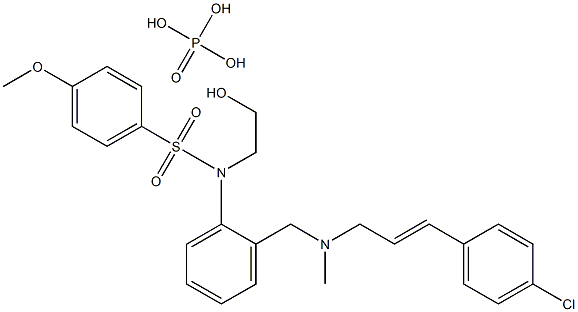
- 1188890-41-6
- C26H32ClN2O8PS
- 599.032641
- All (0)
- China (0)
- (0)
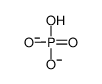
- 14066-19-4
- HO4P
- 95.97930
- All (1)
- China (0)
- (1)

- 7782-44-7
- O2
- 32
- All (1)
- China (1)
- (1)
Related Products More >

- 10124-56-8
- CNY Request For Quotation
- 7664-38-2
- CNY Request For Quotation
- 7722-88-7
- CNY Request For Quotation
- 7722-88-6
- CNY Request For Quotation
- 7722-88-5
- CNY Request For Quotation
- 7758-16-11
- CNY Request For Quotation
- 7758-16-10
- CNY Request For Quotation
- 7758-16-9
- CNY Request For Quotation


Phosphoric acid plays an important physiological role, especially in energy metabolism and bone health. It is a component of phosphate buffers in the blood that help maintain acid-base balance and is involved in the formation of ATP, the energy currency of cells. However, excessive exposure or ingestion of concentrated phosphoric acid can cause irritation or damage to mucous membranes and the gastrointestinal tract, leading to symptoms like abdominal pain or ulcers. Long-term high intake, such as from certain soft drinks containing phosphoric acid, may impact bone density by altering calcium metabolism.
Clinically, phosphoric acid’s acidic nature can affect patients with gastrointestinal sensitivity or kidney issues. Managing exposure involves limiting intake of highly acidic foods or beverages and using antacids or buffering agents if needed. In case of accidental ingestion of concentrated phosphoric acid, immediate medical attention is required to prevent tissue damage.
Understanding the chemical formula helps clarify its structure: three acidic hydrogen ions capable of dissociation contribute to its acidic properties, while the phosphate group provides stability and biological functionality.
Here’s the science: Unlike hydrochloric acid (HCl), which fully splits into ions, phosphoric acid is a weak but triprotic acid—meaning it can donate up to three H⁺ ions, but does so step-by-step (not all at once). Think of it like a three-stage rocket: first stage (H⁺) launches easily, but the next two need more push (like stronger bases or heat).
Real-life example: Ever wonder why cola tastes tangy? Phosphoric acid is the secret sauce! It gives soda its sharp flavor and acts as a preservative. But too much can mess with your teeth’s enamel (like a tiny acid rain party in your mouth!).
Pro tip: If you’re using phosphoric acid for DIY projects (like cleaning rust or adjusting pool pH), always dilute it with water first (check the label for ratios). Wear gloves and goggles—even weak acids can burn skin over time. And skip the cola binge—your teeth (and stomach) will thank you!
Bonus fact: Your bones actually store phosphorus (from phosphoric acid in food) to keep them strong. But balance is key—too much processed food (and phosphoric acid) can leach calcium from bones. Science: always a double-edged sword! ???
Let’s simplify: Think of a strong acid like a sugar cube that dissolves completely in water, leaving no solid bits. HCl does the same with its H⁺ ions—they spread out fully, making the solution highly reactive. This is different from weak acids (like vinegar), which only release a few H⁺ ions and stay mostly intact.
Factors that affect its strength: Concentration matters. Even a diluted HCl (like in toilet cleaners) is still a strong acid because it’s fully dissociated—it just has fewer H⁺ ions per drop. Industrial versions (30%+ concentration) have more H⁺ ions, making them extra corrosive.
Why this matters at home: Those free H⁺ ions attack organic materials (like skin) and metals, which is why HCl eats through stains but can burn skin or damage pipes. Kids and pets are more at risk because their smaller bodies and thinner skin are more sensitive to these ions.
Common myths? Myth 1: “Strong acid means it’s more concentrated.” No—strength is about dissociation, not amount. A dilute HCl is still strong; a concentrated weak acid (like vinegar) is still weak. Myth 2: “Stomach acid (which has HCl) is as strong as cleaning HCl.” Stomach acid is diluted (0.5%) and safely contained, so it’s gentle enough for digestion.
Family-friendly tips:
Treat all HCl products as strong, even if diluted. Wear gloves and ventilate when using them.
Keep HCl cleaners away from kids—even a small spill can irritate their skin or eyes.
Choose weak acid alternatives (vinegar, lemon juice) for most tasks. They have fewer H⁺ ions and are safer.
HCl’s strength comes from its ability to release H⁺ ions freely. Respecting that power keeps your home safe while getting the job done.
Structurally, phosphoric acid features a central phosphorus atom bonded to four oxygen atoms in a tetrahedral arrangement. Among these oxygens, one is double-bonded to phosphorus, while the other three are single-bonded, each carrying a hydrogen atom capable of ionization. These O-H bonds are polar, contributing to phosphoric acid’s acidic behavior by releasing protons (H+) in aqueous solutions. The P=O double bond is relatively stable due to its partial double bond character, involving resonance structures that distribute electron density.
The bonding types in phosphoric acid include covalent bonds (P-O and O-H) with significant polarity because of differences in electronegativity between phosphorus, oxygen, and hydrogen. This polarity explains its solubility in water and its ability to act as a proton donor. When dissolved, it undergoes stepwise ionization, losing protons one at a time, making it a triprotic acid. This feature is important in buffer systems and biological processes.
From a stability perspective, phosphoric acid is quite stable under normal laboratory conditions. However, when heated or in the presence of dehydrating agents, it can lose water molecules to form polyphosphoric acids or condensed phosphates, which have distinct industrial uses.
In industrial and daily applications, phosphoric acid is used extensively in fertilizers, food additives (like acidulants), and cleaning agents. Its chemical properties make it valuable for adjusting pH and providing phosphate nutrients essential for plant growth.