


 Home
Home
In tropical marine environments, materials used on military or communication equipment face two critical challenges: they must remain invisible to radar (stealth), and they must survive constant exposure to salt and moisture (anti-corrosion). Traditionally, improving one often means sacrificing the other. Magnetic materials tend to corrode easily, and anti-corrosion coatings rarely have good electromagnetic properties. So, is it even possible to design a material that does both well? How can something be both highly absorptive to electromagnetic waves and chemically stable in harsh marine conditions? Could hollow carbon microspheres be the answer?
Can One Material Achieve Both Stealth and Anti-Corrosion in the Ocean?
Related Encyclopedia
- 118090-85-0
- C3+
- 36.03210
- All (95)
- China (15)
- (95)
- 141219-98-9
- C36
- 432.38500
- All (95)
- China (15)
- (95)
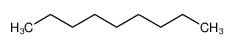
- 129066-02-0
- C9
- 108.09600
- All (95)
- China (15)
- (95)
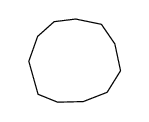
- 139055-01-9
- C11
- 132.11800
- All (95)
- China (15)
- (95)
- 145270-74-2
- C17
- 204.18200
- All (95)
- China (15)
- (95)
- 145270-72-0
- C15
- 180.16000
- All (95)
- China (15)
- (95)
- 145270-70-8
- C13
- 156.13900
- All (95)
- China (15)
- (95)

- 7440-44-0
- C
- 12.011
- All (95)
- China (15)
- (95)

- 12595-79-8
- C2+
- 24.02140
- All (95)
- China (15)
- (95)
- 1253699-04-5
- COZn2
- 158.77000
- All (0)
- China (0)
- (0)
Related Products More >

- 13927-77-0
- CNY Request For Quotation
- 3030-80-6
- CNY Request For Quotation
- 6990-43-8
- CNY Request For Quotation
- 155-04-4
- CNY Request For Quotation
- 36190-62-2 Zinc diisobutyldithiocarbamate
- CNY Request For Quotation
- 14634-93-6 Zinc ethylphenyl dithiocarbamate
- CNY Request For Quotation
- 14726-36-4 Zinc dibenzyldithiocarbamate
- CNY Request For Quotation
- 137-30-4 Zinc dimethyldithiocarbamate
- CNY Request For Quotation


What’s even more interesting is how the material changes over time. When it’s exposed to seawater for longer periods, the magnetic particles inside gradually transform into something called layered double hydroxides. These structures are great at locking in harmful ions, adding a second layer of corrosion protection. So, you're looking at a material that starts strong and gets even better at protecting itself.
This synergy is groundbreaking because traditional magnetic absorbers (e.g., iron-based materials) corrode rapidly in saline environments, degrading their electromagnetic performance, while inert anti-corrosion coatings (e.g., polymers) lack wave-absorbing capabilities. HCMs bridge this gap by combining conductive carbon matrices with reactive magnetic components, ensuring both functionality and durability. For instance, such materials could be applied to naval aircraft or communication equipment in coastal regions, where salt spray accelerates corrosion and radar visibility compromises operational security. The design principles—dual-passivation and interfacial resonance optimization—offer a template for multifunctional material engineering, extending beyond military use to infrastructure or offshore energy systems exposed to harsh climates.
In terms of electromagnetic properties, the synergistic regulation of Zn microspheres' reductive characteristics and heat-driven processes modulates the magnetic domain evolution of magnetic particles within the HCMs. This optimizes heterogeneous interface resonance and achieves strong magnetic coupling, resulting in a minimum reflection loss below -40 dB and an effective absorption bandwidth exceeding 5 GHz, meeting the stealth requirement by efficiently attenuating radar waves.
For anti-corrosion, the negatively charged surface of HCMs repels corrosive ions like Cl⁻ and OH⁻ through electrostatic repulsion, reducing their adsorption and accumulation on the substrate surface, thus mitigating short-term corrosion. Over time, magnetic particles within HCMs transform into layered double hydroxides (LDHs), which possess strong anion-trapping capabilities to further block corrosive ions, enabling long-term corrosion resistance.
Distinct from traditional magnetic materials prone to corrosion and anti-corrosion coatings with poor electromagnetic performance, HCMs overcome the trade-off by combining a hollow carbon structure with dynamic chemical transformations. A potential misunderstanding is that stealth and anti-corrosion rely on mutually exclusive mechanisms, but HCMs demonstrate that through rational design, a single material can integrate both via electrostatic effects, structural evolution, and chemical trapping. This is crucial in marine engineering and military equipment, ensuring equipment longevity and operational security in harsh tropical marine environments.