


 Home
Home
Hi, I'd like to ask—What's the role of CO2 and water in the balanced photosynthesis equation? How does chlorophyll help produce glucose and O2? Are there any chemical factors affecting the balance of this equation? Can the equation vary in different plant types? Thanks!
How Does the Balanced Photosynthesis Equation Transform CO2 and Water into Glucose?
Related Encyclopedia
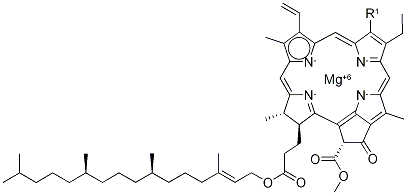
- 1406-65-1
- C54H69MgN4O5R+2
- 878.45446
- All (9)
- China (0)
- (9)
- 10230-16-7
- C8H16O6
- 208.20900
- All (0)
- China (0)
- (0)
- 7658-08-4
- C6H12O5
- 164.16
- All (0)
- China (0)
- (0)
- 13405-60-2
- C13H16O10
- 332.26
- All (0)
- China (0)
- (0)
- 3149-58-4
- C10H20O6
- 236.26200
- All (0)
- China (0)
- (0)
- 87733-75-3
- C5H9NO3
- 131.13000
- All (23)
- China (21)
- (23)
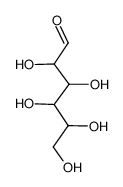
- 93780-23-5
- C6H12O6
- 180.15600
- All (23)
- China (21)
- (23)
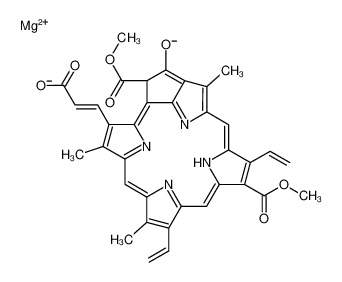
- 111308-93-1
- C36H28MgN4O7
- 652.93512
- All (0)
- China (0)
- (0)
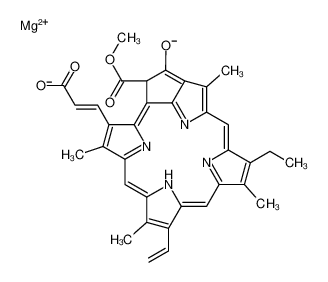
- 18901-56-9
- C35H30MgN4O5
- 610.94100
- All (0)
- China (0)
- (0)
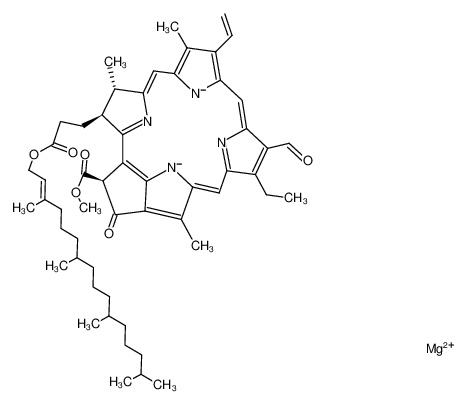
- 22309-14-4
- C55H70MgN4O6
- 907.47200
- All (0)
- China (0)
- (0)
Related Products More >

- CNY Request For Quotation
- CNY Request For Quotation
- CNY Request For Quotation
- 112945-52-5
- Request For Quotation
- 112945-52-5
- Request For Quotation
- 112945-52-5
- Request For Quotation
- 112945-52-5
- Request For Quotation
- 112945-52-5
- Request For Quotation


Chlorophyll, the green pigment in chloroplasts, absorbs light energy from the sun. This energy drives the light-dependent reactions, where water is split into oxygen and hydrogen ions, generating ATP (energy) and NADPH (a reducing agent). These products fuel the Calvin cycle (light-independent reactions), where CO₂ is fixed and converted into glucose through a series of enzyme-catalyzed steps.
Chemical factors like CO₂ concentration, temperature, and light intensity affect reaction rates. Higher CO₂ levels can enhance glucose production, while extreme temperatures or low light slow enzyme activity, disrupting the balance. Additionally, water availability influences the process, as drought can limit H₂O supply for the reaction.
While the basic balanced equation holds for most plants, different types employ varied physiological adaptations. C₄ plants (e.g., corn) and CAM plants (e.g., cacti) have modified pathways to minimize water loss or optimize CO₂ use, but their overall photosynthetic equation remains fundamentally the same as C₃ plants. The difference lies in intermediate steps, not the final reactants or products.
Chlorophyll, the primary pigment in plant chloroplasts, plays a pivotal role in capturing light energy to drive glucose and O₂ production. This green pigment absorbs blue and red wavelengths while reflecting green, giving plants their color. When light strikes chlorophyll molecules in the thylakoid membranes, their electrons are excited to higher energy states, initiating the electron transport chain (ETC). In photosystem II, this excitation leads to photolysis of water, releasing O₂. The ETC then drives the synthesis of ATP via chemiosmosis and reduces NADP⁺ to NADPH in photosystem I. These energy carriers (ATP and NADPH) are crucial for the Calvin cycle, where they power the conversion of CO₂ into glucose. Specifically, ATP provides chemical energy, and NADPH donates hydrogen atoms to fix CO₂ into three-carbon sugars, which eventually combine to form glucose. Chlorophyll’s structure—with a magnesium-containing porphyrin ring—enables efficient light absorption and energy transfer to fuel these reactions.
Several chemical factors influence the balance and rate of photosynthesis. CO₂ concentration is a key factor: increasing CO₂ levels typically enhances the rate of carbon fixation in the Calvin cycle, as the enzyme rubisco (which catalyzes CO₂ attachment to RuBP) has more substrate available. However, this effect is limited by other factors like light intensity and temperature. Temperature affects enzyme activity: rubisco and other Calvin cycle enzymes have optimal temperature ranges (often 25–30°C for C3 plants), and rates drop below or above these ranges due to denaturation or reduced molecular motion. Light intensity impacts the light-dependent reactions: higher intensity provides more energy for electron excitation and ATP production, but beyond a saturation point, other factors (e.g., CO₂ or water) become limiting. Water availability also matters indirectly: drought conditions cause stomata to close, reducing CO₂ intake and increasing O₂ levels, which can trigger photorespiration in C3 plants—a process that wastes energy without producing glucose.
While the fundamental photosynthesis equation (6CO₂ + 6H₂O → C₆H₁₂O₆ + 6O₂) holds for all plants, different types exhibit variations in carbon fixation mechanisms to adapt to environmental stresses. C3 plants (e.g., wheat, soybeans) use the Calvin cycle directly, fixing CO₂ into RuBP in mesophyll cells. C4 plants (e.g., corn, sugarcane) have a specialized anatomy with mesophyll and bundle sheath cells, first fixing CO₂ into a four-carbon compound (oxaloacetate) to concentrate CO₂ around rubisco, minimizing photorespiration in hot, sunny environments. CAM (crassulacean acid metabolism) plants (e.g., cacti, pineapples) open stomata at night to fix CO₂ into organic acids, which are then broken down during the day to release CO₂ for the Calvin cycle, reducing water loss in arid conditions. These adaptations alter how plants acquire and use CO₂ but do not change the overall reactants or products of the photosynthesis equation, which remains consistent across all plant types at the chemical level.
Chlorophyll's function in photosynthesis centers on its ability to absorb light energy, primarily in the blue and red wavelengths, while reflecting green light, which gives plants their characteristic color. Embedded in the thylakoid membranes of chloroplasts, chlorophyll molecules are organized into photosystems that capture photons and use their energy to excite electrons. These high-energy electrons are transferred through an electron transport chain, creating a proton gradient that drives ATP synthesis. Simultaneously, the absorbed energy powers the photolysis of water, splitting it into oxygen, protons, and electrons. The electrons replace those lost by chlorophyll, sustaining the photosynthetic process. Chlorophyll's efficiency in capturing and converting light energy directly influences the rate of glucose production and oxygen release, making it the cornerstone of photosynthetic efficiency.
Several chemical factors can disrupt the balance of the photosynthesis equation. Light intensity directly affects the energy available for ATP and NADPH production; insufficient light limits the rate of glucose synthesis. Temperature influences enzyme activity, with optimal ranges for photosynthetic enzymes ensuring efficient carbon fixation. Extreme temperatures can denature these enzymes, reducing photosynthetic output. CO₂ concentration is another critical variable; while higher levels generally increase the rate of carbon fixation, excessive CO₂ can lead to diminishing returns due to other limiting factors. Water availability is equally crucial, as drought conditions reduce the amount of H₂O accessible for photosynthesis, impairing both energy conversion and glucose production.
The basic photosynthesis equation remains consistent across plant species, but variations exist in the biochemical pathways and adaptations. C₄ plants, such as maize and sugarcane, have evolved additional steps to concentrate CO₂ around RuBisCO, enhancing efficiency in hot and dry environments. CAM plants, like cacti and pineapple, open their stomata at night to minimize water loss, storing CO₂ for daytime use. These adaptations demonstrate how different plants optimize the same fundamental equation to thrive in diverse ecological conditions.