


 Home
Home
Hi, I'd like to ask—can the bismuth subsalicylate in Pepto-Bismol cause side effects when taken with antacids? Will taking them together affect the pH-regulating effect of antacids? Is there a recommended time interval between doses? If someone has acid reflux and diarrhea, is it appropriate to use both medications? Thanks!
Can Pepto-Bismol and Antacids Be Taken Together? Risks of Bismuth and Antacid Interaction
Related Encyclopedia
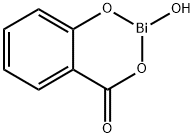
- 14882-18-9
- C7H5BiO4
- 362.09
- All (18)
- China (6)
- (18)
Related Products More >

- 14882-18-9
- Request For Quotation
- 25kg/Cardboard Drum
- 14882-18-9
- Request For Quotation
- 25kg/bag
- 14882-18-9
- Request For Quotation
- 14882-18-9
- Request For Quotation
- 25kg/drum
- 14882-18-9
- Request For Quotation
- 14882-18-9
- Request For Quotation
- 14882-18-9
- Request For Quotation
- 14882-18-9
- Request For Quotation


Regarding pH regulation, antacids primarily aim to increase stomach pH for acid reflux relief, and while bismuth subsalicylate has mild antacid properties, its main role is not pH modulation. Taking them together might slightly interfere with bismuth’s mucosal protective effects but won’t significantly blunt the antacid’s pH-raising action. To minimize interactions, experts recommend spacing doses by 1–2 hours: take antacids first to address acid reflux, then wait before taking Pepto-Bismol for diarrhea.
For individuals with both acid reflux and diarrhea, using both medications is feasible but requires caution. The interval helps separate their actions: antacids target immediate acid relief, while Pepto-Bismol addresses diarrhea through its antimicrobial and mucosal barrier effects. However, consult a healthcare provider first, especially for those with kidney issues (due to bismuth) or taking other medications, to ensure safety and efficacy.
To minimize interactions, it’s recommended to space doses by 1–2 hours. For acid reflux and diarrhea, using both medications may be appropriate in some cases, but caution is needed. Bismuth subsalicylate helps with diarrhea by coating the intestines, while antacids ease reflux. However, consult a healthcare provider first, especially for those with kidney issues or on long-term salicylate use, as combined use could increase side effect risks (like black stools or tinnitus from salicylates) or disrupt electrolyte balance from antacids.
Taking these two medications together can lead to several side effects. The most commonly reported issues include black stools and a black tongue, which are harmless but can be alarming if unexpected. These effects occur because bismuth subsalicylate reacts with small amounts of sulfur in saliva and the gastrointestinal tract, forming bismuth sulfide, a black compound. Additionally, antacids may interfere with the absorption and effectiveness of bismuth subsalicylate, potentially reducing its ability to coat the stomach lining and provide symptom relief. Conversely, bismuth subsalicylate might alter the pH-balancing effects of antacids, making them less effective at neutralizing stomach acid.
The interaction between these medications is primarily due to their differing mechanisms of action and the way they affect stomach pH. Antacids work by raising the pH of the stomach, while bismuth subsalicylate operates at a lower pH to exert its protective and antibacterial effects. This difference can lead to a diminished therapeutic effect for both medications when taken simultaneously.
To minimize potential interactions, it is generally recommended to space out the doses of Pepto-Bismol and antacids by at least 1 to 2 hours. This time interval allows each medication to work effectively without significantly interfering with the other. For example, if an antacid is taken for immediate relief of heartburn, Pepto-Bismol can be taken a couple of hours later to address diarrhea or stomach discomfort.
In cases where someone is experiencing both acid reflux and diarrhea, using both medications together may seem like a practical solution. However, this approach is not always appropriate. Acid reflux typically requires long-term management strategies, such as proton pump inhibitors or H2 blockers, rather than relying solely on antacids for relief. Diarrhea, on the other hand, may be better addressed by staying hydrated and, in some cases, using medications specifically designed to slow intestinal motility.
Consulting a healthcare provider is essential for individuals with persistent or severe symptoms of acid reflux and diarrhea. A doctor can recommend a tailored treatment plan that addresses the root causes of both conditions while minimizing the risk of adverse effects from medication interactions. This personalized approach ensures that the treatment is both effective and safe, avoiding unnecessary complications.
Regarding the pH-regulating effect of antacids, antacids quickly raise gastric pH to neutralize acid, but bismuth subsalicylate releases salicylic acid, a weak acid that could slightly counteract this. The main impact, though, is on bismuth’s ability to protect the mucosal lining—antacids might reduce how well bismuth binds to ulcer sites. Studies show antacids still provide immediate pH buffering, but their sustained effect might be slightly less when used with bismuth.
It’s recommended to space doses by 1 to 2 hours. Take antacids first for immediate acid reflux relief, then take Pepto-Bismol for diarrhea afterward. This interval helps minimize interactions that could affect salicylate absorption and lets each medication work better.
For someone with both acid reflux and diarrhea, using both medications is acceptable under a doctor’s guidance, but consider alternatives. Proton pump inhibitors (PPIs) like omeprazole are more effective for long-term acid reflux, and loperamide may be better for severe diarrhea. Be cautious: long-term antacid use, especially with calcium carbonate, can cause rebound acid secretion, and bismuth might turn stools or the tongue black, though that’s harmless.
Recent research (2023–2024) has looked at new antacids with delayed-release formulas to reduce interactions with bismuth compounds. Studies also suggest bismuth subsalicylate’s antimicrobial properties against Helicobacter pylori could work with acid suppression in peptic ulcer treatment, though separate dosing remains the standard approach. To stay safe and effective, space doses, choose appropriate medications for specific symptoms, and avoid long-term combination use without medical advice, especially if you have kidney issues.