


 Home
Home
Why do the clouds of Venus appear streaked with mysterious dark bands when viewed in ultraviolet light, and what substances could be absorbing so much UV radiation? Could these dark streaks be linked to sulfur compounds or even products of lightning-driven chemical reactions in the dense atmosphere? How do processes like the breakdown of sulfur dioxide or the formation of reactive sulfur radicals contribute to the chemistry of Venus’s clouds? Is it possible that these radicals eventually lead to complex molecules such as polysulfur or sulfuric acid, creating the patterns we see? And if lightning can accelerate these reactions thousands of times faster than sunlight, what does that tell us about the dynamics of Venus’s weather system and the speed at which these compounds spread across the planet’s atmosphere?
Why Does Venus Have Dark Streaks in Its Clouds and What Role Could Sulfur Play?
Related Encyclopedia

- 7704-34-9
- S8
- 256.52
- All (4)
- China (4)
- (4)
- 12185-12-5
- S2
- 63.94410
- All (4)
- China (4)
- (4)
- 1183858-70-9
- C15H34BrNO2S
- 372.40500
- All (0)
- China (0)
- (0)
- 953814-17-0
- C80H96O24S8
- 1698.12000
- All (0)
- China (0)
- (0)
- 42824-17-9
- C5H5NO2S
- 143.16400
- All (0)
- China (0)
- (0)
- 70576-58-8
- C6H15NO2S
- 165.25400
- All (0)
- China (0)
- (0)
- 1183858-69-6
- C19H42BrNO2S
- 428.51100
- All (0)
- China (0)
- (0)
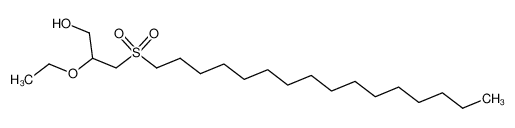
- 103304-72-9
- C21H44O4S
- 392.63700
- All (0)
- China (0)
- (0)
- 65952-74-1
- C12H8N6S
- 268.29700
- All (0)
- China (0)
- (0)
- 1177730-84-5
- O4S
- 96.06260
- All (0)
- China (0)
- (0)
Related Products More >

- 7664-93-9
- CNY 360.0000
- 1ton
- 7791-25-5
- Request For Quotation
- 100kg
- 8014-95-7
- Request For Quotation
- 1ton
- 8014-95-7
- Request For Quotation
- 1kg
- 8014-95-7
- Request For Quotation
- 25kg
- 10545-99-0
- Request For Quotation
- 1kg
- 10545-99-0
- Request For Quotation
- 500g
- 10545-99-0
- Request For Quotation
- 25kg


The interesting part is how fast this happens—lightning could make it a thousand times quicker than sunlight alone, so these particles spread through the atmosphere really fast. Over time, they cluster in certain areas, creating those dark streaks we see in UV images.
So, instead of a simple cloud layer, Venus has this crazy, dynamic system driven by storms, electricity, and chemistry all working together.
Lightning’s role accelerates atmospheric chemistry, enabling these compounds to spread at hundreds of kilometers per hour, influencing Venus’s weather dynamics. This contrasts with slower, sunlight-driven reactions, highlighting lightning as a key driver of chemical heterogeneity. The presence of such sulfur species underscores the complexity of Venus’s atmosphere, bridging planetary chemistry and meteorology, and offers insights for interpreting mission data on atmospheric composition.
The dynamics of Venus's weather system, particularly its super-rotating atmosphere, further distribute these compounds rapidly across the planet. The radicals and their products are transported horizontally at hundreds of kilometers per hour, explaining the streaked patterns. This mechanism aligns with data from past missions like Pioneer Venus and suggests that lightning-driven chemistry is a dominant force in shaping Venus's cloud composition. For instance, the breakdown of SO₂ into sulfuric acid aerosols—a known UV absorber—mirrors processes observed in lab simulations.
The presence of polysulfur or sulfur allotropes could also contribute to the absorption, as these compounds exhibit strong UV absorption bands. The interplay between lightning, sulfur chemistry, and atmospheric circulation underscores the complexity of Venus's weather system, where energetic processes drive chemical reactions far more efficiently than sunlight. This framework not only explains the observed UV darkening but also highlights how extreme planetary conditions can produce unique atmospheric phenomena.