


 Home
Home
Hi, I’ve been curious about the chemicals used in everyday cleaning and construction. I often hear about calcium hydroxide being used in things like limewater or plaster. But I’m not sure if it’s considered a really strong base like sodium hydroxide, or if it’s gentler. Does it react strongly with acids? How does it behave in water compared to other bases, and is it safe to handle in normal household or lab situations? Could someone explain how strong it really is?
Is Calcium Hydroxide a Strong Base or Just Moderately Alkaline?
Related Encyclopedia
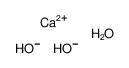
- 1332-69-0
- CaH4O3
- 92.10800
- All (0)
- China (0)
- (0)

- 20665-52-5
- GaH2O2
- 103.73800
- All (0)
- China (0)
- (0)
- 8068-05-1
- C30H25ClN6
- 505.01
- All (0)
- China (0)
- (0)

- 14280-30-9
- HO
- 17.01000
- All (0)
- China (0)
- (0)

- 18933-05-6
- H2MnO2
- 88.95270
- All (0)
- China (0)
- (0)
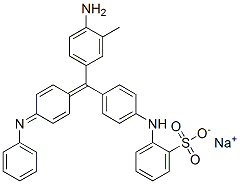
- 62152-67-4
- C38H31N4NaO3S
- 646.73
- All (0)
- China (0)
- (0)
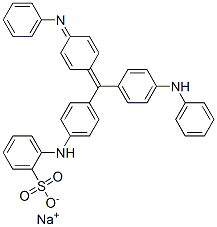
- 8004-90-8
- C74H59N6NaO7S2
- 1231.42
- All (6)
- China (0)
- (6)
- 34118-37-1
- H7O4
- 71.05320
- All (0)
- China (0)
- (0)
- 75594-07-9
- HOTi
- 64.87430
- All (0)
- China (0)
- (0)
- 154726-68-8
- C16H30N2O
- 266.42200
- All (0)
- China (0)
- (0)
Related Products More >

- 1310-73-2
- Request For Quotation
- 1310-73-2
- Request For Quotation
- 1310-73-2
- Request For Quotation
- 1310-73-2
- USD 1.0000
- 25kg
- 1305-62-0
- USD 270.0000
- 900kg
- 1305-62-0
- USD 117.0000
- 900kg
- 1310-73-2
- CNY 750.0000
- 1ton
- 1310-73-2
- CNY 2.6000
- 25kg


The distinction between strong bases and their solubility is critical. While Ca(OH)₂ does not dissolve extensively, the portion that does dissolves completely—qualifying it as strong. This differs from compounds like magnesium hydroxide (Mg(OH)₂), which is also a strong base but even less soluble, and from weak bases like sodium bicarbonate (NaHCO₃), which do not fully dissociate regardless of solubility.
A common misconception is equating low solubility with weak basicity. For example, Ca(OH)₂ solutions are less alkaline than highly soluble strong bases like sodium hydroxide (NaOH) because fewer OH⁻ ions are present, but this is due to solubility, not incomplete dissociation. Its strength lies in the completeness of ionization, not the concentration of ions.
In chemistry and industry, recognizing Ca(OH)₂ as a strong base explains its applications: it is used in water treatment to neutralize acidity, in agriculture to adjust soil pH, and in construction for mortar setting, where its OH⁻ ions react with CO₂ to form calcium carbonate. Understanding its strong base nature also clarifies its reactivity—for instance, its ability to neutralize acids completely, forming salts and water, a characteristic of strong bases in acid-base reactions.
In practical terms, calcium hydroxide is widely used in construction, agriculture, and water treatment. In construction, it reacts with carbon dioxide from the air to form calcium carbonate, providing durability in mortars and plasters. In agriculture, it is used to neutralize acidic soils, improving crop growth by raising soil pH gradually. Its role in water treatment involves softening hard water by precipitating dissolved carbonate salts, which is safer and easier to handle than using stronger bases.
From a chemical perspective, the base strength of calcium hydroxide is sufficient for these applications due to its ability to maintain an alkaline environment, yet its limited solubility prevents excessively rapid reactions that could pose handling hazards. For example, when added to an acidic soil sample, it reacts slowly and steadily, allowing controlled pH adjustment. Similarly, in limewater testing, it reacts with carbon dioxide to form a visible precipitate of calcium carbonate, demonstrating its reactivity without being dangerously caustic. Its balance of moderate strength and practical utility makes it a versatile base in both laboratory and everyday scenarios.
Chemically, the basicity of Ca(OH)₂ arises from its ability to accept protons (H⁺) from acids, forming water and calcium salts. For instance, in neutralizing sulfuric acid (H₂SO₄), it produces calcium sulfate (CaSO₄) and water, a reaction critical in industrial wastewater treatment. Physically, its solid form is a white powder with a high melting point (580°C), reflecting strong ionic bonds in its lattice structure, which limit solubility but not the reactivity of dissolved ions.
In daily life, Ca(OH)₂’s strong basicity is harnessed in agriculture to neutralize acidic soils, improving crop yields by balancing pH levels. Industrially, it serves as a flux in metallurgy to remove impurities and in construction to produce lime mortar, where its alkaline environment promotes adhesion and durability. Medically, its antiseptic properties are utilized in dental treatments to disinfect root canals, as the high pH destroys pathogens. These applications illustrate how Ca(OH)₂’s classification as a strong base, despite its solubility quirks, enables it to bridge chemical theory with practical solutions across environmental, industrial, and healthcare sectors.