


 Home
Home
Hi, I’ve been curious about the chemical behavior of calcium lately. When I see it in different compounds like calcium oxide or calcium chloride, I notice it seems to behave consistently in reactions. I wonder, what exactly is the oxidation state of calcium in these situations? Does it change depending on the compound, or is it always the same? How does this affect the way it interacts with other elements?
Understanding What is the Oxidation State of Calcium in Everyday Compounds
Related Encyclopedia
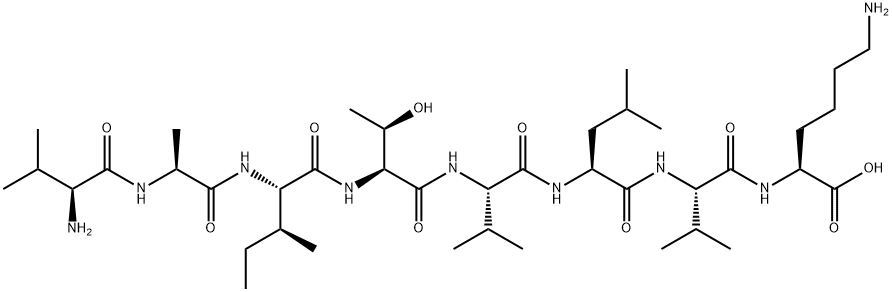
- 145224-99-3
- C40H75N9O10
- 842.08
- All (1)
- China (0)
- (1)
- 7440-70-2
- Ca
- 40.08
- All (5)
- China (3)
- (5)
- 12173-98-7
- AlCaH37O7Si5
- 356.77700
- All (0)
- China (0)
- (0)
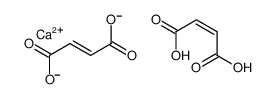
- 3416-22-6
- C8H6CaO8
- 270.20600
- All (0)
- China (0)
- (0)
- 11056-25-0
- Bi2Ca3
- 538.19500
- All (0)
- China (0)
- (0)
- 11062-30-9
- Ca3Sb2
- 363.75400
- All (0)
- China (0)
- (0)
- 11091-65-9
- CaCu5
- 357.80800
- All (0)
- China (0)
- (0)
- 858853-25-5
- C8H4CaO4
- 204.19300
- All (0)
- China (0)
- (0)
- 50275-95-1
- CaO6Pt
- 331.15200
- All (0)
- China (0)
- (0)
- 88608-68-8
- Br6CaTc
- 617.50200
- All (0)
- China (0)
- (0)
Related Products More >

- 7778-54-3
- CNY Request For Quotation
- CNY Request For Quotation
- CNY Request For Quotation
- CNY Request For Quotation
- 7757-93-11
- CNY Request For Quotation
- 7757-93-10
- CNY Request For Quotation
- 7757-93-9
- CNY Request For Quotation
- 10389-09-2
- CNY Request For Quotation


Understanding this behavior is crucial in both industrial and biological contexts. In cement production, calcium oxide’s ionic nature facilitates its reaction with water to form calcium hydroxide, which then interacts with carbon dioxide to harden concrete structures. In biology, calcium ions with a +2 charge are essential for cellular signaling, muscle contraction, and bone mineralization, highlighting how the oxidation state governs both chemical reactivity and physiological function. Even in everyday products such as antacids or dietary supplements, calcium’s consistent +2 state ensures predictable reactions with other ions, enhancing their effectiveness.
By recognizing the +2 oxidation state as a defining feature, chemists and engineers can predict how calcium will behave in chemical reactions, design safer and more efficient materials, and explain why calcium compounds are so widely used across industries and natural systems. This insight bridges fundamental chemistry with practical applications, from construction to health.
Chemically, the +2 oxidation state governs calcium’s reactivity and bonding patterns. In compounds like calcium oxide (CaO) or calcium carbonate (CaCO₃), calcium donates its two electrons to nonmetals such as oxygen or carbon, forming ionic bonds stabilized by electrostatic attraction between Ca²⁺ and the resulting anions (O²⁻ or CO₃²⁻). Physically, this oxidation state influences properties like high melting points (e.g., 842°C for CaO) and solubility in water, as the ionic lattice requires significant energy to break apart.
The +2 oxidation state of calcium has far-reaching implications. In construction, calcium compounds like calcium hydroxide (produced when CaO reacts with water) are essential in mortar and plaster, binding materials through chemical reactions. Industrially, calcium’s +2 state enables its use as a flux in metallurgy to remove impurities and as a desulfurizing agent in steel production. Medically, calcium ions (Ca²⁺) play critical roles in muscle contraction, nerve transmission, and blood clotting, underscoring their biological necessity. These applications highlight how oxidation states serve as a predictive tool in chemistry, guiding the synthesis of materials that underpin modern infrastructure, industry, and healthcare.
In its elemental form (pure calcium metal, Ca), the oxidation state is 0, as no electron transfer or redistribution occurs in uncombined elements. This contrasts with its behavior in compounds: for instance, in calcium oxide (CaO), calcium’s +2 oxidation state balances oxygen’s -2 state to maintain electrical neutrality. In calcium chloride (CaCl₂), the +2 state of calcium offsets the -1 states of two chloride ions, adhering to the rule that the sum of oxidation states in a neutral compound equals 0.
A common misconception is that calcium can exhibit multiple oxidation states, but its position in group 2 limits this. Unlike transition metals, which have partially filled d-orbitals allowing variable oxidation states, calcium’s full 4s orbital makes the loss of two electrons energetically dominant, leaving other states highly unstable and rare.
Understanding calcium’s oxidation state is vital in chemistry, as it guides the balancing of redox reactions, predicts compound stability, and explains reactivity. For example, in biological systems, calcium ions (Ca²⁺) with their +2 oxidation state play critical roles in muscle contraction and nerve signaling, while in industrial processes like steelmaking, calcium’s +2 state in compounds enables it to act as a flux, removing impurities through ionic interactions. This consistency in oxidation state underscores calcium’s predictable behavior across chemical and biological contexts.