


 Home
Home
Hi there, I’ve been hearing about molar mass when it comes to chemicals, and I’m wondering about calcium hydroxide specifically. What does molar mass even mean in simple terms? Is it like the weight of a certain amount of the substance? How do you figure out the molar mass for something like calcium hydroxide? Does it affect how it’s used in everyday things? Could you explain what the molar mass of calcium hydroxide is?
What Is the Molar Mass of Calcium Hydroxide and Why Does It Matter?
Related Encyclopedia

- 1305-62-0
- CaH2O2
- 74.09
- All (241)
- China (18)
- (242)
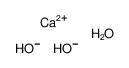
- 1332-69-0
- CaH4O3
- 92.10800
- All (0)
- China (0)
- (0)
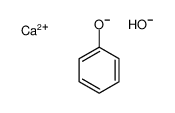
- 89306-95-6
- C6H6CaO2
- 150.18900
- All (0)
- China (0)
- (0)
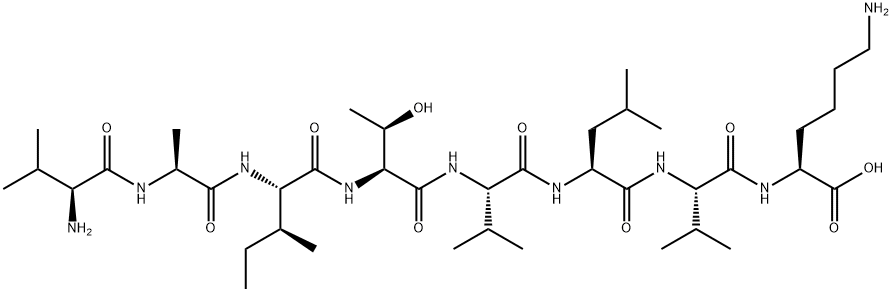
- 145224-99-3
- C40H75N9O10
- 842.08
- All (1)
- China (0)
- (1)
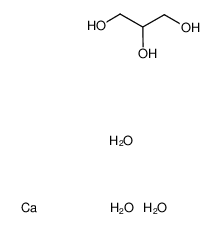
- 18879-29-3
- C3H14CaO6
- 190.24900
- All (0)
- China (0)
- (0)

- 7782-44-7
- O2
- 32
- All (1)
- China (1)
- (1)

- 80937-33-3
- O2
- 31.99880
- All (1)
- China (1)
- (1)

- 17410-58-1
- O2
- 33.99860
- All (1)
- China (1)
- (1)
- 12180-94-8
- CaGa2H6O4
- 249.56900
- All (0)
- China (0)
- (0)
- 13780-21-7
- CaO7U2
- 628.13200
- All (0)
- China (0)
- (0)
Related Products More >

- 7778-54-3
- CNY Request For Quotation
- 7757-93-11
- CNY Request For Quotation
- 7757-93-10
- CNY Request For Quotation
- 7757-93-9
- CNY Request For Quotation
- 10389-09-2
- CNY Request For Quotation
- 10389-09-1
- CNY Request For Quotation
- 10389-09-0
- CNY Request For Quotation
- 35947-07-2
- CNY Request For Quotation


Calcium hydroxide is made of calcium, oxygen, and hydrogen. There’s one calcium atom, two oxygen atoms, and two hydrogen atoms in each molecule. If you add up their individual weights—calcium is pretty heavy, oxygen is medium, and hydrogen is light—you get the total. For calcium hydroxide, that total is about 74 grams for that one “batch.”
You might not need to know this for daily life, but it matters when people use it in things like making mortar or treating water. Knowing the molar mass helps make sure they use the right amount, so the stuff works like it should. It’s just a way to measure how much of the chemical you’re dealing with, in a language scientists and workers understand.
This specific mass value is indispensable for stoichiometric calculations in numerous applied fields. In water treatment engineering, for instance, knowing the exact molar mass allows for the accurate dosing required to adjust pH and precipitate dissolved impurities, ensuring the effectiveness of the process without wasteful excess. In construction, the stoichiometry of the carbonation reaction, where calcium hydroxide reacts with atmospheric carbon dioxide to form calcium carbonate and water, relies on molar mass to predict the amount of material needed for producing durable mortars and plasters. The quantity of base generated from a given mass is precisely determined by this foundational property.
Within medical and biological contexts, the molar mass is equally vital. In endodontic procedures, the concentration of the therapeutic hydroxide ions released from a prepared paste is contingent on the mass of compound used, influencing its efficacy as an antimicrobial agent and its ability to promote hard tissue formation. From a broader physicochemical perspective, the molar mass interlinks with other properties like its alkalinity and lattice energy, defining its reactivity and functionality. This exemplifies how a simple quantitative descriptor serves as a cornerstone, connecting abstract atomic theory to tangible applications in industry, environmental science, and medicine, highlighting the profound interdependence between molecular-scale properties and macroscopic technological outcomes.
Unlike calcium oxide (CaO, 56.08 g/mol), which reacts with water to form Ca(OH)₂, the molar mass of Ca(OH)₂ reflects its hydrated state, influencing solubility and reactivity. A common misconception is conflating molar mass with molecular weight; while numerically identical in this context, molar mass (g/mol) is a macroscopic property used in lab-scale preparations, whereas molecular weight (Da or u) applies to molecular compounds. In construction, Ca(OH)₂’s molar mass underpins its role in lime mortar, where precise ratios with sand and water ensure structural integrity.
In medicine, calculating molar mass is essential for formulating antiseptic pastes, as it determines the concentration of hydroxide ions (OH⁻) responsible for microbial inhibition. Errors in molar mass computation could lead to ineffective treatments or tissue irritation. Thus, understanding Ca(OH)₂’s molar mass bridges theoretical chemistry with practical applications, ensuring accuracy in industries ranging from environmental engineering to healthcare.
This value represents the mass of one mole of Ca(OH)₂ particles, a unit that bridges atomic-scale composition to measurable quantities in laboratory and industrial settings. Molar mass is critical for stoichiometric calculations, enabling precise measurement of reactants and products in chemical reactions. For example, in water treatment, where Ca(OH)₂ neutralizes acidic contaminants, knowing its molar mass ensures the correct amount is added to achieve the desired pH—too little leaves acidity unaddressed, too much raises pH excessively.
In construction, when mixing mortar, the molar mass of Ca(OH)₂ helps determine how much is needed to react with carbon dioxide over time, forming calcium carbonate and hardening the material. Without this precise measurement, the mortar’s strength and setting time could be compromised. Thus, molar mass acts as a foundational tool, translating the theoretical composition of Ca(OH)₂ into practical, actionable data for consistent and effective application across fields.