


 Home
Home
Hi, I’m trying to get a handle on some basic chemistry stuff, and I keep coming across calcium hydroxide. I know chemicals have those short formulas with letters and numbers, like H₂O for water. What’s the formula for calcium hydroxide? Does it tell you what it’s made of? And do the letters and numbers in the formula mean something specific? I’m really curious to know what the formula of calcium hydroxide is.
What Is the Chemical Formula of Calcium Hydroxide and What Does It Mean?
Related Encyclopedia

- 1305-62-0
- CaH2O2
- 74.09
- All (241)
- China (18)
- (242)
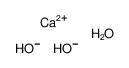
- 1332-69-0
- CaH4O3
- 92.10800
- All (0)
- China (0)
- (0)
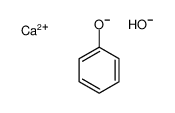
- 89306-95-6
- C6H6CaO2
- 150.18900
- All (0)
- China (0)
- (0)
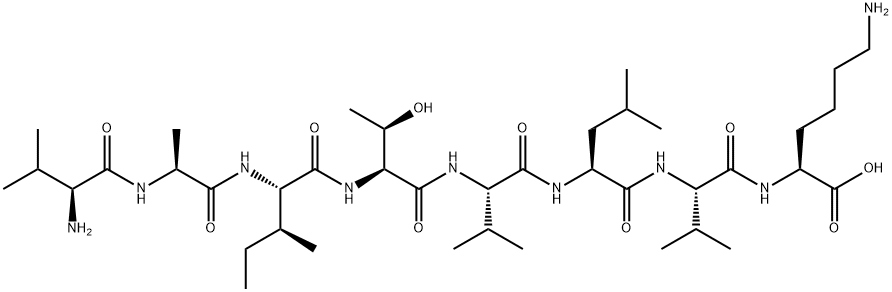
- 145224-99-3
- C40H75N9O10
- 842.08
- All (1)
- China (0)
- (1)
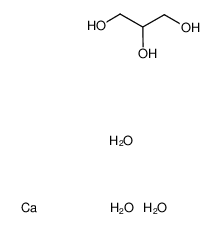
- 18879-29-3
- C3H14CaO6
- 190.24900
- All (0)
- China (0)
- (0)
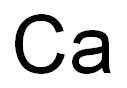
- 7440-70-2
- Ca
- 40.08
- All (5)
- China (3)
- (5)
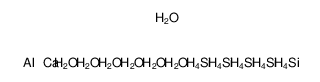
- 12173-98-7
- AlCaH37O7Si5
- 356.77700
- All (0)
- China (0)
- (0)
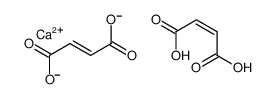
- 3416-22-6
- C8H6CaO8
- 270.20600
- All (0)
- China (0)
- (0)
- 11056-25-0
- Bi2Ca3
- 538.19500
- All (0)
- China (0)
- (0)
- 11062-30-9
- Ca3Sb2
- 363.75400
- All (0)
- China (0)
- (0)
Related Products More >

- 7778-54-3
- CNY Request For Quotation
- 7757-93-11
- CNY Request For Quotation
- 7757-93-10
- CNY Request For Quotation
- 7757-93-9
- CNY Request For Quotation
- 10389-09-2
- CNY Request For Quotation
- 10389-09-1
- CNY Request For Quotation
- 10389-09-0
- CNY Request For Quotation
- 35947-07-2
- CNY Request For Quotation


The little “₂” next to the OH means there are two of these hydroxide groups in each piece of calcium hydroxide. So it’s like one calcium atom paired up with two hydroxide groups to make the whole thing.
You might not need to memorize the formula, but it’s useful to know because it tells you what the stuff is made of. This is the same stuff in some garden lime or the mortar used in bricklaying, and its formula helps scientists and workers know how it will react with other things.
In aqueous solutions, Ca(OH)₂ dissociates into Ca²⁺ and OH⁻ ions, defining its strong basicity (pH ~12–13). This contrasts with calcium chloride (CaCl₂), which dissociates into Ca²⁺ and Cl⁻ ions, lacking hydroxide’s proton-accepting capacity. A common misconception is confusing Ca(OH)₂ with calcium bicarbonate (Ca(HCO₃)₂), a soluble compound involved in water hardness; the presence of hydroxide ions in Ca(OH)₂ makes it insoluble in excess CO₂ environments, unlike bicarbonates.
In medicine, the formula’s hydroxide content underpins its antiseptic properties, as OH⁻ ions disrupt microbial cell membranes—a principle used in dental cements and wound care. Engineering applications, such as wastewater treatment, rely on Ca(OH)₂’s ability to precipitate heavy metals via hydroxide complexes, a reaction unavailable to non-hydroxide calcium salts. Precise formula knowledge ensures correct stoichiometry in these processes, avoiding inefficiencies or hazardous byproducts, such as incomplete neutralization in acid-base reactions. Thus, Ca(OH)₂’s formula is not merely symbolic but a cornerstone of its functional specificity across disciplines.
The parentheses in Ca(OH)₂ denote that the OH group functions as a single polyatomic ion, with the subscript "2" indicating two such groups per formula unit. This distinguishes it from compounds like calcium oxide (CaO), where a single oxide ion (O²⁻) balances Ca²⁺, and from calcium chloride (CaCl₂), which pairs Ca²⁺ with two monatomic Cl⁻ ions. The formula thus conveys both the identity of constituent ions and their ratio, critical for predicting reactivity.
In practical contexts, this formula guides quantitative applications. For instance, in water treatment, calculating the amount of Ca(OH)₂ needed to neutralize acidity relies on its 1:2 ratio of Ca²⁺ to OH⁻, ensuring sufficient hydroxide ions to react with H⁺. In construction, the formula explains why mortar hardens: Ca(OH)₂ reacts with CO₂ to form CaCO₃ and H₂O, a process dependent on the availability of hydroxide ions as specified in its molecular structure. Understanding this formula therefore bridges molecular composition to functional behavior across scientific and industrial settings.
This specific atomic arrangement is fundamental to its function across diverse fields. In environmental engineering, the formula explains its acid-neutralizing capacity, where one mole of Ca(OH)₂ can neutralize two moles of hydrogen ions (H⁺), a reaction leveraged in treating acidic industrial wastewater and flue gas desulfurization. The stoichiometry is equally vital in construction science, where the formula is central to the carbonation reaction: Ca(OH)₂ + CO₂ → CaCO₃ + H₂O, a process that transforms the soft mortar into a hard, durable matrix of calcium carbonate. The two hydroxide groups are essential for this transformation.
Within biological systems, the formula elucidates its therapeutic mechanism. In endodontics, the controlled release of both calcium and hydroxide ions from Ca(OH)₂-based sealers contributes to a high pH environment that eliminates pathogens while simultaneously providing calcium ions that may facilitate hard tissue regeneration. The formula’s implication extends to food chemistry, where it is used in processes like nixtamalization of corn; the hydroxide ions alter the chemistry of the grain, improving its nutritional profile. The formula Ca(OH)₂ is therefore far more than a symbolic abbreviation; it is a predictive tool that allows scientists and engineers to model its reactivity, calculate required quantities for reactions, and understand its interactive effects within complex chemical and biological networks.