


 Home
Home
Hi, I was wondering about calcium in chemical reactions. I know elements can gain or lose electrons, but I’m not quite sure how that works for calcium. When calcium forms compounds like calcium oxide or calcium chloride, what oxidation number does it usually have? Does it change depending on the compound, or is it always the same? How can I figure out its oxidation number in everyday chemical contexts?
Understanding What Is the Oxidation Number of Calcium and Its Implications
Related Encyclopedia
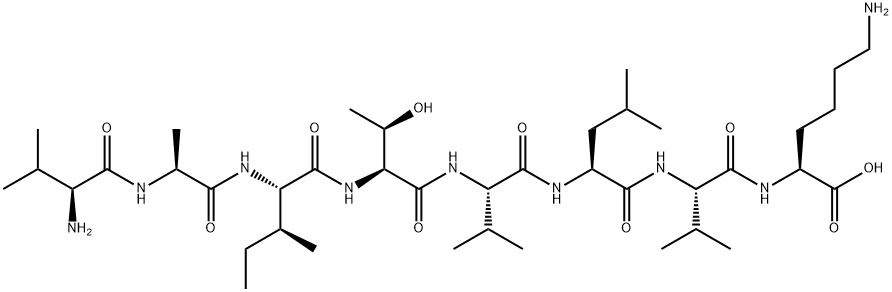
- 145224-99-3
- C40H75N9O10
- 842.08
- All (1)
- China (0)
- (1)
- 7440-70-2
- Ca
- 40.08
- All (5)
- China (3)
- (5)
- 12173-98-7
- AlCaH37O7Si5
- 356.77700
- All (0)
- China (0)
- (0)
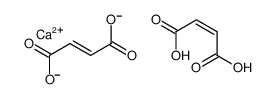
- 3416-22-6
- C8H6CaO8
- 270.20600
- All (0)
- China (0)
- (0)
- 11056-25-0
- Bi2Ca3
- 538.19500
- All (0)
- China (0)
- (0)
- 11062-30-9
- Ca3Sb2
- 363.75400
- All (0)
- China (0)
- (0)
- 11091-65-9
- CaCu5
- 357.80800
- All (0)
- China (0)
- (0)
- 858853-25-5
- C8H4CaO4
- 204.19300
- All (0)
- China (0)
- (0)
- 50275-95-1
- CaO6Pt
- 331.15200
- All (0)
- China (0)
- (0)
- 88608-68-8
- Br6CaTc
- 617.50200
- All (0)
- China (0)
- (0)
Related Products More >

- 7778-54-3
- CNY Request For Quotation
- 7757-93-11
- CNY Request For Quotation
- 7757-93-10
- CNY Request For Quotation
- 7757-93-9
- CNY Request For Quotation
- 10389-09-2
- CNY Request For Quotation
- 10389-09-1
- CNY Request For Quotation
- 10389-09-0
- CNY Request For Quotation
- 35947-07-2
- CNY Request For Quotation


Chemically, the +2 oxidation state of calcium governs its reactivity and bonding patterns. In compounds like calcium oxide (CaO) or calcium chloride (CaCl₂), calcium donates its two electrons to nonmetals like oxygen or chlorine, forming ionic bonds stabilized by electrostatic attraction between Ca²⁺ and the resulting anions (O²⁻ or Cl⁻). Physically, this oxidation state influences properties such as high melting points (e.g., 842°C for CaO) and solubility in water, as the ionic lattice must overcome strong electrostatic forces to dissolve.
The +2 oxidation state of calcium has profound implications across disciplines. In construction, calcium compounds like calcium hydroxide (formed when CaO reacts with water) are vital in mortar and plaster, binding materials through chemical reactions. Industrially, calcium’s +2 state enables its use as a reducing agent in metallurgy and a desulfurizing agent in steel production. Medically, calcium ions (Ca²⁺) regulate muscle contraction, nerve signaling, and blood clotting, highlighting their biological essentiality. These applications underscore how oxidation numbers serve as a foundational tool for predicting chemical behavior, enabling innovations that shape infrastructure, industry, and human health.
This +2 oxidation state is a consistent feature of calcium in ionic compounds because it allows for predictable bonding behavior. In calcium chloride (CaCl₂), each chlorine atom accepts one electron, so calcium’s +2 balances the two -1 charges from chlorine atoms. Understanding calcium’s oxidation number is essential for explaining its role in everyday chemical processes, such as in cement production, water softening, or dietary supplements. Its electron donation underlies the formation of strong ionic lattices, which is why calcium compounds are typically solid at room temperature and highly stable.
Calcium’s behavior also connects directly to practical applications in industrial chemistry. For instance, when producing lime from calcium carbonate, the +2 oxidation state facilitates reactions with acids to release carbon dioxide while forming calcium salts. Similarly, in biological systems, calcium ions with a +2 charge are crucial for cellular signaling and bone structure, illustrating how a fundamental chemical property translates into real-world utility. The predictability of this oxidation number allows chemists and engineers to design reactions and materials with confidence in both lab and industrial contexts.
In elemental form (pure calcium metal, Ca), the oxidation number is 0, as there is no electron transfer or sharing. This distinguishes elemental calcium from its compounds: in substances like calcium oxide (CaO), calcium’s oxidation number is +2, balancing oxygen’s -2 to maintain overall neutrality. Similarly, in calcium chloride (CaCl₂), calcium’s +2 balances two chloride ions (-1 each), adhering to the principle that the sum of oxidation numbers in a neutral compound is 0.
A common misconception is assuming calcium can have multiple oxidation numbers, but due to its position in group 2, it rarely deviates from +2. Unlike transition metals (e.g., iron, which can have +2 or +3), alkaline earth metals have a full s-orbital in their valence shell, making the loss of two electrons energetically favorable and other oxidation states unstable.
Understanding calcium’s oxidation number is critical in chemistry, as it helps predict reaction outcomes, balance chemical equations, and interpret bonding in compounds. For example, in redox reactions, calcium’s +2 state indicates it has been oxidized (lost electrons), a key detail in analyzing energy transfers or reactivity in industrial processes like cement production, where calcium compounds play central roles.