


 Home
Home
People often see products labeled as “resin” or “acrylic” and wonder if they are the same thing. Are all resins made from acrylic, or are they completely different materials? How can you tell the difference when buying art supplies, furniture, or coatings? Is acrylic just one type of resin, or is it something else entirely? And what are the everyday uses for each? If you’re curious about what makes resin and acrylic alike or different, you might be asking yourself: is resin acrylic?
Is Resin Acrylic? Understanding the Difference
Related Encyclopedia
- 122973-06-2
- C6H5NO+
- 108.11800
- All (38)
- China (36)
- (38)
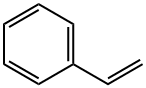
- 100-42-5
- C8H8
- 104.15
- All (38)
- China (36)
- (38)
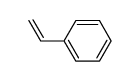
- 79637-11-9
- C8H8
- 104.15000
- All (38)
- China (36)
- (38)
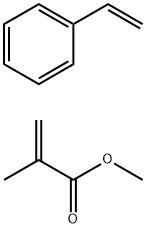
- 25034-86-0
- C13H16O2
- 204.27
- All (0)
- China (0)
- (0)
![3-[(E)-4,6-dimethylhept-2-enyl]oxolane-2,5-dione,2-[3-(oxiran-2-ylmethoxy)propoxymethyl]oxirane,4-(oxiran-2-yl)-7-oxabicyclo[4.1.0]heptane](https://chemcloud-1304660855.cos.ap-shanghai.myqcloud.com/compound/bbb16ce2863d42899585d90674283a10.png?imageMogr2/format/webp)
- 52368-54-4
- C30H48O9
- 552.69700
- All (0)
- China (0)
- (0)
- 856646-54-3
- C12H14O2
- 190.23800
- All (0)
- China (0)
- (0)
- (C14H13NO)n
- 211.26000
- All (0)
- China (0)
- (0)
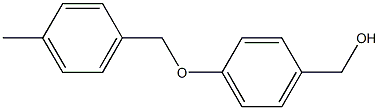
- 201058-08-4
- C15H16O2
- 228.28634
- All (0)
- China (0)
- (0)
- 28931-47-7
- C6H14N2O3
- 162.19
- All (0)
- China (0)
- (0)

- 11041-12-6
- C27H47N
- 385.66878
- All (0)
- China (0)
- (0)
Related Products More >

- 9002-86-2
- CNY Request For Quotation
- CNY Request For Quotation
- CNY Request For Quotation
- CNY Request For Quotation
- CNY Request For Quotation


Most of the time, when people say “resin” in arts and crafts, they could mean epoxy, polyester, or acrylic. Acrylic is special because it stays clear and doesn’t yellow as fast as some other resins. It’s easy to handle, dries pretty quickly, and is safe for lots of everyday projects. So next time you’re shopping or doing a DIY project, remember: all acrylic is resin, but not all resin is acrylic.
The key attributes of acrylic resin include exceptional optical clarity, resistance to ultraviolet light degradation, and good mechanical strength. These properties are directly linked to the covalent bonds within its polymer matrix, which provide a robust yet flexible structure. In practice, this material is pivotal in industries requiring durable, transparent components. A common example is its use in automotive tail lights and lenses, where the resin must maintain optical clarity while withstanding prolonged exposure to sunlight and temperature fluctuations without yellowing or becoming brittle.
Another significant application is in artistic and protective coatings. Acrylic resin serves as the binding medium in water-based acrylic paints, enabling pigment suspension, adhesion to surfaces, and the formation of a flexible, water-resistant film upon drying. The mechanism here involves the coalescence of acrylic polymer particles as the water evaporates, creating a continuous protective layer. This principle is also exploited in clear wood varnishes, which shield furniture from moisture and physical wear while preserving the natural grain appearance, demonstrating the material’s functional versatility beyond mere structural uses.
In professional fields such as materials engineering and manufacturing, distinguishing between resin and acrylic is critical for selecting appropriate materials. Resins, particularly thermosetting resins like epoxy, are integral in composite materials, adhesives, and coatings due to their ability to cross-link during curing, resulting in strong, durable structures that resist heat and chemicals. Acrylics, by contrast, find primary use in applications demanding transparency and impact resistance, such as automotive lenses, medical devices, and architectural glazing; PMMA, for example, offers optical properties comparable to glass but with greater shatter resistance, making it a safer alternative in many scenarios. The confusion often arises when "acrylic resin" is used as a term—this refers to a subset of synthetic resins where the polymer backbone includes acrylic monomers, blending some properties of both, but it is not synonymous with either the broad resin category or pure acrylic polymers like PMMA.
A common misconception is that all resins are acrylic or that acrylics are merely a type of resin, but this overlooks their fundamental differences in composition and behavior. Resins can be based on numerous monomers beyond acrylics, including phenol-formaldehyde or polyurethane, each tailored for specific functions—phenolic resins, for example, are used in high-temperature insulators due to their thermal stability, a property not typically associated with acrylics. Conversely, acrylics are defined by their monomer type, limiting their chemical variation compared to the vast resin category. Understanding this distinction ensures precise material selection, whether for creating a flexible resin-based adhesive or a transparent acrylic component, directly impacting the performance and durability of the final product.
From a material science perspective, acrylic resins are valued for their clarity, UV resistance, and moderate flexibility. Their ability to maintain transparency over time makes them ideal for applications ranging from optical lenses and display screens to protective coatings and artistic media. In industrial settings, acrylic resins are formulated for injection molding, extrusion, or casting, allowing precise control over shape and surface finish. This contrasts with certain polyester or epoxy resins, which may offer higher strength or chemical resistance but less optical clarity. Understanding the chemical and physical basis of acrylic resins enables designers and engineers to select materials according to the specific demands of transparency, weathering, and ease of processing.
In everyday life, the distinction between acrylic and other resins is often subtle yet significant. Consumers encounter acrylic in furniture, decorative objects, and personal care products where clarity, color stability, and lightweight properties are critical. Meanwhile, other resins may be present in automotive parts, structural composites, or coatings requiring toughness and adhesion rather than optical quality. Recognizing acrylic as a distinct class of resin provides insight into its versatility and the rationale behind material choices across disciplines, from art and design to medicine and industrial manufacturing.