


 Home
Home
Hi, I'd like to ask—what exactly is polyvinyl chloride? Is it a type of plastic? What are its key characteristics? How does its molecular structure influence its uses? What's the basic definition of PVC in the field of materials? Thanks!
What Is a Polyvinyl Chloride? Getting to Know the Fundamentals of PVC
Related Encyclopedia
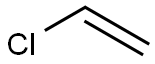
- 9002-86-2
- C2H3Cl
- 62.49822
- All (75)
- China (10)
- (75)
Related Products More >

- 9002-86-2
- CNY Request For Quotation
- 9002-86-2
- CNY 10.0000
- 25kg
- 9002-86-2
- Request For Quotation
- 220kg
- 9002-86-2
- Request For Quotation
- 1ton
- 9002-86-2
- Request For Quotation
- 25kg
- 9002-86-2
- Request For Quotation
- 1ton
- 9002-86-2
- Request For Quotation
- 1ton
- 9002-86-2
- Request For Quotation
- 1kg


PVC has distinct characteristics that make it versatile. In its unplasticized form, known as rigid PVC or uPVC, it is hard, stiff, and strong, making it ideal for pipes, window frames, and construction materials. It also resists chemicals well, withstanding acids, alkalis, and salts, which suits it for chemical storage and wastewater systems. The high chlorine content, around 56% by weight, gives PVC flame-retardant qualities, allowing it to self-extinguish, a key trait for electrical cables and building uses.
By adding plasticizers like phthalates, PVC can be made flexible, resulting in soft PVC. This flexible type is used in products such as vinyl flooring, medical tubing, and inflatable items. In materials science, PVC is a thermoplastic, meaning it softens when heated and hardens when cooled, enabling it to be shaped through processes like extrusion and injection molding. This adaptability, combined with durability and cost-effectiveness, makes it useful in many industries.
The key characteristics of PVC include its durability, flexibility, and resistance to chemicals and weathering. These properties are largely influenced by its molecular structure. PVC is composed of repeating units of vinyl chloride, with the chemical formula (C2H3Cl)n. The presence of chlorine atoms in the polymer backbone imparts inherent flame retardancy and chemical resistance to PVC. Additionally, the polymer chains can be modified with various additives to tailor its properties for specific uses. For example, plasticizers can be added to increase flexibility, while stabilizers and fillers can enhance thermal stability and mechanical strength.
In its rigid form, PVC is used extensively in construction for applications such as pipes, fittings, and window frames. Its strength, durability, and resistance to corrosion make it an ideal material for these purposes. Flexible PVC, achieved through the addition of plasticizers, is used in a variety of products including cables, flooring, and medical tubing. The ability to modify PVC to meet specific needs is a major factor in its widespread use across different industries.
From an international trade perspective, PVC is a crucial material due to its versatility and cost-effectiveness. It is exported and imported in large quantities globally, with significant production and consumption in regions such as Asia, Europe, and North America. The trade dynamics of PVC are influenced by factors such as raw material availability, production costs, and regulatory requirements. For instance, the production of PVC requires ethylene, which is derived from natural gas or petroleum. Regions with abundant natural gas reserves often have a competitive advantage in PVC production.
Moreover, PVC's environmental impact is a growing concern in international discussions. While it is a durable and versatile material, PVC can pose challenges in terms of recycling and disposal. The presence of additives such as plasticizers and stabilizers can complicate recycling processes. Additionally, the incineration of PVC can release harmful substances such as dioxins.
The molecular structure of PVC consists of repeating -CH2-CHCl- units which create a relatively rigid backbone when no plasticizers are present. The chlorine atoms attached to the carbon backbone contribute significantly to PVC's unique properties including its chemical resistance flame retardancy and durability. The presence of chlorine also makes PVC inherently flame resistant as it releases hydrogen chloride gas when exposed to high temperatures which inhibits combustion. However this same property raises environmental and health concerns during production and disposal since hydrogen chloride is a corrosive gas. To modify PVC's physical properties manufacturers often add plasticizers which are small molecules that penetrate the polymer matrix and increase flexibility. Common plasticizers include phthalates though their use has declined due to regulatory restrictions related to potential health risks.
In terms of key characteristics PVC exhibits excellent chemical resistance making it suitable for applications involving exposure to acids alkalis and salts. It also demonstrates good electrical insulation properties which is why it is widely used in wiring and cable sheathing. Rigid PVC is commonly employed in construction materials such as pipes fittings window frames and siding due to its strength and weather resistance. Flexible PVC finds applications in medical tubing blood bags vinyl flooring and inflatable products. The material's ability to be colored and printed easily further expands its use in consumer goods packaging and signage.
PVC's environmental impact remains a subject of debate. While it is highly durable and recyclable its production involves chlorine chemistry which can lead to the formation of hazardous byproducts such as dioxins if not properly controlled. Additionally PVC waste poses challenges for recycling due to the variety of additives used and potential contamination from other materials. Incineration of PVC can release toxic substances if not managed under strict emission controls. Despite these concerns PVC continues to be widely used because of its cost-effectiveness versatility and functional properties in numerous industrial and consumer applications.
Polyethylene, on the other hand, consists of carbon and hydrogen only, making it more flexible. Its simplicity allows for easier processing into thin films, such as those used in plastic bags. The absence of chlorine also affects how it interacts with heat; it melts at lower temperatures than PVC.
These structural differences influence their environmental impacts too. PVC’s chlorine content can release harmful substances when burned, while polyethylene’s breakdown into microplastics raises long-term concerns. Understanding these nuances helps in choosing the right material for specific needs, balancing functionality with sustainability.