


 Home
Home
Hi, I'd like to ask—where exactly is polyvinyl chloride used? What industries rely on PVC? Are there specific products that use PVC? How does PVC's unique properties make it suitable for different uses? Can you give examples of PVC applications in daily life and industry? Thanks!
What Is Polyvinyl Chloride Used for? Exploring the Diverse Applications of PVC
Related Encyclopedia
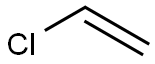
- 9002-86-2
- C2H3Cl
- 62.49822
- All (75)
- China (10)
- (75)
Related Products More >

- 9002-86-2
- CNY Request For Quotation
- 9002-86-2
- CNY 10.0000
- 25kg
- 9002-86-2
- Request For Quotation
- 220kg
- 9002-86-2
- Request For Quotation
- 1ton
- 9002-86-2
- Request For Quotation
- 25kg
- 9002-86-2
- Request For Quotation
- 1ton
- 9002-86-2
- Request For Quotation
- 1ton
- 9002-86-2
- Request For Quotation
- 1kg


The healthcare industry relies on PVC for various products. Medical tubing, IV bags, and some protective gloves are often made from PVC. It is flexible, allowing tubes to bend easily without breaking, and transparent, letting医护人员 monitor fluid flow. It can also be sterilized repeatedly, which is crucial for preventing infections in medical settings.
In daily life, PVC is found in many items. Shower curtains use PVC for its water resistance, keeping water from leaking out. Vinyl flooring, made with PVC, is tough, scratch-resistant, and easy to clean, suitable for busy homes and offices. Credit cards and ID cards are often made from PVC too, as it holds prints well and maintains its shape with regular handling. PVC’s ability to be rigid or flexible—depending on added plasticizers—makes it fit for these varied uses.
The construction industry represents the largest market for PVC, accounting for nearly two-thirds of global consumption. PVC pipes and fittings are extensively used for water supply, sewage, and irrigation systems due to their corrosion resistance, lightweight nature, and long service life. Window frames and doors made from PVC offer excellent thermal insulation and require minimal maintenance compared to traditional wooden or metal alternatives. Roofing membranes and flooring materials also frequently incorporate PVC for their durability and resistance to moisture and chemicals.
In the electrical and electronics sector, PVC plays a critical role as insulation material for wires and cables. Its excellent dielectric properties, flame retardancy, and ability to withstand high voltages make it indispensable for residential, commercial, and industrial electrical installations. Cable jackets, conduits, and wiring harnesses rely on PVC to ensure safety and longevity in electrical systems.
Healthcare applications utilize PVC extensively due to its biocompatibility, flexibility, and ease of sterilization. Medical devices such as IV bags, blood bags, tubing, catheters, and surgical gloves often incorporate PVC because it maintains its integrity when exposed to bodily fluids and medical disinfectants. The material’s ability to be formulated into soft, flexible versions makes it ideal for products that require elasticity and patient comfort.
Consumer products represent another major area where PVC finds widespread use. Everyday items such as credit cards, vinyl records, shower curtains, garden hoses, and inflatable structures are commonly made from PVC. Its ability to be colored, printed, and formed into various shapes allows manufacturers to create visually appealing and functional products for daily use.
Industrial applications of PVC include automotive components, where it is used for interior trim panels, cable insulation, and under-the-hood parts due to its resistance to oil and chemicals. Industrial flooring, conveyor belts, and protective clothing also benefit from PVC’s durability and chemical resistance.
PVC’s unique properties stem from its molecular structure, which can be modified to produce rigid or flexible materials. Rigid PVC provides strength and stiffness for construction and piping applications, while plasticizers can be added to create flexible versions suitable for medical devices and consumer goods. The material’s resistance to water, chemicals, and UV radiation enhances its performance in demanding environments.
From underground plumbing systems to hospital IV bags and children’s toys, PVC remains a ubiquitous material whose versatility continues to drive innovation across multiple sectors, despite ongoing debates about its environmental and health impacts.
Everyday items often contain PVC. Shower curtains are a common example, thanks to its water-resistant properties. Vinyl flooring, which is easy to clean and affordable, uses PVC too. The material’s flexibility when plasticized allows it to mimic the look of wood or stone.
In healthcare, PVC is found in IV bags and tubing. It can be sterilized easily and doesn’t react with most medications, ensuring safety. Automotive industries use it for wire insulation and interior parts, as it handles temperature changes well. Its combination of strength, versatility, and low cost makes it a staple across these areas.
In the electrical sector, PVC is a key material for cable insulation. Its insulating properties protect electrical conductors from moisture and physical damage while ensuring safe operation. The automotive industry relies on PVC for interior components such as dashboard skins, seating upholstery, and door panels. The material's flexibility and durability make it suitable for these applications, where it must withstand daily wear and tear. Additionally, PVC is used in the production of automotive hoses and seals, benefiting from its resistance to oils and fuels.
Flexible PVC is also a critical component in the healthcare industry. It is used to manufacture medical devices like blood bags, IV tubing, and medical gloves. The material's flexibility, clarity, and ability to be sterilized without degradation make it ideal for these applications. In consumer products, PVC is found in everyday items such as shower curtains, vinyl flooring, and outdoor furniture. Its water resistance and ease of cleaning make it a popular choice for household applications.
The unique properties of PVC, such as its ability to be modified with plasticizers to achieve desired levels of flexibility, allow it to be tailored for a wide range of uses. For example, rigid PVC is used for structural applications like piping and construction profiles, while flexible PVC is ideal for hoses, medical devices, and consumer goods. Despite its many advantages, the use of PVC also comes with environmental and health considerations, particularly regarding the production process and the potential release of additives. However, ongoing research and regulatory measures aim to mitigate these challenges while continuing to leverage the material's extensive benefits.