


 Home
Home
I’m curious about the best ways to cut corrugated plastic roofing for my home project. What tools should I use? How can I avoid cracking or damaging the material? Are there any special techniques or safety tips I should know? Could someone explain the easiest and safest way to do this?
How Do You Cut Corrugated Plastic Roofing Without Damaging It?
Related Encyclopedia

- 25037-45-0
- C16H18O5
- 290.32
- All (23)
- China (7)
- (23)
![[11C]-PVC](https://chemcloud-1304660855.cos.ap-shanghai.myqcloud.com/compound/058772b71aa947d8b11258d8de84400d.png?imageMogr2/format/webp)
- 191161-46-3
- C18H20ClN3O
- 329.82400
- All (0)
- China (0)
- (0)
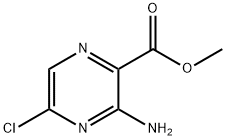
- 28643-16-5
- C6H6ClN3O2
- 187.58
- All (0)
- China (0)
- (0)
![4-amino-1-[(1R,4R,5S)-4,5-dihydroxy-3-(hydroxymethyl)cyclopent-2-en-1-yl]pyrimidin-2-one](https://chemcloud-1304660855.cos.ap-shanghai.myqcloud.com/compound/f9d90d4bd7854872871957a743091143.png?imageMogr2/format/webp)
- 90597-22-1
- C10H13N3O4
- 239.23000
- All (0)
- China (0)
- (0)
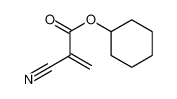
- 10151-78-7
- C10H13NO2
- 179.22000
- All (0)
- China (0)
- (0)

- 5415-34-9
- C19H6Br8O5S
- 985.54500
- All (0)
- China (0)
- (0)
- 1439365-38-4
- C45H62Cl2N6O8
- 885.91500
- All (0)
- China (0)
- (0)
Related Products More >

- 9002-86-2
- CNY Request For Quotation
- 79509-46-9 Poly(1,3,4-thiadiazole-2,5-diyldithio)
- CNY Request For Quotation
- CNY Request For Quotation
- Request For Quotation
- 25037-45-0
- CNY 10.0000
- 25kg
- 63449-39-8
- USD 1000.0000
- 1200kg
- CAS 57-11-4
- USD 800.0000
- 25kg
- 25037-45-0
- Request For Quotation
- 1ton


A common approach is to use power tools like a circular saw or jigsaw fitted with a fine-toothed blade designed specifically for plastics. These blades minimize heat buildup and melting, which could deform the edges. Supporting the sheet firmly on a flat surface reduces vibrations and prevents bending during cutting, which is crucial since excessive flexing can cause fractures. For manual cutting, scoring along the cut line with a utility knife before sawing can help achieve a cleaner edge.
In practical applications, such as residential roofing or greenhouse panels, precise cuts are essential to ensure proper fitting and weatherproofing. For example, contractors often cut sections to size onsite, balancing speed and precision. Safety precautions include wearing eye protection due to plastic shards and ensuring ventilation if cutting indoors because heated plastic fumes can be harmful.
Understanding these factors allows for effective and clean cutting of corrugated plastic roofing, ensuring durability and aesthetic quality in installations. The method chosen depends on available tools, project scale, and desired finish quality.
The key is using tools that minimize stress on the material. Circular saws with fine-toothed blades (60–80 teeth per inch) work well, as they slice through the plastic with minimal friction—reducing heat buildup, which can melt the polymer and clog the blade. The saw’s speed should be moderate; high speeds generate excess heat, causing the plastic to soften and bind, while low speeds may tear the material. This contrasts with cutting metal roofing, which requires abrasive blades, or wood, where coarser teeth clear debris effectively.
For straight cuts, scoring with a utility knife followed by bending can suffice for thinner panels. The sharp blade severs the outer layer, and bending creates a clean break along the scored line, leveraging the plastic’s ductility—the ability to deform under stress without breaking. This method avoids heat entirely but works best for PP, which is more flexible than PE, reducing the risk of splintering.
A common misconception is that any saw will work, but coarse blades or reciprocating saws cause vibration, leading to chipping along the cut edge. Additionally, ignoring the corrugation pattern can result in uneven cuts that compromise the roof’s water resistance; marking cut lines to align with ridge peaks ensures structural integrity.
Cooling the blade with water during prolonged cutting prevents thermal degradation of the plastic, preserving its weather resistance—a critical property for roofing, where exposure to UV and moisture demands intact polymer chains. Proper cutting maintains the material’s intended performance, demonstrating how understanding polymer behavior (flexibility, melting point) guides tool selection and technique, ensuring both precision and durability in construction applications.
Physically, the process involves overcoming the material’s tensile strength and thermal resistance. HDPE, for instance, has a melting point around 120–130°C, while PC melts at 155°C. Using tools that generate excessive heat—such as dull blades or high-speed saws without cooling—can deform the plastic, fusing the cut edges or weakening the structure. Mechanically, the ribbed core acts as a stress concentrator; cutting perpendicular to the ribs may cause splitting, whereas aligning cuts parallel to the ribs enhances stability.
In practice, a sharp utility knife or fine-toothed circular saw with a carbide-tipped blade is ideal. For straight cuts, scoring the outer layer deeply with a knife before snapping along the line works well for thinner sheets (≤3mm). Thicker sheets require a saw, with a slow feed rate to prevent melting. Clamping the material firmly reduces vibration, ensuring cleaner cuts. Post-cutting, sanding edges smooths roughness, minimizing stress points and improving safety.
Applications span construction, agriculture, and packaging. In roofing, precise cuts ensure weatherproof seals, while in agriculture, tailored sheets protect crops without gaps. Medically, corrugated plastic’s lightweight, sterile properties suit disposable medical enclosures. The broader significance lies in optimizing material use: efficient cutting reduces waste, aligning with sustainability goals. Interdisciplinary insights from material science and engineering inform tool design and cutting protocols, balancing performance, cost, and environmental impact in modern manufacturing and DIY projects.