


 Home
Home
I’d like to ask about the best ways to glue plastic materials. What types of glue work well with different kinds of plastic? Are there special preparation steps needed before gluing? How long does it take for the glue to set, and how strong will the bond be? Can glue fail easily with plastic?
How to Glue Plastic Effectively? What Are the Best Methods for Strong Bonds?
Related Encyclopedia
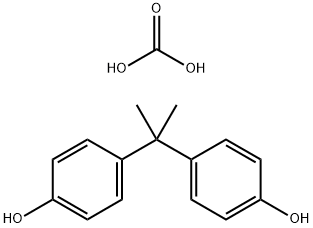
- 25037-45-0
- C16H18O5
- 290.32
- All (23)
- China (7)
- (23)
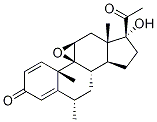
- 83873-16-9
- C22H28O4
- 356.46
- All (0)
- China (0)
- (0)
![[11C]-PVC](https://chemcloud-1304660855.cos.ap-shanghai.myqcloud.com/compound/058772b71aa947d8b11258d8de84400d.png?imageMogr2/format/webp)
- 191161-46-3
- C18H20ClN3O
- 329.82400
- All (0)
- China (0)
- (0)
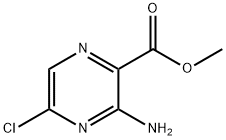
- 28643-16-5
- C6H6ClN3O2
- 187.58
- All (0)
- China (0)
- (0)
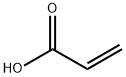
- 9003-03-6
- C3H4O2
- 72.06
- All (0)
- China (0)
- (0)

- 51252-84-7
- C3H4O2
- 72.06270
- All (0)
- China (0)
- (0)
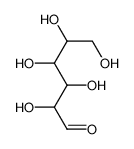
- 25191-16-6
- C6H12O6
- 180.15600
- All (0)
- China (0)
- (0)
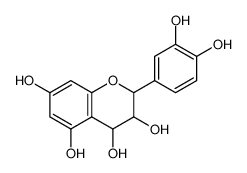
- 27015-21-0
- C15H14O7
- 306.26700
- All (0)
- China (0)
- (0)
- 64742-49-0
- N/A
- 112
- All (0)
- China (0)
- (0)
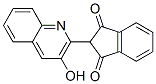
- 75216-45-4
- C18H11NO3
- 289.28
- All (0)
- China (0)
- (0)
Related Products More >

- 9002-86-2
- CNY Request For Quotation
- 9003-55-8
- CNY Request For Quotation
- CNY Request For Quotation
- CNY Request For Quotation


The key to successful plastic bonding lies in the adhesive’s ability to chemically or mechanically interact with the plastic surface. Solvent-based adhesives work by partially dissolving the plastic surface, allowing the adhesive to fuse the two pieces together as it evaporates. Epoxy and cyanoacrylate (super glue) adhesives create strong mechanical interlocks and sometimes form chemical bonds, depending on the plastic’s composition.
In practical terms, the preparation process often includes cleaning the surfaces thoroughly and sometimes roughening them to increase mechanical adhesion. For example, bonding acrylic display cases commonly uses solvent cement, which softens the acrylic surface for a seamless joint. Polyethylene, widely used in containers, often requires specialized surface primers or hot melt adhesives because of its low surface energy.
Understanding the plastic type guides the adhesive choice, application technique, and curing time. For instance, in automotive repairs, flexible urethane-based adhesives bond plastics with some elasticity, accommodating movement and vibrations without cracking. Properly selecting and applying the adhesive enhances durability, aesthetics, and safety in both everyday repairs and industrial manufacturing.
To enhance bonding, abrasion (e.g., sanding) or chemical primers (e.g., isopropyl alcohol wipes) are used to increase surface roughness and remove contaminants, promoting mechanical interlocking and chemical adhesion. Cyanoacrylate adhesives (super glues) work well on rigid plastics like ABS or acrylic by forming rapid, strong bonds through anionic polymerization, but they may become brittle under stress. Polyurethane adhesives offer flexibility and water resistance, ideal for bonding dissimilar plastics or outdoor applications, as they cure via moisture reaction to create a durable, elastic joint.
A critical distinction exists between solvent-based and reactive adhesives: solvent-based glues (e.g., PVC cement) dissolve plastic surfaces slightly to create a fused bond, suitable for pipes or rigid PVC, while two-part epoxies chemically crosslink with plasticizers in soft plastics like PVC for high-strength repairs. Misconceptions arise when assuming a single adhesive works universally; for example, standard super glue fails on polyethylene due to its ultra-low surface energy. Selecting the right adhesive—based on plastic type, flexibility needs, and environmental exposure—ensures optimal performance in engineering, manufacturing, or DIY projects.
For polar plastics, solvent-based adhesives work by dissolving the plastic surface, creating a semi-fluid layer that fuses with the adhesive; as the solvent evaporates, the polymers interlock at the molecular level. This mechanism is effective for PVC pipes, where cement-like adhesives dissolve the surface to form a seamless bond. Cyanoacrylates (super glues) also perform well here, polymerizing rapidly upon contact with moisture, forming strong covalent bonds with polar functional groups—useful for small acrylic or nylon parts.
Non-polar plastics require adhesives with low surface tension to wet the surface, often combined with mechanical or chemical modification. Polyurethane adhesives, which cure via reaction with moisture to form flexible, crosslinked networks, adhere to PE and PP by mechanical interlocking if the surface is roughened. Alternatively, primers containing chlorinated polyolefins can chemically modify non-polar surfaces, introducing polar sites that bond with the adhesive—critical in automotive applications where PP bumpers are glued to frames.
Surface preparation is universal: cleaning with isopropyl alcohol removes oils or contaminants that block adhesion, while sanding increases roughness for better mechanical grip. For high-stress applications, like industrial plastic components, structural adhesives (epoxies) offer superior strength, curing through a two-part chemical reaction that forms a rigid bond resistant to temperature and chemicals. Epoxies work across polar and non-polar plastics by combining a resin and hardener that, when mixed, create a matrix that adheres through both chemical attraction and mechanical interlock.
In daily life, this translates to repairing toys (using cyanoacrylates on PVC), fixing plastic furniture (polyurethanes on PP), or assembling DIY projects (epoxies on mixed plastics). Industrial uses range from bonding plastic parts in electronics (where low-volatile adhesives prevent contamination) to packaging (where pressure-sensitive adhesives on PE labels rely on modified surfaces for stickiness).
Beyond functionality, gluing plastic underscores the role of interface science in connecting dissimilar materials, enabling lighter, more durable products by replacing mechanical fasteners. It also drives sustainability—effective adhesion extends the life of plastic items, reducing waste. Whether in a home workshop or a manufacturing plant, the process embodies the fusion of chemistry and engineering, turning polymer properties into practical solutions.