


 Home
Home
When people talk about eco-friendly fashion, they often mention natural fiber clothing. But what exactly does that mean? Are all natural fibers the same, and how do they differ from synthetic ones like polyester or nylon? Can something be called “natural” even if it’s processed in a factory? What makes these fibers more sustainable or skin-friendly? Is natural fiber clothing really better for the environment, or is it just a trend?
What Is Natural Fiber Clothing and Why Should You Care?
Related Encyclopedia
- 9005-53-2
- unspecified
- 0
- All (8)
- China (7)
- (8)
- 8068-05-1
- C30H25ClN6
- 505.01
- All (0)
- China (0)
- (0)
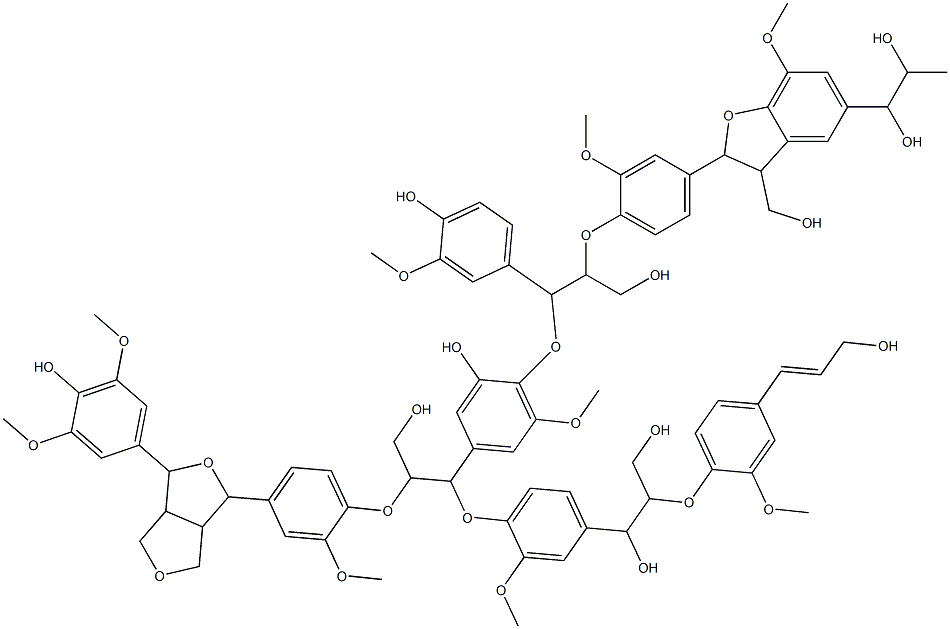
- 8068-03-9
- C81H92O28
- 1513.58038
- All (0)
- China (0)
- (0)
- 42613-30-9
- 0
- All (4)
- China (4)
- (4)

- 9004-64-2
- C3H7O*
- 59.08708
- All (22)
- China (9)
- (22)
- 9004-62-0
- C29H52O21
- 0
- All (59)
- China (31)
- (59)
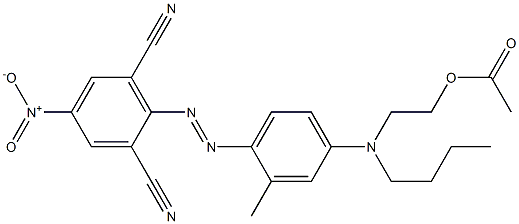
- 9004-57-3
- C23H24N6O4
- 448.47446
- All (21)
- China (2)
- (21)
- 9013-34-7
- C20H23NO5
- 0
- All (4)
- China (4)
- (4)
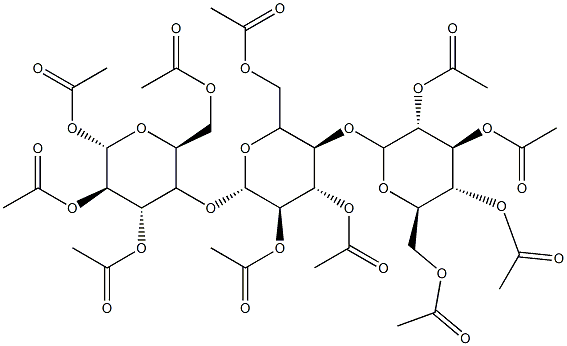
- 9012-09-3
- C40H54O27
- 966.84056
- All (3)
- China (0)
- (3)

- 9004-41-5
- C6H8N2O
- 124.14052
- All (1)
- China (1)
- (1)
Related Products More >

- CNY Request For Quotation
- CNY Request For Quotation
- CNY Request For Quotation
- 9004-62-0
- Request For Quotation
- 9004-62-0
- Request For Quotation
- 9004-65-3
- Request For Quotation
- 9004-65-3
- USD 361.6000
- 25kg
- 9004-57-3
- USD 580.0000
- 25kg


People like natural fiber clothes because they feel soft, let your skin breathe, and don’t trap sweat the way some plastic-based fabrics do. They’re comfy for everyday wear and usually better for folks with sensitive skin. Plus, they’re more likely to break down over time instead of sitting in landfills forever.
You’ll see natural fibers in all kinds of outfits—from casual wear to dress shirts, and even baby clothes. They’re a popular choice for anyone who wants to feel good and do a little better for the planet at the same time.
The key attributes of natural fiber clothing are closely tied to their origin. Plant fibers like linen, extracted from flax stems, are strong and have high moisture-wicking capabilities, making them ideal for warm-weather wear; their rigid molecular structure resists stretching, contributing to durability. Animal fibers such as silk, produced by silkworms, exhibit a smooth, lustrous surface due to the triangular cross-section of the fibers, which reflects light uniquely. These properties translate directly into practical use: a cotton t-shirt stays cool in summer by absorbing sweat and allowing it to evaporate, while a wool sweater retains heat in winter by trapping air within its fibers, even when damp.
Beyond comfort, natural fiber clothing interacts with the environment in distinct ways. Many natural fibers are biodegradable; a cotton garment, when discarded, breaks down over time through microbial action, unlike synthetic fibers that persist in landfills. This biodegradability aligns with sustainable practices, though it’s balanced by factors like water usage in cotton cultivation. Hemp, another plant fiber, requires less water and pesticides, making hemp clothing a more eco-friendly choice for those prioritizing resource efficiency. These examples illustrate how the inherent characteristics of natural fibers not only shape their functionality but also influence broader decisions about sustainability and daily wardrobe choices.
The key attributes of natural fibers include sustainability and low environmental impact compared to synthetics, which often shed microplastics. However, their production isn’t without challenges—cotton farming, for example, can be water-intensive unless managed organically. In practice, natural fiber clothing aligns with slow fashion principles, emphasizing durability and timeless design. A linen shirt, for example, becomes softer with each wash and can last decades if cared for properly, reducing waste.
Mechanically, natural fibers interact differently with dyes and finishes than synthetics. Plant-based fibers like hemp readily absorb natural dyes, yielding earthy tones, while silk’s protein structure allows for vibrant colors. This influences artisanal practices, such as hand-block printing on cotton or indigo dyeing techniques. The tactile qualities of these materials also affect wearer experience; wool’s natural elasticity resists wrinkling, making it practical for travel. These characteristics underscore how natural fiber clothing bridges functionality, aesthetics, and ecological awareness in everyday life.
From a physiological standpoint, natural fibers interact with the human body in unique ways. Due to their hygroscopic nature, they can absorb and release moisture without feeling wet, maintaining skin comfort and reducing the risk of irritation. Their porous structure allows for effective air circulation, helping regulate body temperature. On a chemical level, the absence of petroleum-based compounds makes these materials less likely to emit volatile organic compounds (VOCs), which can be problematic in closed environments. Mechanically, the physical properties of natural fibers—like tensile strength, elasticity, and resilience—depend on their internal morphology, including fiber length, cell wall thickness, and crystallinity of cellulose microfibrils.
In daily life, natural fiber clothing is valued not only for its tactile comfort and aesthetic appeal but also for its biodegradability and reduced environmental footprint. In industry, these materials play a vital role beyond apparel. Natural fibers are used in composite materials for automotive parts, construction (as insulation or reinforcement), and even aerospace sectors due to their lightweight yet strong characteristics. In medicine, their biocompatibility is exploited in wound dressings, surgical sutures, and tissue scaffolding, where synthetic materials might trigger immune responses.
The study of natural fibers spans multiple disciplines—from plant biology and textile engineering to environmental science and human physiology. This intersection allows for innovations in sustainable material development, bioengineering, and circular fashion systems. Moreover, the renewed interest in traditional fiber crafts and regenerative agriculture has socio-economic implications, supporting rural economies and cultural preservation while addressing global sustainability goals.