


 Home
Home
We know that fiber is important for digestion and overall health, and many people choose breakfast cereals as an easy way to get more fiber. Raisin Bran is often advertised as a high-fiber option—but how much fiber does it really have per serving? Does it vary between brands like Kellogg’s and Post? And how much of it comes from the bran versus the raisins? Are all types of fiber in Raisin Bran equally beneficial to our body?
How Much Fiber Is in Raisin Bran Cereal?
Related Encyclopedia
- 9005-53-2
- unspecified
- 0
- All (8)
- China (7)
- (8)
- 8068-05-1
- C30H25ClN6
- 505.01
- All (0)
- China (0)
- (0)
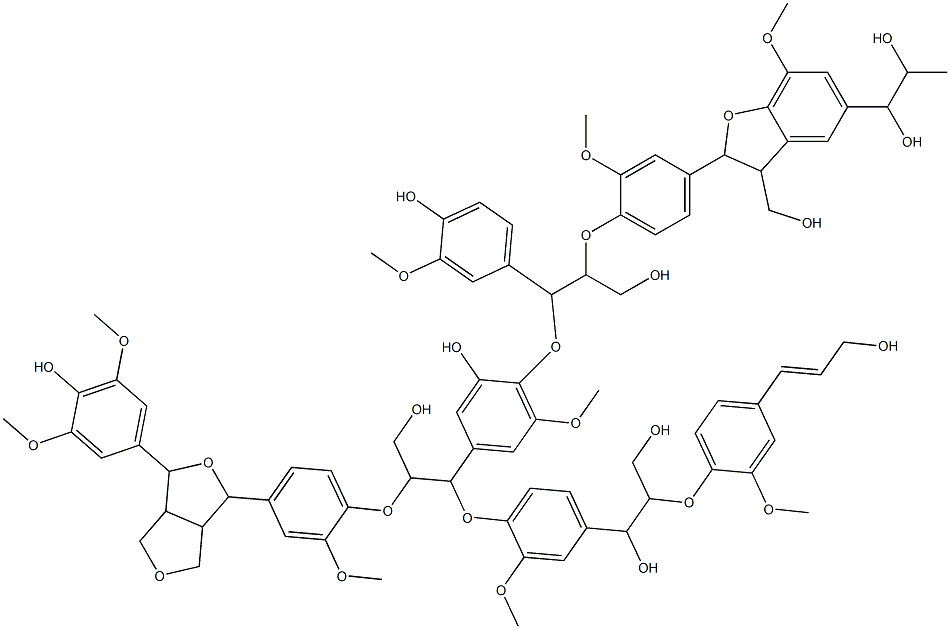
- 8068-03-9
- C81H92O28
- 1513.58038
- All (0)
- China (0)
- (0)
- 42613-30-9
- 0
- All (4)
- China (4)
- (4)
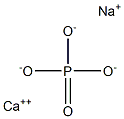
- 65997-17-3
- CaNaO4P
- 158.039131
- All (3)
- China (0)
- (3)

- 9004-64-2
- C3H7O*
- 59.08708
- All (22)
- China (9)
- (22)
- 9004-62-0
- C29H52O21
- 0
- All (59)
- China (31)
- (59)
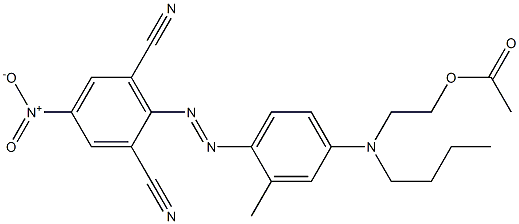
- 9004-57-3
- C23H24N6O4
- 448.47446
- All (21)
- China (2)
- (21)
- 9013-34-7
- C20H23NO5
- 0
- All (4)
- China (4)
- (4)
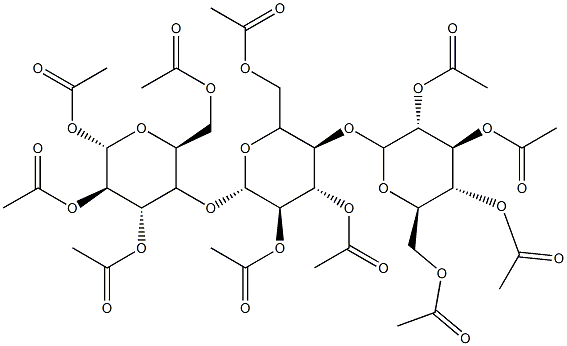
- 9012-09-3
- C40H54O27
- 966.84056
- All (3)
- China (0)
- (3)
Related Products More >

- CNY Request For Quotation
- CNY Request For Quotation
- CNY Request For Quotation
- 9004-62-0
- Request For Quotation
- 9004-62-0
- Request For Quotation
- 9004-65-3
- Request For Quotation
- 9004-65-3
- USD 361.6000
- 25kg
- 9004-57-3
- USD 580.0000
- 25kg


A lot of people eat Raisin Bran in the morning to help “keep things moving,” so to speak—it’s helpful if you’re trying to stay regular. It’s also a quick and easy option if you’re trying to get more fiber without totally changing your diet. Just pour it in a bowl with some milk, and you’re good to go.
So if you're wondering whether Raisin Bran is a good fiber choice—yes, it actually is, especially compared to other sugary cereals that barely have any.
The fiber in raisin bran interacts with the body’s digestive processes in ways that align with broader nutritional principles. For instance, the insoluble fiber’s role in maintaining regularity is practical for individuals aiming to support gut health, as consistent bowel function is linked to reduced risk of certain digestive issues. Meanwhile, the soluble fiber’s ability to slow glucose absorption can be beneficial for managing blood sugar levels, making raisin bran a more balanced choice compared to sugary cereals with little fiber.
When considering portion sizes, a standard cup of raisin bran delivers a significant portion of the recommended daily fiber intake—about 25 to 30% for adults. This makes it a convenient option for those looking to increase their fiber consumption without relying solely on fruits, vegetables, or legumes. Pairing it with milk or a plant-based alternative can further enhance its nutritional profile, though it’s important to note that added sugars in some brands may affect overall healthfulness, even with the fiber content. For example, someone starting their day with raisin bran might notice they feel fuller longer than if they’d chosen a low-fiber cereal, demonstrating the fiber’s role in satiety and meal satisfaction.
The interplay between these fiber types illustrates how raisin bran functions nutritionally. Insoluble fiber accelerates food transit through the digestive tract, reducing constipation, while soluble fiber forms a gel-like substance during digestion, slowing glucose absorption. This dual mechanism makes raisin bran a practical choice for those seeking balanced fiber intake. For example, someone managing mild digestive sluggishness might benefit from the insoluble fiber, while individuals focusing on blood sugar control could leverage the soluble component.
Processing methods can influence fiber retention. Some brands fortify their products with additional wheat bran or oat fiber to boost content, highlighting how manufacturing choices impact nutritional outcomes. The raisins, though naturally high in sugar, contribute fructose and glucose alongside fiber, creating a moderated glycemic response compared to sugary cereals without fiber. This balance underscores why raisin bran is often positioned as a middle-ground option between highly processed cereals and whole-food alternatives like oatmeal.
Dietary fiber exerts its influence through several mechanisms. Insoluble fiber adds bulk to stool and facilitates peristalsis by increasing water absorption in the large intestine. Soluble fiber, though less abundant in Raisin Bran, dissolves in water to form a gel-like substance, which can slow gastric emptying and reduce absorption rates of glucose and lipids, thus impacting glycemic control and lipid metabolism. These physiological functions make fiber essential not only for digestive health but also for managing conditions such as constipation, hyperlipidemia, and type 2 diabetes.
From a chemical standpoint, fiber consists of non-starch polysaccharides and other plant components like beta-glucans and hemicellulose. Their resistance to enzymatic breakdown is what distinguishes fiber from other carbohydrates. Physically, fiber alters the rheological properties of intestinal contents, impacting motility and nutrient absorption. This has implications beyond nutrition: in medicine, fiber is used therapeutically to treat gastrointestinal disorders, while in food science and industry, it is employed to improve product texture, water retention, and shelf life.
In a broader interdisciplinary view, fiber intersects with environmental sustainability and agricultural practices. High-fiber crops contribute to soil health and resource efficiency, while consumer trends toward fiber-rich foods drive innovation in cereal processing and product formulation. Thus, examining the fiber content in something as common as Raisin Bran opens a window into the complex interrelationship between food science, human physiology, and global health systems.