


 Home
Home
When reading about animal feed or plant quality, you might come across the term “acid detergent fiber.” But what exactly does it mean? Is it something naturally found in plants, or is it added during processing? Why is it called “acid detergent,” and what does that have to do with fibers? How does it affect things like digestion in animals or the nutritional value of food? Could it also relate to how tough or soft a plant is? What is acid detergent fiber, and how is it measured?
What Is Acid Detergent Fiber and Why Does It Matter in Plants?
Related Encyclopedia
- 9005-53-2
- unspecified
- 0
- All (8)
- China (7)
- (8)
- 8068-05-1
- C30H25ClN6
- 505.01
- All (0)
- China (0)
- (0)
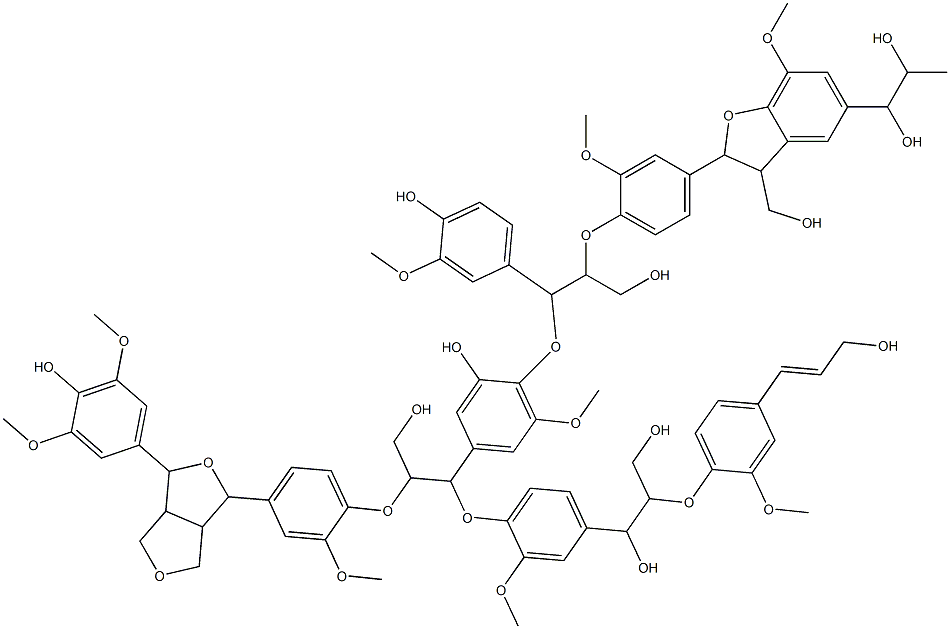
- 8068-03-9
- C81H92O28
- 1513.58038
- All (0)
- China (0)
- (0)
- 42613-30-9
- 0
- All (4)
- China (4)
- (4)

- 9004-64-2
- C3H7O*
- 59.08708
- All (22)
- China (9)
- (22)
- 9004-62-0
- C29H52O21
- 0
- All (59)
- China (31)
- (59)
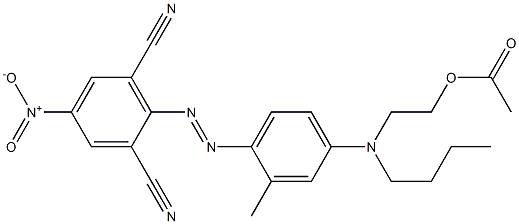
- 9004-57-3
- C23H24N6O4
- 448.47446
- All (21)
- China (2)
- (21)
- 9013-34-7
- C20H23NO5
- 0
- All (4)
- China (4)
- (4)
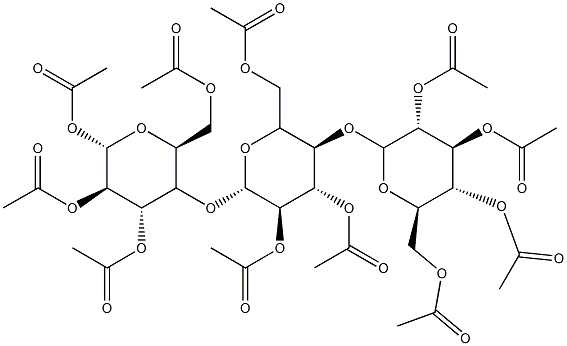
- 9012-09-3
- C40H54O27
- 966.84056
- All (3)
- China (0)
- (3)

- 9004-41-5
- C6H8N2O
- 124.14052
- All (1)
- China (1)
- (1)
Related Products More >

- CNY Request For Quotation
- CNY Request For Quotation
- CNY Request For Quotation
- 9004-62-0
- Request For Quotation
- 9004-62-0
- Request For Quotation
- 9004-65-3
- Request For Quotation
- 9004-65-3
- USD 361.6000
- 25kg
- 9004-57-3
- USD 580.0000
- 25kg


You’ll usually hear about it in farming or animal feed — because animals like cows eat a lot of plant material, and farmers want to know how much of it they can actually digest. If a plant has a lot of this fiber, it means it’s harder for animals to break down, which could affect their nutrition.
In everyday terms, it’s a bit like the difference between eating a crunchy raw carrot and a soft piece of bread — one’s just harder for your body to deal with. So yeah, nothing scary — just a fancy way of measuring the tough parts in plants.
At the molecular level, the resistance of ADF components arises from their tight structural integration. Cellulose is a linear polymer of glucose molecules with strong intermolecular hydrogen bonding, creating a rigid crystalline structure. Lignin, on the other hand, is a complex phenolic polymer that fills the spaces between cellulose fibers and provides hydrophobicity and stiffness. The chemical treatment used to isolate ADF dissolves more soluble substances such as proteins, hemicellulose, and pectins, leaving behind these dense, less degradable materials. Physically, this fraction forms the structural “skeleton” of plant tissues, especially in mature or woody plants, contributing to their mechanical strength and resilience.
In industrial applications, understanding ADF is vital for processes like biofuel production, where efficient conversion of plant biomass into energy requires breaking down cellulose and lignin. High ADF content can hinder enzymatic hydrolysis, making feedstock selection and pretreatment technologies crucial. In textiles and paper industries, the cellulose portion of ADF is a desired raw material, while lignin is often a waste product or energy source. In the environmental sciences, ADF is relevant to composting efficiency and soil carbon cycling, influencing how plant residues decompose and contribute to soil health.
From a medical and nutritional perspective, insights from ADF research inform dietary fiber classifications. While humans cannot digest cellulose and lignin, their presence in food affects gut motility and satiety, playing a role in digestive health. Moreover, lignin's phenolic structure has attracted interest for its potential antioxidant properties and interactions with gut microbiota.
Broadly speaking, acid detergent fiber is a lens through which we understand the interface between plant biology and its functional implications across ecosystems and industries. Its relevance spans from animal nutrition to sustainable materials, anchoring it as a foundational concept in both theoretical and applied sciences.
The critical attribute of ADF lies in its inverse relationship with energy availability: higher ADF content reduces the digestible energy in feed, as cellulose and lignin are harder to break down compared to sugars or starches. For instance, in dairy farming, forages with lower ADF levels are preferred because they allow cows to consume more dry matter and produce more milk; a hay sample with 30% ADF might support higher milk yields than one with 40% ADF. This relationship stems from the physical and chemical properties of ADF components—lignin, in particular, acts as a barrier, limiting microbial access to cellulose in the rumen.
In practical terms, ADF analysis guides livestock nutritionists in formulating rations. For example, when feeding beef cattle aimed at rapid weight gain, rations are balanced to keep ADF levels low enough to ensure sufficient energy intake while maintaining gut health. Similarly, in horse feed, ADF content is monitored to prevent digestive issues, as excessive indigestible fiber can lead to impaction. Beyond animal agriculture, ADF measurements inform research on crop breeding, helping develop varieties with optimal fiber content for both forage and biofuel production.
The practical significance of ADF extends beyond nutrition. In biofuel production, high ADF content in biomass feedstock indicates higher recalcitrance to enzymatic breakdown, necessitating more aggressive pretreatment methods. For example, switchgrass with elevated ADF levels requires additional processing steps compared to low-ADF alfalfa to convert cellulose into fermentable sugars. The interplay between ADF and other fiber metrics like neutral detergent fiber (NDF) also informs crop breeding programs; selecting for lower ADF in forages can improve both feed quality and processing efficiency.
In environmental science, ADF measurements aid in studying decomposition rates in ecosystems. Plant litter with high ADF content decomposes slower due to lignin’s resistance to microbial degradation, influencing carbon cycling in soils. This principle is observable in forestry, where coniferous needles with higher ADF persist longer in leaf litter compared to deciduous leaves. The mechanistic link between ADF and material persistence underscores its broader relevance across agriculture, industry, and ecology.