


 Home
Home
Rubber plants are popular houseplants because they’re easy to care for and look great indoors. But what if you want to grow more of them without buying a new one? Is it possible to grow a new rubber plant from the one you already have? Do you need any special tools or chemicals to do it? Can you just cut a piece and stick it in soil, or is there a proper way to get it right? How do you make sure the cutting actually grows roots and turns into a healthy new plant?
How to Propagate a Rubber Plant at Home?
Related Encyclopedia

- 150-86-7
- C20H40O
- 296.53
- All (8)
- China (6)
- (8)
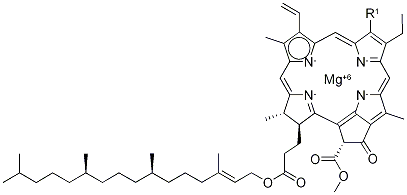
- 1406-65-1
- C54H69MgN4O5R+2
- 878.45446
- All (9)
- China (0)
- (9)
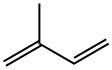
- 78-79-5
- C5H8
- 68.12
- All (7)
- China (7)
- (7)
- 123065-67-8
- C2H2NO2
- 72.04280
- All (7)
- China (7)
- (7)
- 111184-80-6
- C17H19N7
- 321.38000
- All (7)
- China (7)
- (7)
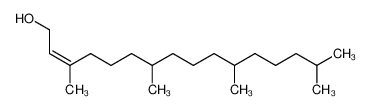
- 854039-21-7
- C20H40O
- 296.53100
- All (0)
- China (0)
- (0)
- 76337-16-1
- C22H42O2
- 338.56800
- All (0)
- China (0)
- (0)
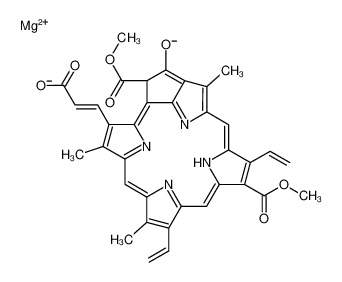
- 111308-93-1
- C36H28MgN4O7
- 652.93512
- All (0)
- China (0)
- (0)
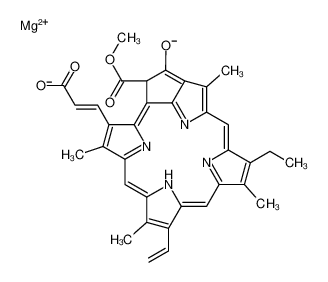
- 18901-56-9
- C35H30MgN4O5
- 610.94100
- All (0)
- China (0)
- (0)
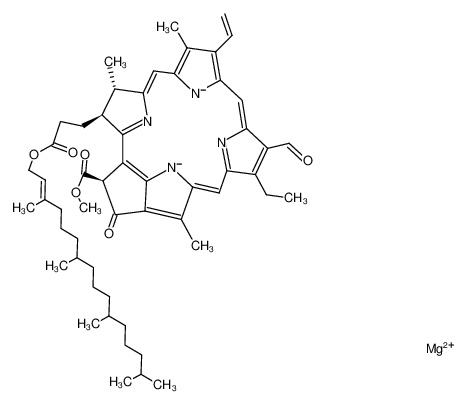
- 22309-14-4
- C55H70MgN4O6
- 907.47200
- All (0)
- China (0)
- (0)
Related Products More >

- CNY Request For Quotation
- CNY Request For Quotation
- CNY Request For Quotation
- CNY Request For Quotation


Keep the plant in a warm spot with indirect sunlight and be patient—it can take a few weeks. Change the water every few days if you're rooting in water. If it’s in soil, keep it slightly damp, not soaked. Once you see roots, you can plant it in a pot like a regular rubber plant.
It's kind of fun and satisfying to grow your own plant this way. Plus, it saves money and makes a great gift too.
After preparing the cutting, allow the cut end to dry for a few hours to form a callus, which prevents rot—a critical step because rubber plants exude a milky sap that can hinder root growth if left moist. Once calloused, place the cutting in water or a well-draining soil mix. Water propagation offers visibility into root development, making it easier to monitor progress, while soil propagation often leads to stronger root systems once established. Maintain a warm environment, around 70-75°F, and indirect light to avoid stressing the cutting. Over time, new growth will emerge, indicating successful propagation. This method not only allows gardeners to expand their collection but also serves as a way to rejuvenate older plants by creating new specimens from healthy cuttings.
A practical example is using a 6-inch stem cutting with 2-3 leaves, dipped in rooting hormone to accelerate the process. When placed in water, roots typically emerge within 3-4 weeks, after which the cutting can be transplanted. Soil propagation, while slightly slower, often results in stronger root systems due to immediate exposure to a stable medium. The success of this method hinges on maintaining high humidity and indirect light, mimicking the plant’s native tropical conditions.
The underlying mechanism involves auxins mobilizing nutrients to the wounded area, stimulating callus formation and subsequent root development. This principle applies broadly to many woody plants, but the rubber plant’s vigor and adaptability make it an ideal candidate for beginners. For instance, a single healthy parent plant can yield multiple cuttings, each capable of growing into a mature specimen with proper care. The process not only expands one’s plant collection but also demonstrates how plant physiology can be harnessed for practical cultivation.
The wound response is also critical. When a cutting is made, the plant initiates protective chemical pathways—laticifers near the wound release latex, rich in isoprene and proteins, which acts both as a physical barrier and a microbial deterrent. This latex, though a defense mechanism, also points to the plant’s industrial value—natural rubber harvested from related species is a vital material in automotive and medical industries. From a physiological perspective, callus formation around the wound area is followed by the emergence of adventitious roots, a remarkable ability that reflects the plant's adaptability and evolutionary strategy for survival in diverse environments.
In terms of environmental requirements, successful propagation depends on factors such as humidity, temperature, and light, all of which influence transpiration rates and metabolic activity. Light promotes photosynthesis, leading to the production of sugars and energy essential for new tissue development. Moisture must be balanced to prevent desiccation while minimizing fungal growth. Rooting in water provides oxygenation, whereas soil offers microbial symbiosis and nutrient interaction—each medium triggers a different subset of physiological responses.
Beyond the home gardening context, understanding propagation has broader implications. In agriculture and forestry, vegetative propagation ensures genetic uniformity in crops. In conservation, it allows for the cloning of rare or endangered plant species. From a biochemical angle, studying these processes sheds light on plant hormone pathways, tissue regeneration, and even wound healing mechanisms that have parallels in biomedical research.
In sum, propagating a rubber plant is not just a hobbyist’s task—it embodies the intersection of biology, chemistry, and environmental science, illustrating how microscopic cellular changes support macroscopic growth and sustainability in both natural and human-made systems.