


 Home
Home
When learning about dietary fibers, it’s common to come across the term "soluble fiber." But what does it really mean in everyday life? Is it about how the fiber behaves in water, or how it affects our body? And how is it different from insoluble fiber that we often hear about too? If you're reading food labels or trying to improve digestion, this can get confusing. So, which of the following is a characteristic of soluble fiber?
Which of the Following Is a Characteristic of Soluble Fiber?
Related Encyclopedia
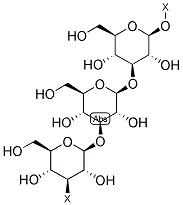
- 9008-22-4
- C18H30O14X2
- 470.42
- All (6)
- China (4)
- (6)
- 9000-69-5
- C6H12O6
- 0
- All (31)
- China (15)
- (31)
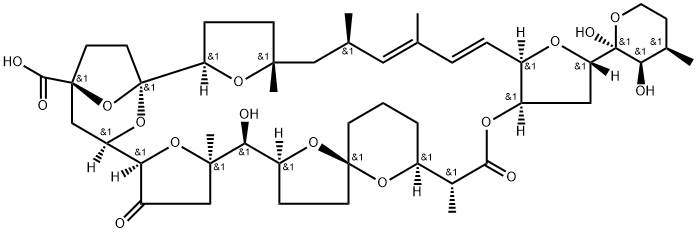
- 124843-18-1
- C47H68O16
- 889.05
- All (0)
- China (0)
- (0)
Related Products More >

- CNY Request For Quotation
- CNY Request For Quotation
- CNY Request For Quotation
- 9051-97-2
- Request For Quotation
- 9041-22-9
- Request For Quotation
- 9037-22-3
- Request For Quotation
- Bottle,barrel,cargo,container,etc.
- 9037-22-3
- Request For Quotation
- 9037-22-3
- Request For Quotation
- 25 kg/bag can


You’ll find soluble fiber in everyday foods like oats, apples, carrots, and beans. If you’ve ever eaten oatmeal and noticed it gets kind of thick when cooked, that’s the soluble fiber doing its thing. It’s also the reason why some high-fiber foods help prevent that mid-morning hunger.
Unlike insoluble fiber, which mostly helps with keeping your digestion regular, soluble fiber works more behind the scenes—helping your heart and sugar levels quietly, without you really noticing. So next time you see “soluble fiber” on a label, just think: it’s the kind that mixes with water and gives your body a little extra support from the inside.
One of the key attributes of soluble fiber is its fermentability by gut microbiota in the colon. During fermentation, short-chain fatty acids (SCFAs) like butyrate, propionate, and acetate are produced, which play critical roles in gut health and systemic inflammation reduction. For instance, propionate can inhibit cholesterol synthesis in the liver, contributing to lower LDL cholesterol levels. This explains why foods rich in soluble fiber, such as oats, apples, and legumes, are often recommended for cardiovascular health.
In practical terms, incorporating soluble fiber into diets can have immediate and long-term effects. A bowl of oatmeal for breakfast, for example, not only stabilizes mid-morning blood sugar but also supports sustained energy levels. Similarly, adding psyllium husk to smoothies can enhance digestive regularity while providing cholesterol-lowering benefits. These everyday applications highlight how soluble fiber’s functional properties translate into tangible health outcomes without requiring drastic dietary changes.
The interaction between soluble fiber and digestive enzymes also underscores its role in nutrient absorption. By delaying the breakdown of carbohydrates, it ensures a more gradual release of glucose into the bloodstream. This modulation of digestion is why soluble fiber is often emphasized in diets for metabolic syndrome management. Its dual impact on gut microbiota and metabolic health makes it a cornerstone of preventive nutrition strategies.
Another defining trait is its fermentability by beneficial gut bacteria in the colon. As these bacteria break down soluble fiber, they produce short-chain fatty acids (SCFAs) such as butyrate, which support gut lining health and reduce inflammation. Foods rich in soluble fiber, including apples with skin, citrus fruits, and legumes, demonstrate these properties: consuming lentils not only adds the gel-forming fiber to the digestive system but also feeds gut microbiota, enhancing their ability to produce SCFAs that nourish colon cells.
This dual action—viscosity and fermentability—also impacts cholesterol levels. The gel-like substance binds to bile acids, which are made from cholesterol, and carries them out of the body, prompting the liver to use more cholesterol to make new bile acids, thereby lowering blood cholesterol. This mechanism, observable in regular consumption of psyllium husk, a concentrated source of soluble fiber, underscores how this fiber type integrates into physiological processes to support metabolic health.
Physically, soluble fiber alters the viscosity of the gastrointestinal contents, which slows gastric emptying and nutrient absorption. This delay contributes to prolonged satiety and moderated postprandial blood glucose levels, making it a critical dietary component in managing type 2 diabetes and metabolic syndrome. The gel-forming properties also trap bile acids in the intestines, promoting their excretion and prompting the liver to use circulating cholesterol to synthesize new bile acids—ultimately lowering LDL cholesterol levels. These physiological effects form the basis of its cardioprotective and glycemic control benefits.
Beyond human health, soluble fiber finds broad application in food and pharmaceutical industries. Its water-binding ability enhances texture, moisture retention, and shelf life in processed foods. In medicine, it is used in nutritional therapy for patients with gastrointestinal disorders, hyperlipidemia, or glucose intolerance. Moreover, in microbiome research, it is considered a prebiotic substrate that selectively feeds beneficial gut bacteria, influencing systemic inflammation and neurological pathways via the gut-brain axis.
From a systems perspective, soluble fiber connects nutritional science, microbiology, endocrinology, and even materials engineering. Its dynamic behavior in aqueous environments makes it a model substance for studying viscosity-modifying agents. In agriculture and sustainability studies, it also contributes to understanding how plant-based diets influence environmental and health outcomes. The significance of soluble fiber thus extends far beyond its presence on nutrition labels—it represents a complex intersection of biology, chemistry, and public health policy.