


 Home
Home
If you're trying to improve your skincare routine or looking for a natural oil for hair or massage, almond oil might be on your list. It's praised for its moisturizing and soothing qualities. But if you're new to using it, you might wonder about its availability. Can you easily find it in stores or is it something you have to buy online? Are there specific types or brands you should look out for? Where can you purchase almond oil, and how do you make sure it's the right kind for your needs?
Where Can You Purchase Almond Oil and What Should You Know Before Buying?
Related Encyclopedia

- 8013-76-1
- C7H6O
- 106.12194
- All (4)
- China (0)
- (4)
- 8007-69-0
- 0
- All (4)
- China (4)
- (4)

- 112-80-1
- C18H34O2
- 282.46
- All (141)
- China (22)
- (141)
- 141903-93-7
- C17H35N
- 253.46600
- All (141)
- China (22)
- (141)
- 67629-40-7
- C30H49ClO3
- 493.16100
- All (38)
- China (12)
- (38)

- 59-02-9
- C29H50O2
- 430.71
- All (38)
- China (12)
- (38)

- 79434-83-6
- C29H50O2
- 430.70600
- All (38)
- China (12)
- (38)

- 2074-53-5
- C29H50O2
- 430.71
- All (38)
- China (12)
- (38)
- 142386-74-1
- C38H67N2O3P
- 630.92400
- All (38)
- China (12)
- (38)
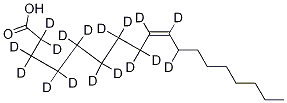
- 223487-44-3
- C18H17D17O2
- 300
- All (0)
- China (0)
- (0)
Related Products More >

- CNY Request For Quotation
- CNY Request For Quotation
- CNY Request For Quotation
- 2074-53-5
- CNY 30.0000
- 25kg
- 60-33-3
- USD 30.0000
- 25kg
- 30999-06-5
- Request For Quotation
- 50kg
- 30999-06-5
- Request For Quotation
- 1kg
- 97-53-0
- Request For Quotation


Almond oil is popular because it’s gentle, non-greasy, and works well for dry skin, frizzy hair, or even baby care. A lot of folks use it as a natural makeup remover or to mix with essential oils for massage. It’s not just for beauty either—some people use food-grade almond oil for cooking or salads, but make sure you’re buying the right type!
All in all, it's super accessible—you just need to know what you're using it for, then match that with the type sold. Ready to grab your bottle and try it out?
From a physiological standpoint, almond oil’s anti-inflammatory and antioxidant actions are significant. The presence of vitamin E acts as a free radical scavenger, reducing oxidative stress in skin cells and tissues. Additionally, oleic acid modulates inflammatory pathways and enhances percutaneous absorption, making almond oil a carrier of choice in transdermal drug delivery. It is also non-comedogenic, which makes it suitable for sensitive and acne-prone skin types.
In a broader context, almond oil spans multiple disciplines—from dermatology and cosmetology to food science and pharmaceuticals. In dermatological formulations, it is used in moisturizers, serums, and ointments for conditions such as eczema and xerosis. In the culinary realm, food-grade almond oil, rich in unsaturated fats, contributes to cardiovascular health by supporting favorable lipid profiles. Industrially, almond oil is valued in the formulation of biodegradable lubricants and organic solvents due to its stability and compatibility with other lipids and esters.
Purchasing almond oil depends on the intended use. For topical or therapeutic use, pharmaceutical or cosmetic-grade oils should be sourced from certified apothecaries, dermatology suppliers, or regulated online health platforms. For edible purposes, food-grade oil—preferably cold-pressed and unrefined—can be found in health food stores or specialized culinary markets. Label scrutiny is essential, as purity, extraction method, and origin all influence efficacy and safety.
Understanding almond oil requires recognizing its dual nature—both as a natural bioactive compound and as a versatile agent in applied sciences. Its significance extends beyond its immediate uses, highlighting how natural substances can bridge traditional wellness practices and modern interdisciplinary applications.
In skincare, almond oil functions as an emollient, forming a protective barrier to retain moisture and soothe irritated skin. Its oleic and linoleic acid content helps balance sebum production, making it suitable for both dry and acne-prone skin. For haircare, the oil penetrates the hair shaft to reduce breakage and add shine, often blended into masks or leave-in treatments. Culinary uses highlight its stability at low heat, perfect for dressings or drizzling over dishes. For instance, a few drops massaged into cuticles can soften nails, while a teaspoon added to smoothies provides healthy fats.
Almond oil is widely available in health food stores, pharmacies, and online retailers like Amazon or iHerb. Specialty grocery stores may carry food-grade versions, while beauty outlets stock cosmetic-grade products. When purchasing, opt for cold-pressed, unrefined oil to ensure maximum potency. Local organic markets or cooperatives often source high-quality variants, though pricing may vary. Its accessibility and multifunctionality underscore its popularity, bridging niche wellness practices and everyday routines. Whether for DIY beauty recipes or gourmet cooking, almond oil’s adaptability makes it a staple in diverse contexts.
To purchase almond oil, several reliable channels exist, each catering to different needs. Health food stores, such as Whole Foods Market or local co-ops, often stock cold-pressed, organic varieties, ideal for those prioritizing unrefined, nutrient-dense options. These versions retain more natural compounds, making them suitable for facial serums or homemade salad dressings. Pharmacies and beauty retailers like CVS or Sephora carry refined almond oil, which undergoes processing to remove scent and impurities, a choice for massage oils or sensitive skin products. Online marketplaces, including Amazon and specialty sites like Mountain Rose Herbs, offer a wide range, from bulk culinary oils to certified organic skincare grades, with detailed product descriptions to guide selection.
In practice, the choice of where to buy aligns with intended use: a grocery store might suffice for a cooking oil, while a pharmacy ensures a gentle formula for baby massage. Understanding these sources helps users access almond oil that best fits their needs, whether enhancing a recipe or supporting a skincare routine.