


 Home
Home
I'm really eager to know what happens when helium and nitrous oxide are combined. I've heard a bit about both gases separately—helium is that light gas we use in balloons, and nitrous oxide is sometimes called "laughing gas." But I have no idea what will happen when they're put together. Will they react chemically to form something new? Or will they just create a physical mixture? And what properties will this mixture have? I'm worried I'll miss out on some really interesting science if I don't get to the bottom of this. I'm really hoping for a clear explanation!
Super Curious! What Occurs When You Combine Helium and Nitrous Oxide and What Kind of Mixture Do They Form?
Related Encyclopedia

- 12596-22-4
- He3+
- 12.00780
- All (2)
- China (2)
- (2)

- 71086-78-7
- He2
- 4.00260
- All (2)
- China (2)
- (2)

- 7440-59-7
- He
- 4
- All (2)
- China (2)
- (2)
- 23724-61-0
- N2O
- 46.99930
- All (0)
- China (0)
- (0)

- 10024-97-2
- N2O
- 44.01
- All (0)
- China (0)
- (0)
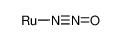
- 1166870-67-2
- N2ORu
- 145.08300
- All (0)
- China (0)
- (0)
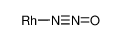
- 1166870-63-8
- N2ORh
- 146.91800
- All (0)
- China (0)
- (0)
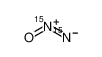
- 20621-02-7
- N2O
- 46.03000
- All (0)
- China (0)
- (0)

- 20259-33-0
- N2O
- 47.99940
- All (0)
- China (0)
- (0)
- 358616-31-6
- H3NO3
- 65.02870
- All (0)
- China (0)
- (0)
Related Products More >

- 97-41-6
- Request For Quotation
- 86290-81-5
- Request For Quotation
- 8053-39-2
- Request For Quotation
- 8015-61-0
- Request For Quotation
- 8007-09-8
- Request For Quotation
- 7440-59-7
- Request For Quotation
- High pressure Cylinder
- 72881-27-7
- Request For Quotation
- 696-59-3
- Request For Quotation


Let's break it down. Helium is a noble gas, and these gases are super stable because their outer electron shells are full. That makes them really reluctant to react with other substances. Nitrous oxide (N₂O), on the other hand, is a bit more reactive than helium but still not likely to react with it. When you put the two gases together, they just sort of coexist in the same space. It's kind of like mixing two different types of small beads in a jar—they don't change each other; they just end up interspersed.
As for the properties of the mixture, the density of the combined gas will be somewhere between the densities of pure helium and pure nitrous oxide. Helium is much lighter than air, while nitrous oxide is heavier than air. So, the mixture's buoyancy depends on the proportions of each gas. If there's a lot of helium, the mixture will be more buoyant and might even be able to lift a small object, just like pure helium in a balloon. But if there's more nitrous oxide, it'll be closer to the density of air or even heavier.
In terms of breathing the mixture (though you should never do this without proper safety precautions and professional guidance), helium changes the sound of your voice because it's less dense than the normal air we breathe, making sound travel faster through it. Nitrous oxide, when inhaled in certain amounts, can cause that "laughing" effect and also acts as an anesthetic. In the mixture, the helium might still affect your voice, but the overall effect on your body would depend on how much nitrous oxide is present.
One important thing to note is that handling these gases, especially nitrous oxide, can be dangerous. Nitrous oxide is stored under high pressure, and improper handling can lead to leaks or other hazards. And inhaling mixtures without knowing exactly what you're doing can be extremely risky to your health. But from a scientific perspective, combining helium and nitrous oxide gives you an interesting blend of gases with properties that are a combination of their individual traits.
The mixture’s properties are a blend of the two gases:
1. Density: Helium is much lighter than air, while nitrous oxide is slightly heavier. Mixing them creates a gas with intermediate buoyancy—useful in niche applications like voice modulation (ever heard of helium’s squeaky effect? Adding N₂O dampens that).
2. Non-flammability: Both gases are non-flammable, so the mix won’t ignite.
3. Behavior under pressure: Helium’s small atoms can leak through tiny gaps, while N₂O’s larger molecules stay put. In pressurized tanks, this might cause gradual separation over time.
One critical safety note: While harmless at low concentrations, nitrous oxide can deprive you of oxygen in enclosed spaces, and helium (though inert) can do the same if it displaces too much air. Never inhale random gas mixes—stick to medical or lab-grade uses.
Bottom line: Helium + nitrous oxide = a safe but quirky physical mix, no fireworks or new chemistry. It’s all about how their individual traits play together!
1. No Chemical Reaction—They’re Just Hanging Out
Helium (He): A noble gas. Super stable, doesn’t react with anything under normal conditions. It’s like the introvert at the party who just vibes in the corner.
Nitrous oxide (N₂O): A bit more social but still lazy chemically. It’s a weak oxidizer (can react with super-reactive stuff like magnesium), but helium isn’t on that list.
Result: They’ll mix physically (like salt in water, but gaseous), but no chemical bonds will form. No “HeN₂O” compound—that’s science fiction.
2. What the Mixture Acts Like
Density:
Helium is lighter than air (floats like a balloon).
N₂O is heavier than air (sinks like a stone if pure).
Mixed together, the density depends on the ratio. If it’s mostly helium, the mix will float; mostly N₂O, and it’ll sink.
Behavior:
Inhaling? Don’t. Mixing these gases and breathing them is extremely dangerous. Helium displaces oxygen (can cause asphyxiation), and N₂O at high doses can freeze your lungs or cause oxygen deprivation (leading to fainting or worse).
Industrial uses: N₂O is used as an anesthetic (dental work) or rocket propellant (when mixed with fuel). Helium is for balloons, cryogenics, or leak detection. But combining them? Not common or useful.
3. Fun (But Useless) Facts About the Mix
Sound effects:
Helium makes your voice high-pitched because sound travels faster in lighter gases.
N₂O does the opposite—it deepens your voice slightly (though not as dramatically as sulfur hexafluoride, SF₆).
Mixed together: The effect depends on the ratio. Mostly helium? You’ll sound like a chipmunk. Mostly N₂O? A bit deeper, but still weird.
Storage: They’re stored as compressed gases in tanks. Mixing them would require careful pressure control—no spontaneous reactions, but you’d need a special cylinder to keep them stable.
4. Why This Isn’t a “Thing” in Science
No practical applications: Chemists don’t mix them because there’s no benefit. Helium’s for inert tasks; N₂O’s for oxidation or anesthesia.
Safety risks: Both gases are asphyxiants (displace oxygen). Mixing them doesn’t make them safer—it just complicates handling.
Final Takeaway
They’re a physical mix, not a chemical reaction: Think of it like blending two types of air—no new substance forms.
Don’t try this at home: Inhaling gas mixtures is lethal. Stick to store-bought helium balloons and leave N₂O to the dentist.
Science lesson: This is a great example of how gases behave independently. Helium stays helium, N₂O stays N₂O, and together they’re just… coexisting.
Now you know: No alchemy here, just two gases chilling in the same space. Keep that curiosity—it’ll take you far in science!