


 Home
Home
Hello, I have some questions regarding the fiber content in grapes. Are grapes considered low fiber, and how does that affect digestion? Also, is it suitable for people with digestive disorders? How can I balance grape consumption with other fiber sources?
Are grapes low fiber enough to impact digestive health or blood sugar control in patients with special dietary needs?
Related Encyclopedia
- 9000-69-5
- C6H12O6
- 0
- All (31)
- China (15)
- (31)
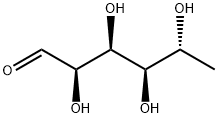
- 7658-08-4
- C6H12O5
- 164.16
- All (0)
- China (0)
- (0)
- 686298-95-3
- C6H12O6
- 180.15600
- All (25)
- China (10)
- (25)

- 30237-26-4
- C6H12O6
- 180.16000
- All (25)
- China (10)
- (25)

- 17598-81-1
- C6H12O6
- 180.15600
- All (25)
- China (10)
- (25)
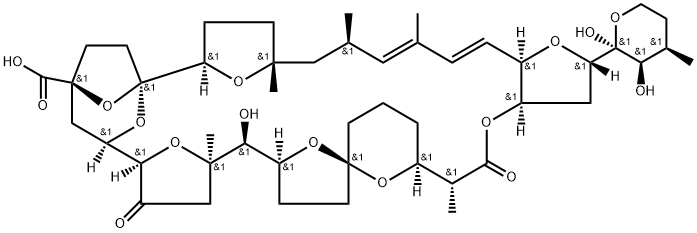
- 124843-18-1
- C47H68O16
- 889.05
- All (0)
- China (0)
- (0)
- 13405-60-2
- C13H16O10
- 332.26
- All (0)
- China (0)
- (0)
- 87733-75-3
- C5H9NO3
- 131.13000
- All (23)
- China (21)
- (23)
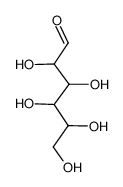
- 93780-23-5
- C6H12O6
- 180.15600
- All (23)
- China (21)
- (23)

- 65997-17-3
- CaNaO4P
- 158.039131
- All (3)
- China (0)
- (3)
Related Products More >

- CNY Request For Quotation
- CNY Request For Quotation
- CNY Request For Quotation
- CNY Request For Quotation
- CNY Request For Quotation
- CNY Request For Quotation
- CNY Request For Quotation
- CNY Request For Quotation


The low fiber content in grapes is due to their chemical composition: they are mostly water and simple sugars such as glucose and fructose, with a limited amount of complex carbohydrates like cellulose and pectin. These complex carbohydrates are types of dietary fiber formed by β-glycosidic bonds, which are resistant to human digestive enzymes and contribute to fiber’s health benefits. Grapes’ relatively simple sugar profile makes them quick sources of energy but low in dietary fiber.
Clinically, eating grapes in moderation is generally safe and healthy, especially for patients requiring low-fiber diets due to certain gastrointestinal conditions such as Crohn’s disease or diverticulitis. However, for those seeking to increase fiber intake for cardiovascular health or weight management, relying solely on grapes may be insufficient. In such cases, combining grapes with other high-fiber foods like oats, legumes, or whole grains is recommended.
To manage fiber intake effectively, patients should consider a balanced diet that includes a variety of fruits and vegetables to meet daily fiber needs, typically 25–30 grams per day. Additionally, hydration is important when increasing fiber intake to help avoid constipation and support fiber’s beneficial effects.
In grapes, most of what you get is water and simple sugars like glucose and fructose, which give them that sweet flavor and quick energy boost. Because grapes have less cellulose and pectin compared to, say, apples or pears, they naturally provide less fiber. This makes them a lighter choice if you’re looking for something refreshing but not too heavy on digestion.
For those who are watching their fiber intake, whether it’s to avoid digestive discomfort or because they need to manage their diet carefully, grapes can fit nicely into a balanced plan. But if you want to boost your fiber intake, combining grapes with higher fiber foods like berries, nuts, or whole grains is a smart move.
In cooking or baking, grapes don’t add much fiber either, but they bring a lot of flavor and moisture, making them perfect for salads, desserts, or snacks. They also have antioxidants like resveratrol, which are great for overall health, even if they don’t contribute much fiber.
So while grapes are delicious and healthy in many ways, if fiber is your main goal, you might want to pair them with other fiber-rich foods to get the best of both worlds.
Think of it like comparing a juicy grape to a crunchy pear. A pear’s got that thick, fibrous skin and flesh that feels “chewier” because of the fiber. Grapes, though, are more like little water balloons—plump and easy to eat, but without much of that rough, fiber-rich texture. It’s like the difference between sipping a smoothie (grapes) and eating a bowl of oatmeal (high-fiber foods)—one’s smooth, the other’s got that hearty bulk.
If you love grapes, pair them with something high in fiber to balance it out. Toss them into a salad with spinach and nuts, or eat a handful alongside a slice of whole-grain toast. That way, you get the sweet snack you want plus the fiber your body needs. Simple swap!
First, a cup of whole grapes (about 32 small grapes) packs roughly 1 gram of fiber. That’s not as high as berries like raspberries (8 grams per cup!) or apples (4 grams per medium fruit), but it’s still a helpful boost. The fiber in grapes comes mostly from their skin and seeds, so peeled grapes or grape juice lose most of it. For example, a cup of grape juice has almost no fiber, while a cup of whole grapes gives you that 1-gram nudge toward your daily goal (kids need about 14–25 grams daily, adults 25–30 grams).
Now, let’s bust a myth: “If a food isn’t super high in fiber, it’s not worth eating.” Nope! Grapes offer other perks, like hydration (they’re 80% water), antioxidants, and natural sweetness that can curb cravings for sugary snacks. Plus, pairing grapes with higher-fiber foods (like a handful of almonds or a cheese stick) balances the meal and keeps everyone fuller longer.
Family-friendly ways to enjoy grapes for fiber:
Snack smart: Keep a bowl of washed grapes on the counter for quick grab-and-go snacks. For toddlers, halve grapes lengthwise to avoid choking risks.
Freeze ’em: Pop grapes in the freezer for a cool treat that doubles as a teethers for little ones. Frozen grapes also make a refreshing addition to smoothies (blend with spinach, banana, and almond milk for a fiber-packed drink).
Mix and match: Toss grapes into a fruit salad with berries, kiwi, or orange segments—all high-fiber picks. Or add them to a yogurt parfait with granola (choose oat-based for extra fiber).
Think beyond sweet: Save grape stems (with leaves, if attached) for a fun Mediterranean-inspired snack—wrap grape leaves around rice, herbs, and diced veggies for a savory twist.
Bonus tip: If someone in your family has trouble digesting grape skins (like young kids or those with IBS), try seedless varieties or gently mash grapes into a sauce for oatmeal or pancakes. You’ll still get some fiber, plus the natural sweetness.
Bottom line: Grapes aren’t a fiber superstar, but they’re a hydrating, tasty way to add a little roughage to your day. Pair them with higher-fiber foods, keep portions reasonable, and enjoy them as part of a balanced diet. Your family’s taste buds—and tummies—will thank you! ?✨