


 Home
Home
Hello, I want to ask about oat fiber and gluten. Is oat fiber always gluten-free? How can contamination occur? What should people with celiac disease consider when choosing oat fiber products? Are there safe alternatives?
Is Oat Fiber Gluten Free: What You Need to Know About Safety and Contamination?
Related Encyclopedia
- 8002-80-0
- 0
- All (2)
- China (0)
- (2)
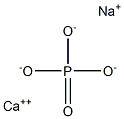
- 65997-17-3
- CaNaO4P
- 158.039131
- All (3)
- China (0)
- (3)

- 115044-69-4
- C103H185N31O24S
- 2273.83
- All (0)
- China (0)
- (0)
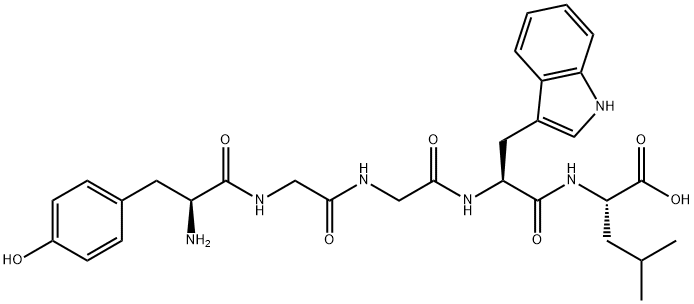
- 68382-18-3
- C30H38N6O7
- 594.66
- All (0)
- China (0)
- (0)
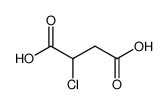
- 617-41-4
- C4H5ClO4
- 152.53300
- All (0)
- China (0)
- (0)
- 90698-81-0
- 0
- All (0)
- China (0)
- (0)
- 9015-54-7
- 0.00000
- All (0)
- China (0)
- (0)
- 222400-29-5
- 0
- All (1)
- China (1)
- (1)
- 14732-77-5
- C37H56O3S
- 580.90400
- All (0)
- China (0)
- (0)
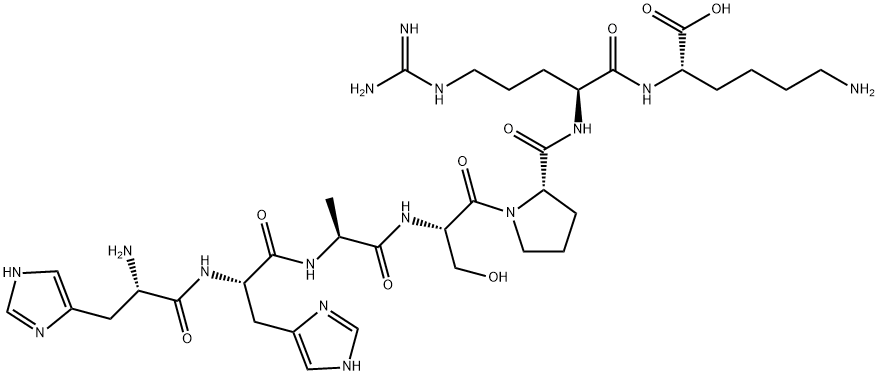
- 255064-79-0
- C35H57N15O9
- 831.92
- All (0)
- China (0)
- (0)
Related Products More >

- 9010-10-2
- CNY Request For Quotation
- 9010-10-1
- CNY Request For Quotation
- 9010-10-0
- CNY Request For Quotation
- 66071-96-3
- USD 15.0000
- 25kg
- 9010-66-6
- USD 9.0000
- 50kg
- 96690-41-4
- Request For Quotation
- 25kg drum
- 93615-44-2
- Request For Quotation
- 25kg drum
- 92113-31-0
- Request For Quotation


Oats contain a protein called avenin, which is structurally different from gluten proteins found in wheat, barley, and rye. Most people with gluten intolerance tolerate avenin well, but the main concern is cross-contamination. During harvesting, transportation, or processing, oats and oat fiber can be mixed with gluten-containing grains, leading to trace gluten presence. For people with celiac disease or severe gluten sensitivity, even small amounts of gluten can trigger immune reactions that damage the small intestine lining, causing symptoms like abdominal pain, diarrhea, and nutrient malabsorption.
Clinically, consuming uncontaminated oat fiber can benefit digestive health due to its high soluble and insoluble fiber content, promoting gut motility and supporting a healthy microbiome. However, if oat fiber is contaminated with gluten, it may cause adverse effects in sensitive individuals. Therefore, products labeled “gluten-free” that are certified by reliable testing agencies are recommended to minimize risk.
For those needing to avoid gluten strictly, it’s best to choose oat fiber products explicitly labeled gluten-free, preferably with certification. Alternatively, other gluten-free fiber sources such as psyllium husk, flaxseed, or chia seeds can be used to support fiber intake without risk of gluten exposure.
Gluten, on the other hand, is a mixture of storage proteins—mainly gliadin and glutenin—found in wheat, barley, and rye. These proteins have distinct chemical structures composed of amino acid chains linked by peptide bonds, forming specific folding patterns and disulfide bridges that give gluten its elastic properties. Unlike oat fiber’s carbohydrate polymers, gluten proteins are polypeptides with polar and nonpolar regions, contributing to their unique functional properties in dough formation.
The key difference here is that oat fiber is a carbohydrate-based polymer without the protein structures that define gluten. This means oat fiber itself is chemically gluten-free. However, contamination with gluten can occur during industrial processing or harvesting due to the shared facilities or fields with gluten-containing grains.
From a chemical stability perspective, oat fiber’s cellulose and hemicellulose chains are very stable, largely inert under normal food processing conditions. Gluten proteins, however, can undergo denaturation when heated, but their presence is defined by their peptide-based structure, which is not found in oat fiber.
In industrial and laboratory settings, techniques like mass spectrometry or immunoassays target gluten-specific peptide sequences to detect contamination. These methods highlight the fundamental chemical differences between oat fiber carbohydrates and gluten proteins.
Think of it like almonds vs. wheat. Almonds are naturally nutty and gluten-free, just like oats. But if almonds are processed in a factory that also handles wheat (which has gluten), they might pick up tiny bits—same with oat fiber. The fiber itself is clean, but cross-contamination can happen.
If you’re avoiding gluten, look for oat fiber labeled “certified gluten-free.” That means it was processed away from wheat, barley, or rye. Stir a teaspoon into smoothies or baked goods for a fiber boost—no weird taste, just extra goodness.
Oat fiber’s a great gluten-free pal—just check the label to keep it that way. Easy peasy!
What Is Oat Fiber?
Oat fiber is made from the outer husk of oats (the inedible part that’s usually discarded). It’s ground into a fine, powdery fiber that’s:
100% dietary fiber (zero net carbs!)
Neutral-tasting (perfect for baking without altering flavor)
Absorbent (great for thickening soups or replacing flour in recipes)
Is Oat Fiber Gluten-Free? The Short Answer…
Yes—but with a caveat.
Oats themselves are naturally gluten-free, but they’re often grown or processed alongside wheat, barley, or rye (gluten-containing grains). This means cross-contamination is common unless the oats are certified gluten-free. The same goes for oat fiber:
Certified gluten-free oat fiber: Safe for celiac disease or severe gluten sensitivity.
Regular oat fiber: Risky if processed in facilities that handle gluten.
Common Myths Busted
“Oats are gluten-free, so oat fiber is too!”
Not always! Regular oat fiber may share equipment with gluten grains. Always check labels for certifications like GFCO or “Certified Gluten-Free.”
“Oat fiber causes bloating like other fibers.”
Nope! Oat fiber is insoluble, meaning it passes through your system without fermenting (less gas!). But start slow—too much fiber too fast can still upset stomachs.
“All oat fiber is the same.”
Quality varies! Look for brands that test for gluten and avoid additives (some oat fibers are cut with cheap fillers).
Family-Friendly Tips for Using Oat Fiber
Choose certified gluten-free brands:
Try Bob’s Red Mill Gluten-Free Oat Fiber or Anthony’s Goods (both test for gluten).
Avoid bulk-bin oat fiber unless you’re sure it’s contamination-free.
Start small:
Replace ¼–½ of the flour in recipes with oat fiber to avoid dryness (it’s super absorbent!).
Add 1 tsp to smoothies or oatmeal for a fiber boost without changing texture.
Pair with hydration:
Fiber needs water to work! Encourage kids to drink water after eating oat-fiber-rich snacks.
Use it creatively:
Thicken soups or sauces (replaces cornstarch!).
Mix into meatballs or veggie burgers for a fiber kick.