


 Home
Home
Coconut oil is often praised for its health and skincare benefits, but some people also claim it has antibiotic-like effects. Is it true that this common kitchen ingredient can fight off bacteria? Does coconut oil have antibiotic properties, or is that just a myth?
Does Coconut Oil Have Antibiotic Properties?
Related Encyclopedia
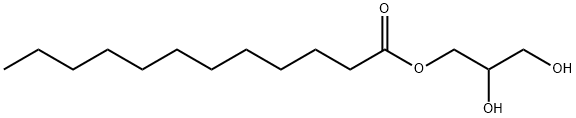
- 142-18-7
- C15H30O4
- 274.4
- All (4)
- China (2)
- (4)

- 86559-73-1
- C34H66NO12P
- 711.86
- All (0)
- China (0)
- (0)
- 202861-77-6
- C91H154N22O16
- 1812.33000
- All (0)
- China (0)
- (0)

- 645-66-9
- C24H46O3
- 382.62
- All (0)
- China (0)
- (0)
- 55621-34-6
- C32H62O7
- 558.83000
- All (84)
- China (21)
- (84)

- 143-07-7
- C12H24O2
- 200.32
- All (84)
- China (21)
- (84)
- 97055-81-7
- C110H207N2O23P
- 1956.79000
- All (0)
- China (0)
- (0)
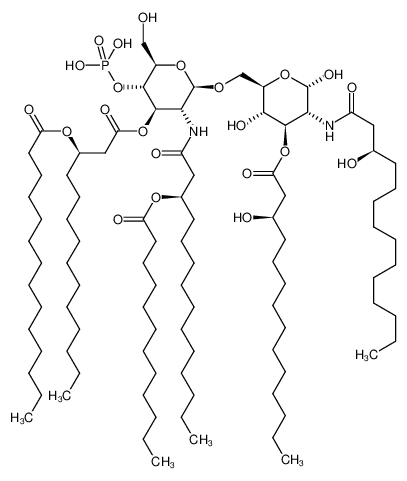
- 88598-53-2
- C94H177N2O22P
- 1718.39000
- All (0)
- China (0)
- (0)
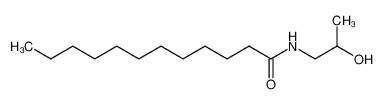
- 142-54-1
- C15H31NO2
- 257.41200
- All (0)
- China (0)
- (0)
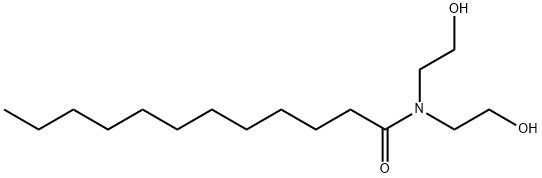
- 120-40-1
- C16H33NO3
- 287.44
- All (3)
- China (2)
- (3)
Related Products More >

- 91296-87-6
- Request For Quotation
- 87-90-1
- Request For Quotation
- 869062-42-0
- Request For Quotation
- Bottle,barrel,cargo,container,etc.
- 70288-86-7
- Request For Quotation
- 67701-03-5
- Request For Quotation
- 67701-03-5
- Request For Quotation
- 61791-00-2
- Request For Quotation
- 61790-79-2
- Request For Quotation


That said, the effect isn’t like taking a prescription antibiotic. Coconut oil doesn’t treat serious infections, and it isn’t powerful enough to replace antibiotics for things like strep throat or a urinary tract infection. But it may help with small things—like using it on minor cuts or dry, irritated skin where bacteria could cause problems. Some people use it as a natural option for soothing issues like acne or mild skin inflammation, where bacteria play a role.
It’s also used in some natural products like lip balms, diaper creams, or even oil pulling for oral care because of its gentle antibacterial effect. But it’s best to think of it as a mild, supportive ingredient—not a cure.
The antibiotic-like activity of coconut oil differs from conventional antibiotics in specificity and potency. While studies show coconut oil inhibits growth of bacteria like Propionibacterium acnes (linked to acne) in vitro, its efficacy is concentration-dependent and often weaker than pharmaceutical antibiotics. This is because the MCTs in coconut oil require enzymatic breakdown (e.g., by lipases) to release active components like monolaurin, a process that may be less efficient in vivo compared to direct administration of purified monolaurin. Additionally, bacterial resistance to coconut oil’s components is less common than with antibiotics, as membrane disruption is a physical rather than enzymatic process, reducing adaptive mutations.
A critical misconception is equating antimicrobial activity to clinical antibiotic efficacy. Coconut oil’s effects are primarily bacteriostatic (inhibiting growth) rather than bactericidal (killing bacteria) at typical concentrations. This distinguishes it from antibiotics, which are designed to kill or inhibit specific pathogens at therapeutic doses. Moreover, coconut oil’s activity is most pronounced against lipid-enveloped microbes, with limited effect on Gram-negative bacteria like Escherichia coli, whose outer membranes contain lipopolysaccharides that resist MCT penetration. In professional contexts, such as dermatology, coconut oil may serve as an adjuvant in barrier repair but cannot replace antibiotics for treating infections, underscoring the need to differentiate between in vitro activity and clinical utility.
The oil’s antimicrobial action isn’t universal, however. Its efficacy is strongest against gram-positive bacteria (like *Streptococcus*) and lipid-coated viruses (such as herpes simplex) but less potent against gram-negative strains like *Pseudomonas aeruginosa*, which have protective outer membranes. In clinical settings, coconut oil has been used as an adjunct in treating fungal infections like candidiasis. A 2007 study in the *Journal of Dermatological Treatment* found that coconut oil applied topically reduced *Candida albicans* colonization in patients with atopic dermatitis, outperforming mineral oil in some cases.
Practical applications highlight its role as a natural alternative in minor infections. For instance, coconut oil mixed with essential oils like tea tree has been used in DIY wound salves to prevent bacterial growth. In oral health, oil pulling with coconut oil has shown promise in reducing *Streptococcus mutans*, a cavity-causing bacteria, though it’s not a replacement for conventional dental care. However, its antibiotic properties are concentration-dependent—raw, virgin coconut oil retains more active compounds than refined versions, which lose some potency during processing.
Despite its benefits, coconut oil isn’t a substitute for medical antibiotics in severe infections. Its role is more preventive or supportive, such as soothing minor cuts or balancing skin microbiota. Overuse can also lead to antibiotic resistance in bacteria, a risk with any antimicrobial agent. The key takeaway? Coconut oil’s antibiotic properties are real but context-specific—valuable in complementary care but not a cure-all.
This mechanism is physical and chemical in nature. Monolaurin can embed itself into the phospholipid bilayer of bacterial cell membranes, weakening their structure and leading to increased permeability. This effect is especially pronounced in bacteria that lack robust outer membrane defenses, such as Staphylococcus aureus or Clostridium difficile. It has also shown inhibitory effects on yeast species like Candida albicans and enveloped viruses, such as herpes simplex. Unlike traditional antibiotics that often target specific protein functions or DNA replication mechanisms, monolaurin's action is broader and more disruptive on a structural level.
Despite this, the antibacterial properties of coconut oil are conditional and context-dependent. Virgin coconut oil may contain higher levels of bioactive compounds compared to refined versions due to minimal processing, preserving polyphenols and other supportive antioxidants. Still, the concentration of active components like monolaurin in raw coconut oil is relatively low unless enzymatically or chemically converted. In laboratory settings, purified lauric acid or synthesized monolaurin is typically used to achieve measurable antimicrobial effects, which are difficult to replicate using unprocessed oil in real-world scenarios.
In medical and therapeutic applications, coconut oil has been incorporated into formulations for wound care, dermatological ointments, and even neonatal skincare, particularly in low-resource settings. It is used to support the skin’s barrier function, reduce microbial colonization, and promote surface healing. In dentistry, coconut oil pulling—a traditional practice—has received some scientific attention for reducing oral microbial load, though the evidence remains limited and often anecdotal. The oil’s viscous nature and fatty acid profile likely contribute to disrupting bacterial adhesion and biofilm formation on oral surfaces.
In food preservation and functional nutrition, coconut oil’s antimicrobial properties have been explored as a natural additive to inhibit microbial spoilage. Its inclusion in topical cosmetic products also reflects its dual function as both an emollient and a preservative agent. However, its activity is generally less potent than synthetic preservatives or targeted antibiotics, making it more suitable for mild microbial control rather than sterilization or infection treatment.
The significance of coconut oil’s antibiotic-like properties lies in its role as a natural adjunct rather than a standalone treatment. In an era of rising antibiotic resistance, there is growing interest in lipid-based antimicrobials that act through non-specific membrane disruption, potentially reducing the risk of resistance development. While coconut oil alone does not meet clinical standards for antimicrobial drugs, its integration into multi-functional formulations reflects a broader shift toward combining traditional knowledge with biochemical principles for safer, gentler antimicrobial support.