


 Home
Home
Hi, I'd like to ask—Does hydrogen chloride form ionic or covalent bonds? What factors determine the bond type in HCl, such as electronegativity difference? Does the bond type change when HCl dissolves in water ? How does this bonding affect the physical properties of HCl, like boiling point and conductivity? Thanks!
Is Hydrogen Chloride an Ionic or Covalent Compound? Analysis of Molecular Bonding Types
Related Encyclopedia
- 13760-18-4
- ClH
- 37.97380
- All (1)
- China (1)
- (1)
- 13779-43-6
- ClH
- 35.97680
- All (1)
- China (1)
- (1)
- 13862-15-2
- ClHHe
- 40.46350
- All (0)
- China (0)
- (0)
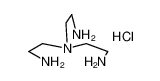
- 44905-58-0
- C6H19ClN4
- 182.69500
- All (0)
- China (0)
- (0)
- 878792-58-6
- C13H21Cl2N2O2
- 309.23200
- All (0)
- China (0)
- (0)
- 14158-33-9
- ClH
- 38.97600
- All (0)
- China (0)
- (0)
- 13473-04-6
- ArClH
- 76.40890
- All (0)
- China (0)
- (0)
- 184970-68-1
- Cl3H
- 107.36700
- All (0)
- China (0)
- (0)
- 512185-60-3
- ClD3O
- 57.49470
- All (0)
- China (0)
- (0)
- 160208-69-5
- CHCl5
- 190.28400
- All (0)
- China (0)
- (0)
Related Products More >

- 97333-46-5
- Request For Quotation
- bags
- 9002-86-2
- Request For Quotation
- 86508-42-1
- Request For Quotation
- Bulk
- 86508-42-1
- Request For Quotation
- 200KG/Drum
- 86508-42-1
- Request For Quotation
- bottle or customized
- 86508-42-1
- Request For Quotation
- Drum/Customized packaging
- 86508-42-1
- Request For Quotation
- 25KG/DRUM
- 86508-42-1
- Request For Quotation
- kg


Does Hydrogen Chloride Form Ionic or Covalent Bonds?
Hydrogen chloride forms a covalent bond. Although HCl exhibits some ionic character due to the significant difference in electronegativity between hydrogen and chlorine, the bond is predominantly covalent.
Factors Determining the Bond Type in HCl
Electronegativity Difference:
Electronegativity is a measure of an atom's ability to attract electrons in a chemical bond. The electronegativity of hydrogen is approximately 2.20, while that of chlorine is about 3.16. The difference in electronegativity between hydrogen and chlorine is about 0.96.
According to the Pauling scale, a difference in electronegativity of 1.7 or greater typically results in an ionic bond, while a difference of less than 1.7 usually leads to a covalent bond. Since the electronegativity difference in HCl is 0.96, the bond is considered covalent.
Bond Characteristics:
In HCl, the chlorine atom attracts the shared electrons more strongly than the hydrogen atom due to its higher electronegativity. This results in a polar covalent bond, where the electrons are not shared equally. The chlorine atom acquires a partial negative charge , and the hydrogen atom acquires a partial positive charge .
Does the Bond Type Change When HCl Dissolves in Water?
When HCl dissolves in water, it forms hydrochloric acid ). The bond type does not change fundamentally, but the behavior of the molecule in solution does.
Dissociation in Water:
Water is a polar solvent, and HCl is a polar molecule. When HCl dissolves in water, it dissociates into hydrogen ions and chloride ions :
HCl →H
+
+Cl
−
This dissociation is facilitated by the polar nature of water, which can stabilize the ions through hydration.
Ionic Character in Solution:
Although the bond in gaseous HCl is covalent, the dissociation in water results in the formation of ions. Therefore, in aqueous solution, HCl behaves as an ionic compound. The hydrogen ions are highly mobile in water and are responsible for the acidic properties of hydrochloric acid.
How Does Bonding Affect the Physical Properties of HCl?
Boiling Point:
The boiling point of HCl is influenced by its molecular structure and intermolecular forces. HCl molecules are held together by dipole-dipole interactions and London dispersion forces. The boiling point of HCl is relatively low compared to ionic compounds, reflecting its covalent nature.
In contrast, when HCl dissolves in water, the resulting hydrochloric acid has a much higher boiling point due to the strong ionic interactions and hydrogen bonding in the aqueous solution.
Conductivity:
Gaseous HCl does not conduct electricity because it consists of neutral molecules. The covalent bond in HCl does not produce free ions that can carry an electric charge.
However, when HCl dissolves in water to form hydrochloric acid, it dissociates into H⁺ and Cl⁻ ions, which are free to move and conduct electricity. Therefore, hydrochloric acid is a strong electrolyte and conducts electricity well.
Solubility:
HCl is highly soluble in water due to its polar nature and the ability of water to stabilize the resulting ions through hydration.
The solubility of HCl in water is a result of the favorable interactions between the polar HCl molecules and the polar water molecules, leading to the dissociation of HCl into ions.
Acidic Properties:
The polar covalent bond in HCl allows it to easily donate a proton in aqueous solution, making it a strong acid. The ability of HCl to dissociate completely in water is a direct result of its polar covalent bonding and the stabilizing effects of water on the resulting ions.
Summary
Hydrogen chloride forms a polar covalent bond due to the significant electronegativity difference between hydrogen and chlorine. The bond type is determined by the electronegativity difference, which is about 0.96 for HCl, indicating a covalent bond. When HCl dissolves in water, it dissociates into H⁺ and Cl⁻ ions, behaving as an ionic compound in solution.
The covalent bonding in HCl affects its physical properties, such as its relatively low boiling point and lack of conductivity in the gaseous state. In contrast, the ionic character of HCl in aqueous solution results in a higher boiling point and strong conductivity due to the presence of free ions. Understanding the bonding nature of HCl helps explain its behavior in different states and its role as a strong acid in aqueous solutions.
1. Core Definitions: Covalent vs. Ionic Bonds
Covalent Bond: Electrons are shared between atoms .
Ionic Bond: Electrons are fully transferred, creating ions .
Polar Covalent: Unequal electron sharing due to moderate ΔEN , as in HCl .
2. Bond Type in HCl and Dissolution
Gas Phase:
HCl is covalent, with a dipole moment of 1.08 D, indicating partial charge separation but no ions.
Aqueous Phase:
Water’s polarity breaks the covalent bond, forming H₃O⁺ and Cl⁻ ions. This ionization makes hydrochloric acid a strong electrolyte .
3. Related Questions
Why Doesn’t HCl Form Ionic Bonds?
The ΔEN of 0.96 is insufficient for full electron transfer. Chlorine’s electron affinity is high, but hydrogen’s small size prevents complete ionization .
Does Bond Type Affect Acidity?
Yes. The polar covalent bond in HCl weakens upon dissolution, allowing easy proton donation, a hallmark of strong acids .
4. Solutions for Misconceptions
Common Confusion:
Mistaking HCl’s solution behavior for its intrinsic bond type. Clarify that pure HCl is covalent, while its aqueous acidity arises from ion-solvent interactions.
Teaching Approach:
Use electronegativity tables and ball-and-stick models to illustrate HCl’s polar covalent structure versus its ionic solution state .
5. Summary
HCl exemplifies the spectrum between covalent and ionic bonding. Its polar covalent nature in the gas phase and ionic behavior in water highlight how solvent polarity can alter apparent bond type, impacting properties like conductivity and acidity.
1. Bond Classification in Compounds
Nonpolar Covalent :
e.g., O₂, Cl₂.
Polar Covalent :
e.g., HCl, NH₃.
Ionic :
e.g., NaCl, MgO .
2. Case Study: HCl in Different States
State 1: Gaseous HCl
Bond Type: Polar covalent.
Properties: Low boiling point , non-conductive, soluble in organic solvents like benzene.
State 2: Aqueous HCl
Bond Type: Effectively ionic .
Properties: High conductivity, strong acidic behavior, reacts with metals to produce H₂ gas .
3. Industrial and Laboratory Applications
PVC Production:
Gaseous HCl is used to produce vinyl chloride , leveraging its covalent reactivity in organic synthesis .
Stomach Acid:
Hydrochloric acid in the stomach aids digestion by activating enzymes. Its ionic state in solution enables pH regulation .
4. Addressing Misinterpretations
Myth: "HCl is ionic because it’s an acid."
Reality: Acidity in solution arises from ionization, not intrinsic ionic bonding. Pure HCl is covalent.
Solution: Use conductivity experiments to demonstrate that gaseous HCl does not conduct, while its solution does, linking behavior to bond type changes .
5. Conclusion
HCl’s bonding is a dynamic example of how molecular structure and environment dictate properties. Its polar covalent gas and ionic solution states showcase the versatility of chemical bonding, essential for applications ranging from plastics production to biological systems.