


 Home
Home
If swapping just one atom in morphine’s core can reduce addiction and respiratory depression, what other properties might be altered by similar core edits? Could changing oxygen to carbon — or even nitrogen or sulfur — allow us to design a whole new class of painkillers that are both effective and non-addictive? How far can skeletal editing go in reshaping how opioids interact with the µ-opioid receptor, and could this approach also work on other high-risk medications?
Could a Single Atom Swap Make Morphine Safer? What Carbamorphine Tells Us About Opioid Design?
Related Encyclopedia
- 898283-84-6
- C17H19NO3
- 285.33800
- All (0)
- China (0)
- (0)
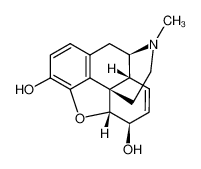
- 143-70-4
- C17H19NO3
- 285.33800
- All (0)
- China (0)
- (0)
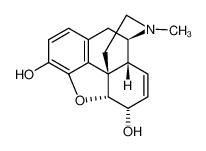
- 57-27-2
- C17H19NO3
- 285.33800
- All (0)
- China (0)
- (0)
- 1176325-39-5
- C17H18FNO2
- 287.32900
- All (0)
- China (0)
- (0)
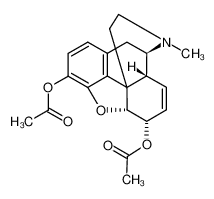
- 98673-60-0
- C21H23NO5
- 369.41100
- All (0)
- China (0)
- (0)
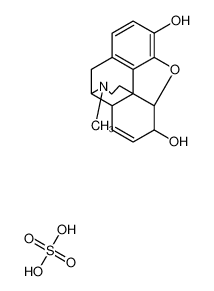
- 64-31-3
- C17H21NO7S
- 383.41600
- All (0)
- China (0)
- (0)
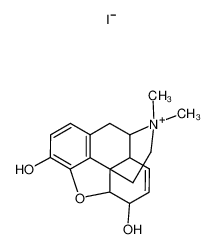
- 14054-17-2
- C18H22INO3
- 427.27700
- All (0)
- China (0)
- (0)
- 335328-17-1
- C18H23NO6S
- 381.44300
- All (0)
- China (0)
- (0)
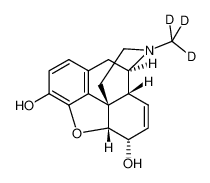
- 67293-88-3
- C17H16D3NO3
- 288.35600
- All (0)
- China (0)
- (0)
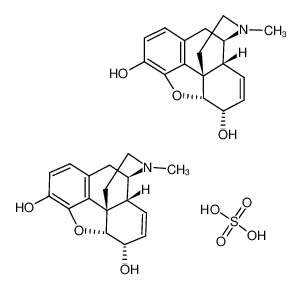
- 52-26-6
- C34H40N2O10S
- 668.75400
- All (0)
- China (0)
- (0)
Related Products More >

- 1170-81-6
- Request For Quotation
- 103-90-2
- Request For Quotation


Now imagine what could happen if we swapped in other atoms like nitrogen, sulfur, or even silicon. Each one has different bonding abilities and electronic properties, which could lead to new versions of opioids that are more selective, less addictive, or even tailored for specific types of pain. Skeletal editing opens up a whole new strategy: instead of tweaking the edges of drug molecules, we can now rewire the core — and that might work for other high-risk drugs too, not just opioids.
The mechanism lies in structural shifts. Carbamorphine’s twisted conformation within the receptor pocket reduces interactions with key residues, curbing activation of β-arrestin 2 (linked to addiction) and respiratory suppression. Extending this logic, swapping oxygen for nitrogen or sulfur could further refine properties: nitrogen might form distinct hydrogen bonds to enhance target binding, while sulfur could boost hydrophobicity, altering receptor affinity.
Skeletal editing’s potential stretches beyond opioids. By modifying core atoms, one can selectively activate therapeutic pathways while silencing harmful ones—a critical advantage for high-risk drugs relying on precise target interactions. For instance, similar edits in other receptor ligands could reduce off-target effects by fine-tuning spatial fit and chemical bonding. This approach redefines drug design: instead of peripheral tweaks, core atom swaps offer a sharper tool to balance efficacy and safety.
Swapping just one atom in the core structure of morphine opens up a fascinating realm of possibilities in opioid design and drug development at large. This subtle but powerful change, replacing an oxygen atom in the E-ring with a methylene group (CH2), alters how the molecule interacts with the µ-opioid receptor. By disrupting a key hydrogen bond, it selectively activates pain relief pathways while suppressing those that cause addiction and respiratory depression, the two most dangerous side effects of traditional opioids. This indicates that minor tweaks deep in the molecular skeleton, rather than just peripheral modifications, can drastically reshape a drug’s biological profile.
Considering this, other core edits—such as swapping oxygen for nitrogen, sulfur, or silicon—might further refine opioid properties, potentially creating painkillers that maintain strong analgesic effects without the risks of addiction or breathing problems. These changes could affect how the drug fits in the receptor’s binding pocket, altering potency, selectivity, or even metabolic stability. Since opioids work by binding to the µ-opioid receptor and triggering complex protein recruitment cascades, subtle shifts in binding geometry and interaction patterns can profoundly influence both therapeutic benefits and side effects.
This approach, called skeletal editing, pushes medicinal chemistry beyond traditional methods that mostly alter side groups or peripheral parts of molecules. By directly modifying the core framework, chemists gain finer control over molecular shape, electronic properties, and receptor interactions. Such precision opens pathways not only for safer opioids but could also revolutionize other high-risk medications where side effects limit clinical use, like certain cancer drugs or central nervous system agents.
Practically, the synthetic methods enabling these core modifications have advanced enough to produce gram-scale quantities, allowing deeper biological evaluation and optimization. Animal models suggest promising outcomes, but thorough testing of efficacy, safety, metabolism, and long-term effects is essential before clinical use. Moreover, integrating computational docking and simulation helps predict how different core substitutions might behave, streamlining the drug discovery process.
From a broader perspective, this strategy exemplifies how merging synthetic chemistry, pharmacology, and computational modeling can accelerate the design of next-generation therapeutics. It highlights the power of atomic-level precision to solve complex problems like opioid addiction, a major public health crisis. If successful, this could reduce reliance on addictive drugs, improve patient outcomes, and lower societal burdens. The principles learned here could inspire innovation across many drug classes, transforming how medicines are conceptualized and crafted in the future.
Skeletal editing can greatly reshape opioid - receptor interactions. By modifying the core, we can adjust the number and strength of interactions with the receptor, suppressing side - effect pathways while maintaining pain - killing activity. This approach could also work on other high - risk medications. Many drugs act on specific receptors, and altering their core structures might reduce off - target effects.
A potential misunderstanding is that all core edits will lead to non - addictive and effective painkillers. The relationship between structure and function is complex, and small changes can have unpredictable effects. Some edits might reduce pain - killing activity or introduce new side effects. Also, it's not just about swapping atoms; the overall three - dimensional structure and the molecule's flexibility play crucial roles. Moreover, different receptors have unique binding sites, so a modification that works for the µ - opioid receptor may not be applicable to others. Continuous research is needed to fully understand and optimize these core edits for drug design.