


 Home
Home
Hi, I'd like to ask—is magnesium classified as a positive ion? How does the loss of electrons during chemical bonding determine magnesium's charge in compounds? What role does magnesium's electron configuration play in forming positive ions? Are there specific chemical reactions where magnesium consistently carries a positive charge? Thanks!
Is Magnesium a Positive Ion? How Does Electron Loss Determine Its Charge in Chemical Compounds?
Related Encyclopedia
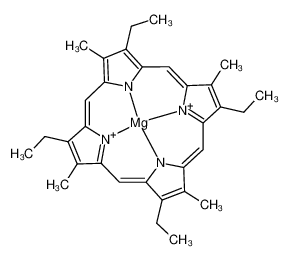
- 15006-36-7
- C32H36MgN4
- 500.96000
- All (0)
- China (0)
- (0)
- 7439-95-4
- Mg
- 24.31
- All (7)
- China (5)
- (7)
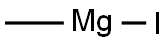
- 917-64-6
- CH3IMg
- 166.24
- All (1)
- China (1)
- (1)
- 12053-95-1
- CuMg2
- 112.15600
- All (0)
- China (0)
- (0)
- 12054-17-0
- Cu2Mg
- 151.39700
- All (0)
- China (0)
- (0)
- 12057-80-6
- Mg9Nd
- 362.98500
- All (0)
- China (0)
- (0)
- 12139-68-3
- CoMg2
- 107.54300
- All (0)
- China (0)
- (0)
- 12142-60-8
- LaMg
- 163.21000
- All (0)
- China (0)
- (0)
- 12159-27-2
- DyMg
- 186.80500
- All (0)
- China (0)
- (0)
- 12159-51-2
- ErMg
- 191.56400
- All (0)
- China (0)
- (0)
Related Products More >

- 14783-68-9
- CNY Request For Quotation
- 14783-68-8
- CNY Request For Quotation
- 14783-68-7
- CNY Request For Quotation
- 869-06-9
- CNY Request For Quotation
- 869-06-8
- CNY Request For Quotation
- 869-06-7
- CNY Request For Quotation
- 3344-18-3
- CNY Request For Quotation
- 3344-18-2
- CNY Request For Quotation


Magnesium, located in group 2 (the alkaline earth metals) of the periodic table, has an atomic number of 12, meaning its neutral atom contains 12 protons and 12 electrons. Its electron configuration is 1s²2s²2p⁶3s², with the outermost energy level (the third shell) holding two valence electrons in the 3s orbital. These valence electrons are critical because they are the farthest from the nucleus and experience the weakest electrostatic attraction, making them the most readily involved in chemical reactions. The key driving force behind magnesium’s ion formation is its tendency to achieve a stable electron configuration, often mirroring that of a noble gas. The nearest noble gas to magnesium is neon (atomic number 10), which has a full outer shell of eight electrons (1s²2s²2p⁶). For magnesium to attain this stable state, it must lose its two valence electrons rather than gain six, as the latter would require significantly more energy and is thermodynamically unfavorable.
When magnesium participates in chemical bonding, it undergoes oxidation, a process in which atoms lose electrons and become positively charged ions. Each magnesium atom loses its two valence electrons, resulting in a cation with a +2 charge, denoted as Mg²⁺. This charge arises because the ion now contains 12 protons (positive charges) and 10 electrons (negative charges), yielding a net charge of +2. The loss of these electrons leaves magnesium with a complete inner electron shell (the 2s²2p⁶ configuration of neon), which is highly stable due to the minimized electron-electron repulsion and maximized nuclear attraction in a full shell. The energy required to remove the first and second electrons from magnesium (its first and second ionization energies) is relatively low compared to elements with more electrons in their valence shells, further facilitating this electron loss. The first ionization energy of magnesium is approximately 738 kJ/mol, and the second is about 1451 kJ/mol. While the second ionization energy is higher, the combined energy required is still outweighed by the stability gained from achieving the noble gas configuration, making the formation of Mg²⁺ ions energetically favorable.
Magnesium’s tendency to form positive ions is consistent across a wide array of chemical reactions, particularly those involving ionic bonding with nonmetals. Ionic bonding occurs when there is a significant electronegativity difference between atoms, leading to the transfer of electrons from one atom to another. For example, when magnesium reacts with oxygen, it forms magnesium oxide (MgO). In this reaction, each magnesium atom donates its two valence electrons to an oxygen atom. Oxygen, being highly electronegative (electronegativity 3.44), has a strong affinity for electrons and readily accepts the two electrons to complete its octet, becoming an O²⁻ ion. The resulting Mg²⁺ and O²⁻ ions are held together by strong electrostatic forces, forming a stable ionic compound. Similarly, in the reaction with chlorine, magnesium forms magnesium chloride (MgCl₂). Here, a single magnesium atom donates its two valence electrons to two chlorine atoms (one electron to each Cl atom). Chlorine, with an electronegativity of 3.16, gains one electron per atom to become Cl⁻ ions, resulting in the formation of Mg²⁺ and two Cl⁻ ions. This pattern of electron donation is not limited to oxygen and chlorine; magnesium behaves similarly with other nonmetals such as sulfur (forming MgS), nitrogen (forming Mg₃N₂), and the halogens, consistently losing two electrons to form Mg²⁺ ions.
Magnesium’s electron configuration also influences its role in metallic bonding, a type of bonding found in pure metals and alloys. In metallic magnesium, the atoms are arranged in a crystalline lattice, and each magnesium atom loses its two valence electrons. These electrons become delocalized, forming a "sea" of electrons that surrounds a lattice of Mg²⁺ ions. The attraction between the positively charged ions and the delocalized electrons holds the metal together and is responsible for its physical properties, such as high electrical and thermal conductivity. While the context of metallic bonding is different from ionic bonding, the core principle remains: magnesium exists as positive ions (Mg²⁺) by losing its valence electrons, a direct consequence of its electron configuration.
Under normal chemical conditions, there are no known stable compounds where magnesium does not carry a +2 charge. The element’s low electronegativity (1.31 on the Pauling scale) and its position in group 2 dictate that it is a strong reducing agent, readily donating electrons rather than accepting them. For magnesium to form a neutral or negatively charged species, it would need to retain or gain electrons, which is energetically infeasible. For instance, gaining electrons would require filling the 3p orbital, which is higher in energy and would not provide the stability of a noble gas configuration. Additionally, the concept of magnesium forming negative ions (anions) is chemically implausible due to its lack of electron affinity and the repulsion between additional electrons and the existing electron cloud.
In biological systems, the Mg²⁺ ion plays a vital role, further illustrating the consistency of magnesium’s positive charge. As an essential mineral in living organisms, Mg²⁺ is involved in numerous physiological processes. For example, it is a central component of chlorophyll, the pigment responsible for photosynthesis in plants. In chlorophyll, a magnesium ion is coordinated at the center of a porphyrin ring, where it helps absorb light energy and facilitate electron transfer reactions. In humans and other animals, Mg²⁺ ions are crucial for enzyme activation, particularly in reactions involving ATP (adenosine triphosphate), the body’s primary energy currency. Magnesium ions also play a role in maintaining the structure of DNA and RNA by interacting with the negatively charged phosphate groups in their backbones, highlighting the importance of its positive charge in stabilizing biological molecules through electrostatic interactions.
In summary, magnesium’s classification as a positive ion is a direct result of its electron configuration, which drives it to lose two valence electrons and form Mg²⁺ ions in chemical reactions. This behavior is consistent across ionic and metallic bonding environments, as well as in biological systems, due to the energy stability achieved by attaining a noble gas electron configuration. The absence of exceptions to magnesium’s +2 charge under normal conditions underscores the fundamental role of atomic structure in determining an element’s chemical behavior, solidifying its status as a consistent cation-forming element in virtually all its compounds.
The loss of electrons during chemical bonding is the key factor that determines magnesium's charge in compounds. As an element in Group 2 of the periodic table, magnesium has two valence electrons in its outermost electron shell. In chemical reactions, elements strive to achieve a more stable electron configuration, often resembling that of a noble gas. Noble gases have full outer electron shells, which provide them with a high degree of stability. For magnesium, the closest noble gas is neon, which has an electron configuration of 1s²2s²2p⁶. To attain this stable configuration, magnesium readily loses its two valence electrons. When it does so, the number of protons (12) in the nucleus remains unchanged, but the number of electrons decreases to 10. With more protons than electrons, the resulting particle has a net positive charge of +2, and it is now the Mg²⁺ ion.
Magnesium's electron configuration, 1s²2s²2p⁶3s², plays a crucial role in its ability to form positive ions. The two electrons in the 3s orbital are the outermost electrons and are relatively far from the nucleus compared to the inner - shell electrons. As a result, they experience a weaker electrostatic attraction from the positively charged nucleus. Additionally, the shielding effect of the inner electrons reduces the effective nuclear charge felt by the valence electrons. This combination of factors makes the two 3s electrons relatively easy to remove. When magnesium comes into contact with nonmetals, which have a greater tendency to gain electrons due to their higher electronegativities, the nonmetal atoms can attract these valence electrons away from magnesium. For example, in the reaction between magnesium and oxygen, oxygen has a much higher electronegativity. Oxygen atoms strongly attract the two valence electrons of magnesium. Once these electrons are transferred to oxygen, magnesium is left as the Mg²⁺ ion, and oxygen becomes the O²⁻ ion. The resulting Mg²⁺ and O²⁻ ions are then held together by strong ionic bonds, forming magnesium oxide (MgO).
There are numerous specific chemical reactions where magnesium consistently carries a positive charge. When magnesium reacts with the halogens—fluorine (F₂), chlorine (Cl₂), bromine (Br₂), and iodine (I₂)—it forms ionic compounds. In the reaction with chlorine gas, for instance, each magnesium atom donates its two valence electrons to two chlorine atoms. Each chlorine atom gains one electron to achieve a stable electron configuration, becoming a Cl⁻ ion. Magnesium, having lost two electrons, becomes Mg²⁺, and the compound magnesium chloride (MgCl₂) is formed. Similarly, when magnesium reacts with sulfur to form magnesium sulfide (MgS), sulfur, which needs two electrons to complete its outer shell, accepts the two valence electrons from magnesium. This results in the formation of Mg²⁺ and S²⁻ ions, which are bonded together by ionic forces. In the context of acid - metal reactions, such as when magnesium reacts with hydrochloric acid (HCl), magnesium donates its two electrons. One electron is transferred to each hydrogen ion (H⁺) in the acid, reducing the hydrogen ions to hydrogen gas (H₂) and leaving magnesium in the form of the Mg²⁺ ion in solution. These examples illustrate that across a wide range of chemical reactions involving nonmetals, acids, and other reactive substances, magnesium's tendency to lose its two valence electrons and form the Mg²⁺ ion is highly consistent, making it a reliable cation in the world of chemical compounds.
The process of magnesium losing electrons to form positive ions can be observed in various chemical reactions. For example, when magnesium reacts with oxygen, it forms magnesium oxide (MgO). In this reaction, each magnesium atom loses two electrons to two oxygen atoms. The magnesium atoms become Mg²⁺ ions, while the oxygen atoms gain electrons to form O²⁻ ions. This transfer of electrons allows both magnesium and oxygen to achieve stable electron configurations. The resulting magnesium oxide is an ionic compound held together by the electrostatic attraction between the positively charged magnesium ions and the negatively charged oxide ions.
Another example is the reaction of magnesium with hydrochloric acid. In this reaction, magnesium reacts with the hydrogen ions from the acid, producing hydrogen gas and magnesium chloride. The magnesium atom loses two electrons to the hydrogen ions, forming Mg²⁺ ions. The hydrogen ions gain these electrons to form neutral hydrogen atoms, which then combine to produce hydrogen gas. The magnesium ions combine with chloride ions from the acid to form magnesium chloride (MgCl₂), an ionic compound. This reaction demonstrates how magnesium consistently carries a positive charge in its compounds due to its tendency to lose electrons.
The electron configuration of magnesium plays a crucial role in its ability to form positive ions. The presence of two electrons in the outermost 3s orbital makes it energetically favorable for magnesium to lose these electrons rather than gain additional electrons to fill its outer shell. By losing two electrons, magnesium achieves a stable configuration with a full outer shell of eight electrons, similar to the noble gas neon. This stability is a driving force behind the formation of positive ions in many chemical reactions involving magnesium.
In addition to these examples, magnesium's behavior as a positive ion can be seen in its reactions with other elements and compounds. For instance, when magnesium reacts with sulfur, it forms magnesium sulfide (MgS). In this reaction, magnesium loses two electrons to sulfur, forming Mg²⁺ ions and S²⁻ ions. The resulting magnesium sulfide is an ionic compound with magnesium ions carrying a positive charge. Similarly, in reactions with water, magnesium can react with hydroxide ions to form magnesium hydroxide (Mg(OH)₂), where magnesium again forms positive ions.
The consistent formation of positive ions by magnesium in various chemical reactions is a result of its electron configuration and the principles of electron transfer that govern chemical bonding. Magnesium's tendency to lose electrons to achieve a stable octet configuration drives its behavior in reactions with other elements, leading to the formation of ionic compounds where magnesium carries a positive charge. This characteristic is fundamental to magnesium's chemical properties and its role in numerous chemical processes.