


 Home
Home
Hi, I'd like to ask—Does sodium polyacrylate itself have stickiness? Which properties in its molecular structure does its stickiness originate from? Why does sodium polyacrylate form a gel-like substance after absorbing water? How is this stickiness applied in fields such as diapers and cosmetics? Thanks!
Is Sodium Polyacrylate Sticky? Analysis of Its Stickiness Performance from Molecular Structure, Water Absorption Characteristics, and Application Scenarios
Related Encyclopedia
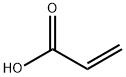
- 9003-04-7
- C3H4O2
- 72.06
- All (33)
- China (26)
- (33)
- 25067-61-2
- C4H5N
- 67.08920
- All (0)
- China (0)
- (0)
- 25086-42-4
- C8H9N
- 119.17000
- All (0)
- China (0)
- (0)
- 25852-37-3
- (C7H12O2.C5H8O2)x
- 684.85800
- All (2)
- China (0)
- (2)
Related Products More >

- 7446-19-7
- USD 10.0000
- 25kg
- 98319-26-7
- Request For Quotation
- 98319-26-7
- Request For Quotation
- 91770-12-6
- Request For Quotation
- 25kg/Drum
- 9065-11-6
- Request For Quotation
- 9065-11-6
- Request For Quotation
- 9065-11-6
- Request For Quotation


The key to understanding any potential stickiness of sodium polyacrylate lies in its molecular structure. The polymer chain contains numerous carboxylate groups (–COO⁻Na⁺). These carboxylate groups are highly polar. Polarity in a molecule occurs when there is an uneven distribution of electrons, and in the case of the carboxylate group, the oxygen atoms, which are highly electronegative, pull electrons away from the carbon atom and the sodium ion. This polarity gives the carboxylate groups a strong affinity for water molecules, which are also polar. Water molecules have a bent shape, with the oxygen atom being more electronegative than the hydrogen atoms, creating a partial negative charge on the oxygen and partial positive charges on the hydrogens. The carboxylate groups of sodium polyacrylate can form hydrogen bonds with these water molecules. A hydrogen bond is a relatively strong intermolecular force that occurs when a hydrogen atom covalently bonded to a highly electronegative atom (such as oxygen in water) is attracted to another electronegative atom (like the oxygen in the carboxylate group).
The reason sodium polyacrylate forms a gel - like substance after absorbing water is a complex interplay of its chemical and physical properties. As mentioned, the carboxylate groups attract water molecules through hydrogen bonding. When water comes into contact with sodium polyacrylate, the sodium ions start to dissociate from the polymer chains. This dissociation increases the electrostatic repulsion between the negatively charged carboxylate groups. As a result, the polymer chains begin to expand and separate from each other. In cross - linked versions of sodium polyacrylate, which are commonly used in practical applications, short cross - link chains or chemical bonds connect the main polymer strands. These cross - links act as anchors, preventing the polymer chains from completely dissolving in the water. Instead, the water molecules are trapped within the three - dimensional network formed by the polymer chains and the cross - links. As more and more water is absorbed, the network swells, and a hydrogel is formed. This hydrogel has a unique consistency, being soft and jelly - like, yet capable of holding a large amount of water. In fact, sodium polyacrylate can absorb hundreds to thousands of times its own weight in water, depending on factors such as the degree of cross - linking and the purity of the polymer.
In the field of diapers, the properties of sodium polyacrylate are utilized in a very specific way. Diapers need to quickly absorb urine and keep the skin dry to prevent rashes and discomfort. When urine, which is mostly water along with dissolved substances, comes into contact with the layer of sodium polyacrylate in a diaper, the polymer immediately starts to absorb the liquid. The rapid absorption is due to the strong hydrophilic nature of the carboxylate groups. As the sodium polyacrylate absorbs the urine, it swells and forms a gel. This gel is not sticky in the sense that it doesn't adhere to the skin in an uncomfortable way. Instead, it remains within the absorbent core of the diaper, effectively locking away the moisture. The gel - like structure also prevents the re - wetting of the surface that comes into contact with the skin. Even if pressure is applied, such as when a baby moves or sits, the gel holds onto the liquid, ensuring that the diaper stays dry on the outside.
In cosmetics, sodium polyacrylate serves multiple functions related to its ability to form gels and interact with other substances. In skincare products like creams and lotions, it acts as a thickener. When added to the formulation, as it absorbs water present in the product, it swells and forms a gel matrix. This matrix gives the product a more viscous, spreadable texture. It also helps to suspend other ingredients, such as oils, emollients, and active compounds, within the product, preventing them from separating out. In haircare products, for example, hair gels or styling creams, sodium polyacrylate can contribute to the hold and texture. When applied to the hair, the hydrated gel coats the hair strands. As the product dries, it forms a flexible film around the hair, which helps to keep the hair in place while still allowing some movement and flexibility. In some cases, the hydrated gel may also provide a subtle adherence to the skin or hair surface, which can improve the application feel of the cosmetic product, making it easier to spread evenly.
Overall, while the term "stickiness" might not be the most accurate way to describe sodium polyacrylate in all situations, its unique ability to absorb water, form gels, and interact with other substances makes it a highly valuable material in a wide range of applications, from personal care products like diapers and cosmetics to other industries where moisture management and texture control are crucial.
The potential for a property that might seem like stickiness, or more accurately, the ability to form a gel - like substance that can adhere under certain conditions, stems from its unique molecular structure. The most crucial feature is the presence of numerous carboxylate functional groups along the polymer chains. These carboxylate groups (–COO⁻) are highly polar. Polarity in a molecule occurs when there is an unequal distribution of electrons, and in the case of the carboxylate group, the oxygen atoms, which are more electronegative than carbon, pull the shared electrons towards themselves, creating a charge separation. This polarity makes the carboxylate groups hydrophilic, meaning they have a strong affinity for water molecules. Water, being a polar molecule itself, is attracted to these carboxylate groups.
When sodium polyacrylate comes into contact with water, a series of chemical and physical changes take place. First, the sodium ions dissociate from the carboxylate groups. This dissociation occurs because water is a good solvent for ionic compounds. Once the sodium ions are removed, the negatively charged –COO⁻ groups are left on the polymer chains. These like - charged groups repel each other, causing the tightly coiled polymer chains to start expanding and unfolding. At the same time, the hydrophilic carboxylate groups form hydrogen bonds with water molecules. Hydrogen bonds are a relatively strong type of intermolecular force that occurs when a hydrogen atom is covalently bonded to a highly electronegative atom (such as oxygen in water) and is attracted to another electronegative atom. In this case, the hydrogen atoms in water are attracted to the oxygen atoms in the carboxylate groups, and vice versa.
This combination of charge repulsion and hydrogen bonding enables sodium polyacrylate to absorb an astonishing amount of water, often up to several hundred times its own weight. As more and more water molecules are drawn into the expanding polymer network, the powder gradually transforms into a gel - like substance. The gel's appearance and behavior can give the impression of stickiness when it is disturbed or comes into contact with other surfaces. The reason for this is that the entangled polymer chains, which are now filled with water molecules, create a viscous and cohesive matrix. The water is trapped within this three - dimensional network formed by the polymer chains, and any attempt to separate the gel from a surface or disrupt its structure requires breaking the numerous hydrogen bonds and overcoming the entanglement of the chains, which can feel like a sticky resistance.
In the field of diapers, the non - sticky nature of dry sodium polyacrylate is initially very important. Manufacturers can easily incorporate the powder into the diaper's absorbent core in a uniform manner. When urine, which is mainly composed of water, penetrates the diaper and reaches the sodium polyacrylate, the polymer quickly starts to absorb the liquid. As it swells and turns into a gel, it effectively locks away the urine, preventing it from leaking out and keeping the surface of the diaper dry. This dryness is essential for the comfort of the wearer, especially infants, as it reduces the risk of skin irritation and rashes that can occur when skin is in prolonged contact with wet substances. The gel formed by the sodium polyacrylate also has a high water - holding capacity, meaning it can retain the absorbed urine even under pressure, such as when the baby moves or sits.
In cosmetics, sodium polyacrylate plays a different but equally important role. In products like moisturizers, lotions, and face masks, the polymer is used to create a gel - based formulation. When hydrated, the gel provides a smooth and spreadable texture. This texture allows the product to be easily applied to the skin. The gel adheres to the skin for a period of time, which helps in the even delivery of active ingredients present in the cosmetic product. These active ingredients could include vitamins, antioxidants, or other substances designed to nourish, protect, or improve the appearance of the skin. Additionally, the gel's ability to hold a large amount of water helps prevent the rapid evaporation of moisture from the skin's surface. By reducing moisture loss, the skin remains hydrated, which is a key factor in maintaining healthy - looking skin. The "stickiness" of the gel in cosmetics is carefully controlled by adjusting factors such as the concentration of sodium polyacrylate, the degree of hydration, and the addition of other ingredients. This ensures that the product adheres to the skin just enough to be effective without being overly tacky or difficult to wash off, providing a pleasant user experience.
The molecular structure of sodium polyacrylate consists of long chains of acrylic acid units, where the carboxyl groups are neutralized by sodium ions. These chains are highly hydrophilic, meaning they have a strong affinity for water. When sodium polyacrylate comes into contact with water, the polymer chains absorb water molecules through a process known as osmosis. The carboxylate ions in the polymer chains create an electrostatic repulsion, causing the chains to expand and form a three-dimensional network. This network traps water molecules, resulting in a gel-like substance.
The formation of this gel-like substance is what gives sodium polyacrylate its apparent stickiness. The gel has a high viscosity, which means it flows very slowly and can adhere to surfaces. This viscosity is a result of the polymer chains entangling with each other and the trapped water molecules. The gel-like substance can stick to surfaces through a combination of hydrogen bonding and mechanical interlocking. Hydrogen bonds form between the water molecules and the carboxylate groups in the polymer chains, while the entangled polymer chains create a physical barrier that prevents the gel from easily detaching from a surface.
In the context of diapers, the ability of sodium polyacrylate to form a gel-like substance after absorbing water is crucial for its effectiveness. Diapers are designed to keep the skin dry by quickly absorbing and retaining moisture. When urine comes into contact with the sodium polyacrylate in the diaper, the polymer absorbs the liquid and forms a gel. This gel locks in the moisture, preventing it from leaking out and keeping the skin dry. The stickiness of the gel helps the diaper maintain its shape and effectiveness, even when it is saturated with liquid. The gel adheres to the fibers in the diaper, ensuring that the absorbed moisture does not redistribute and cause discomfort or leakage.
In the field of cosmetics, sodium polyacrylate is used for its ability to create gels with specific textures and properties. For example, in hair gels, sodium polyacrylate is used to provide a smooth and adhesive texture that helps hold hair in place. The polymer absorbs water from the hair and the surrounding environment, forming a gel that adheres to the hair strands. This gel provides a firm hold without being overly sticky, allowing the hair to maintain its shape for an extended period. In facial masks, sodium polyacrylate is used to create a gel that adheres to the skin and delivers active ingredients. The gel-like substance ensures that the mask stays in place and provides a consistent application of the active ingredients to the skin.
The stickiness of sodium polyacrylate in its hydrated form is also utilized in other applications, such as in adhesive tapes and sealants. The polymer's ability to form a gel that adheres to surfaces makes it useful for creating temporary bonds or seals. For example, in some types of adhesive tapes, sodium polyacrylate is used to provide a strong initial bond that can be easily removed without leaving residue. In sealants, the gel-like substance can fill gaps and create a watertight seal.
The properties of sodium polyacrylate that contribute to its stickiness are closely related to its molecular structure and its interaction with water. The polymer chains' ability to absorb and retain water molecules through osmosis and electrostatic repulsion creates a high-viscosity gel. This gel adheres to surfaces through hydrogen bonding and mechanical interlocking, providing the adhesive properties that are useful in various applications.
In practical terms, the stickiness of sodium polyacrylate is a result of its ability to form a gel-like substance when it absorbs water. This gel has a high viscosity and can adhere to surfaces, making it useful in applications such as diapers, cosmetics, adhesive tapes, and sealants. The molecular structure of sodium polyacrylate, with its hydrophilic polymer chains and carboxylate groups, is what enables this unique behavior. By understanding the relationship between the polymer's structure and its properties, scientists and engineers can design products that take advantage of sodium polyacrylate's ability to absorb water and form adhesive gels.