


 Home
Home
Hi, I'd like to ask—do people use lye (sodium hydroxide) for cleaning at home? Specifically, what types of stubborn stains or greasy surfaces can lye effectively tackle? What safety measures should be taken when handling lye-based cleaning products? Thanks!
Is Lye (Sodium Hydroxide) Commonly Used for Household Cleaning? Is It Safe?
Related Encyclopedia
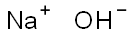
- 1310-73-2
- NaOH
- 39.99711
- All (130)
- China (116)
- (131)

- 12200-64-5
- H3NaO2
- 58.01240
- All (0)
- China (0)
- (0)
- 87331-12-2
- HNa3O
- 85.97670
- All (0)
- China (0)
- (0)
- 389873-17-0
- HNaO
- 40.99680
- All (0)
- China (0)
- (0)
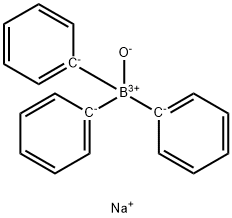
- 12113-07-4
- C18H15BNaO
- 281.12
- All (0)
- China (0)
- (0)
- 12179-02-1
- H3NaO2
- 58.01240
- All (0)
- China (0)
- (0)
![1,1-dioxo-1λ6-benz[d]isothiazole-3-thione, compound of sodium-salt with sodium hydroxide](https://chemcloud-1304660855.cos.ap-shanghai.myqcloud.com/compound/0baa2f2e2d4e447ba1d868ee6e368753.png?imageMogr2/format/webp)
- 132625-48-0
- C7H5NNaO3S2
- 238.23900
- All (0)
- China (0)
- (0)
![2-[1-(2-hydroxyethyl)-2-undecyl-4,5-dihydroimidazol-1-ium-1-yl]acetic acid,sodium,hydroxide](https://chemcloud-1304660855.cos.ap-shanghai.myqcloud.com/compound/6693a34bb157411c9d4382ddc941778e.png?imageMogr2/format/webp)
- 26837-33-2
- C18H36N2NaO4
- 367.47900
- All (0)
- China (0)
- (0)
![Sodium hydroxide - [2-heptyl-1-(2-hydroxyethyl)-4,5-dihydro-1H-im idazol-1-ium-1-yl]acetate (1:1:1)](https://chemcloud-1304660855.cos.ap-shanghai.myqcloud.com/compound/23c6ba61894848ea9c3c4025e1e71755.png?imageMogr2/format/webp)
- 13039-35-5
- C14H27N2NaO4
- 310.36500
- All (0)
- China (0)
- (0)
![Sodium hydroxide 3-{3-[2-(2-carboxylatoethoxy)ethyl]-2-undecyl-4, 5-dihydro-1H-imidazol-3-ium-1-yl}propanoate (2:1:1)](https://chemcloud-1304660855.cos.ap-shanghai.myqcloud.com/compound/07ddc7ccc09a46bf834d1de80735783c.png?imageMogr2/format/webp)
- 68610-43-5
- C22H40N2Na2O6
- 474.54234
- All (0)
- China (0)
- (0)
Related Products More >

- 1310-73-2
- Request For Quotation
- 1310-73-2
- Request For Quotation
- 1310-73-2
- Request For Quotation
- 1310-73-2
- USD 1.0000
- 25kg
- 1310-73-2
- CNY 750.0000
- 1ton
- 1310-73-2
- CNY 2.6000
- 25kg
- 1310-73-2
- USD 450.0000
- 50kg
- 1310-73-2
- Request For Quotation
- 30ton


Lye is particularly adept at tackling stubborn stains and greasy surfaces. In the kitchen, one of the most common battlefields for lye - based cleaning is the range hood and exhaust fan. Over time, these appliances accumulate layers upon layers of cooking grease, which can congeal into a thick, sticky mess. The caustic nature of lye reacts with the fatty acids in the grease through a process called saponification. During saponification, lye breaks down the complex fat molecules into simpler compounds, essentially turning the grease into soap and glycerol. This transformation makes it much easier to wipe away the once - stubborn grime. To clean a range hood with lye, a small amount of lye is carefully dissolved in warm water (always add lye to water, never the other way around to prevent splashing). The solution is then applied to the greasy areas, allowed to sit for a short period to work its chemical magic, and then scrubbed with a stiff - bristle brush. After that, thorough rinsing with plenty of water is essential to remove any remaining lye.
Another area where lye shines is in unclogging drains. When drains become blocked by a combination of food scraps, hair, and congealed grease, lye can be a powerful solution. Pouring lye crystals followed by hot water down a clogged drain initiates a chemical reaction. The lye attacks the organic matter, breaking it down into smaller, more soluble pieces. The heat from the hot water further aids in dissolving the grease and softening the blockage. However, this method should only be used for metal pipes. PVC and other plastic pipes can be damaged by the heat and the caustic nature of lye, leading to leaks and costly repairs.
Lye can also be used to clean ovens. The interior of an oven often accumulates burnt - on food residues and grease, which can be incredibly difficult to remove with regular cleaners. A lye - based oven cleaner can penetrate these tough stains, breaking them down so that they can be wiped away. But just like with other applications, care must be taken to protect the oven's interior surfaces. Some ovens have special coatings that can be damaged by lye, so it's crucial to check the manufacturer's recommendations before using lye - based cleaners.
When handling lye - based cleaning products, a multitude of safety measures are non - negotiable. First and foremost, personal protective equipment is essential. Thick, chemical - resistant rubber gloves should be worn at all times to shield the skin from direct contact with the lye. Even a small drop of concentrated lye solution can cause severe chemical burns, which may result in permanent scarring and tissue damage. Protective goggles are also necessary to prevent any accidental splashes from reaching the eyes. Inhalation of lye fumes can irritate the respiratory tract, so working in a well - ventilated area is a must. This could mean opening windows and doors or using a fan to ensure proper air circulation.
Storage of lye is equally important. It should be kept in a cool, dry place, away from direct sunlight and heat sources. Lye should be stored in containers made of materials that are resistant to its corrosive effects, such as high - density polyethylene. In households with children and pets, lye must be stored out of reach, preferably in a locked cabinet. The containers should be clearly labeled to avoid any accidental misuse.
When mixing lye with water, the process should be carried out slowly and carefully. As mentioned earlier, adding water to lye can cause a violent reaction, resulting in splashing of the hot, caustic solution. The correct procedure is to add the lye to the water in small amounts while stirring constantly. This helps to distribute the heat evenly and reduces the risk of splashing. Measuring lye accurately is also vital. Using too much lye can increase the cleaning power but also significantly raises the risk of damage to surfaces and injury to the user.
In addition, lye should never be mixed with acidic cleaners. Combining lye with acids, such as vinegar or lemon juice, triggers a rapid and potentially dangerous neutralization reaction. This reaction generates heat and can produce harmful fumes. The resulting mixture may also foam up and overflow, creating a messy and hazardous situation.
From an environmental perspective, lye - containing waste water cannot be disposed of casually. High - alkaline waste water can disrupt the ecological balance of water bodies and damage sewage treatment systems. If possible, the waste water should be neutralized with an appropriate amount of acid (such as citric acid) until it reaches a near - neutral pH level before being drained.
In conclusion, while lye can be an extremely effective cleaning agent for tackling stubborn stains and greasy surfaces at home, its use should be limited to specific, challenging cleaning tasks. For most everyday cleaning needs, there are safer, more user - friendly alternatives available on the market. When lye is the chosen option, strict adherence to safety protocols is the only way to ensure a successful cleaning process without compromising personal safety and the integrity of household items.
In the kitchen, one of the most common areas where lye-based cleaners are employed is on stovetops. Over time, stovetops accumulate layers of cooked-on grease, food spills, and burnt residues that regular dish soap and scrubbing just can't remove. Lye-based cleaners break down these greasy substances, converting them into soap-like compounds that can be easily rinsed away. Ovens are another major culprit for stubborn grime. The high temperatures inside an oven cause food drippings and spills to bake onto the surfaces, creating a hard, blackened layer. Lye-based oven cleaners can penetrate and dissolve this tough coating, making it possible to wipe away the mess with less effort. Exhaust fans above stoves are constantly exposed to cooking fumes, which deposit a thick layer of sticky grease on the blades and housing. Lye can cut through this grease, restoring the fan's efficiency and appearance.
Drains are yet another area where lye proves useful. Hair, soap scum, and bits of food often combine to form clogs in sinks, showers, and bathtubs. Lye can dissolve the organic matter in these clogs, such as hair, which is primarily composed of proteins. By breaking down the proteins, lye helps to clear the blockage and restore the flow of water. However, it's important to note that while lye can be effective for drain cleaning, it should be used with caution as it can also damage certain types of plumbing materials over time, especially if used too frequently.
When handling lye-based cleaning products, a multitude of safety measures must be strictly adhered to. First and foremost, protective gear is non-negotiable. Thick rubber gloves are essential to shield your hands from direct contact with lye. Even a small drop of lye solution can cause severe chemical burns, which can be extremely painful and may lead to long-term scarring. Safety goggles or a full-face shield should also be worn to protect your eyes. The eyes are particularly vulnerable to lye; if lye gets into the eyes, it can cause immediate and permanent damage, potentially leading to vision loss.
Working in a well-ventilated area is crucial. Lye-based products can release fumes, especially when they react with other substances or when heated during the cleaning process. Inhaling these fumes can irritate the respiratory system, causing coughing, wheezing, and in severe cases, damage to the lungs. Opening windows and using fans to circulate fresh air helps to reduce the concentration of these harmful fumes.
Mixing lye with other cleaning products is a big no-no. Combining lye with acidic cleaners like vinegar can result in a violent chemical reaction. This reaction not only renders the cleaning agents ineffective but can also produce harmful gases. For example, when lye reacts with bleach, it can release chlorine gas, which is highly toxic and can cause serious respiratory problems.
Proper storage of lye is equally important. It should be kept in a secure, locked container, preferably in a cool, dry place away from direct sunlight. This ensures that children and pets cannot access it accidentally. If there are any spills during storage or use, they should be cleaned up immediately using appropriate materials. For lye spills, neutralizing agents like baking soda can be used to safely react with the lye and reduce its caustic properties before cleaning up the residue.
When diluting lye to create a cleaning solution, the correct procedure is to add the lye to water slowly, and not the other way around. Adding water to lye can cause a rapid and violent exothermic reaction, which means the mixture can heat up quickly and may splatter. This can result in lye getting on your skin or in your eyes. By adding lye to water, you have more control over the reaction and can minimize the risk of splashing.
In case of accidental contact with lye, immediate action is required. If it gets on the skin, rinse the affected area continuously with large amounts of water for at least 15 minutes. This helps to wash away the lye and reduce the extent of the burn. If lye is ingested, do not induce vomiting. Instead, drink large amounts of water or milk to dilute the lye and seek medical attention immediately.
While lye can be a powerful tool for tackling stubborn stains and greasy surfaces at home, its hazardous nature means that it should only be used when necessary and with the utmost care. For less severe cleaning tasks, there are many milder, safer alternatives available that can still get the job done effectively without the risk of injury.
One of the most common uses of lye in household cleaning is for tackling baked-on grease in ovens and grills. Over time, the accumulation of cooking oils and food residues can create a thick, difficult-to-remove layer of grime. Sodium hydroxide, with its strong alkaline nature, is particularly effective in breaking down these deposits. When applied to a greasy surface, the lye reacts with the fats, causing them to dissolve and loosen from the surface. This makes it much easier to clean the oven or grill thoroughly, restoring it to a more hygienic and functional state.
In addition to ovens and grills, lye is also used for cleaning clogged drains. One of the primary causes of drain blockages is the accumulation of organic matter, such as hair, soap scum, and grease. Sodium hydroxide can dissolve these materials, breaking them down into simpler compounds that can be flushed away. This makes it a popular ingredient in many commercial drain cleaners. However, it is important to use such products according to the manufacturer's instructions, as improper use can damage plumbing systems.
Lye is also effective for cleaning exterior wood surfaces. Over time, outdoor wood can become covered in mold, mildew, and moss, which can be difficult to remove with regular cleaning methods. Sodium hydroxide can help break down these organic growths, making it easier to clean the wood. It is particularly useful for weathered wood surfaces, as it does not require high-pressure application to be effective. This makes it a safer alternative to power washing, which can sometimes damage the wood.
When it comes to concrete and other outdoor surfaces, lye can be used to remove dirt, mold, and mildew stains. These surfaces often accumulate grime and organic matter, which can be challenging to clean. Sodium hydroxide, combined with a pressure washer, can effectively remove these stains without causing damage to the surface. The strong alkaline nature of lye helps to break down the dirt and organic matter, making it easier to rinse away.
Despite its effectiveness as a cleaning agent, handling lye requires extreme caution due to its highly corrosive nature. Sodium hydroxide can cause severe chemical burns if it comes into contact with skin or eyes. Therefore, it is essential to wear protective gear, including gloves, goggles, and protective clothing, when using lye-based cleaning products. Additionally, it is important to ensure that the area is well-ventilated to avoid inhaling any fumes. Inhaling sodium hydroxide fumes can cause respiratory irritation and other health issues.
Proper storage of lye is also crucial. It should be kept out of reach of children and pets and stored in a cool, dry place in a clearly labeled, corrosion-resistant container. In the event of accidental contact with skin or eyes, it is important to immediately flush the area with water for at least 15 minutes and seek medical attention. This immediate action can help minimize the severity of any potential burns or injuries.
Another important consideration when using lye is to avoid mixing it with other chemicals. Combining sodium hydroxide with acids or other cleaning agents can produce dangerous reactions and toxic fumes. For example, mixing lye with bleach can release chlorine gas, which is highly toxic and can cause severe respiratory problems. Therefore, it is essential to use lye-based cleaning products separately from other chemicals to avoid such hazardous interactions.
While lye is a powerful cleaning agent, it is not suitable for all surfaces. For instance, it should not be used on aluminum or certain types of plastic, as it can cause damage. Additionally, when using lye for cleaning, it is important to rinse surfaces thoroughly to remove any residue. Leftover lye can continue to react with surfaces, potentially causing further damage or leaving a soapy residue that can attract dirt.
In practical applications, lye is often used in combination with other cleaning agents to enhance its effectiveness. For example, in oven cleaners, lye may be combined with surfactants to help lift and remove grease more effectively. Similarly, in drain cleaners, it may be combined with other chemicals to speed up the breakdown of organic matter. However, it is important to follow the manufacturer's instructions carefully when using these products to ensure safe and effective use.
Understanding the properties and uses of lye is essential for effective household cleaning. Its ability to break down grease and organic matter makes it a valuable tool for tackling stubborn stains and difficult cleaning tasks. However, its highly corrosive nature requires careful handling and proper safety measures to avoid potential hazards. By following these guidelines, individuals can safely and effectively use lye-based cleaning products to maintain a clean and hygienic home environment.