


 Home
Home
Hi, I'd like to ask—what is the average sugar content (in grams) in a gallon of regular cow's milk? Does the sugar content vary between whole milk, skim milk, and flavored milk? Are the sugars in milk mostly lactose, and how does that affect nutritional value? Thanks!
How Many Grams of Sugar Are There in One Gallon of Cow's Milk?
Related Encyclopedia
- 207570-54-5
- C12H22O11
- 342.29600
- All (47)
- China (9)
- (47)
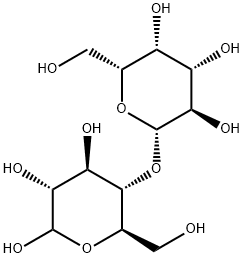
- 63-42-3
- C12H22O11
- 342.3
- All (47)
- China (9)
- (47)
- 84604-20-6
- C25H22O10
- 482.43618
- All (10)
- China (0)
- (10)
- 24162-28-5
- C13H24N2O11
- 384.33600
- All (0)
- China (0)
- (0)
- 12111-18-1
- C14H16Cl6NOPt-
- 622.07
- All (0)
- China (0)
- (0)

- 6291-42-5
- C28H38O19
- 678.59
- All (1)
- China (0)
- (1)
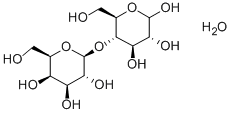
- 10039-26-6
- C12H24O12
- 360.31
- All (6)
- China (5)
- (6)

- 1159637-28-1
- C24H41NO10
- 503.58
- All (0)
- China (0)
- (0)
- 91876-69-6
- C20H39NO10
- 453.52400
- All (0)
- China (0)
- (0)
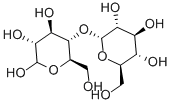
- 14641-93-1
- C12H22O11
- 342.3
- All (1)
- China (0)
- (1)
Related Products More >

- 7446-20-0
- Request For Quotation
- 63-42-3
- CNY 5.0000
- 25kg
- 9002-88-4
- USD 3.0000
- 25kg
- 59-23-4
- USD 100.0000
- 25kg
- 9028-79-9
- Request For Quotation
- 9028-54-0
- Request For Quotation
- 84604-20-6
- Request For Quotation
- 84604-20-6
- Request For Quotation


Whole milk, which has a rich, creamy texture due to its 3.25% fat content, contains about 12 to 13 grams of sugar per cup. Since there are 16 cups in a gallon, a gallon of whole milk holds approximately 192 to 208 grams of sugar. This sugar is entirely lactose, which contributes to the slightly sweet taste of the milk. Lactose isn't just a source of flavor; it also provides energy. When we consume whole milk, our bodies break down lactose into glucose and galactose using the enzyme lactase. These simpler sugars are then absorbed into the bloodstream, fueling various bodily functions.
Skim milk, on the other hand, is a fat - free alternative. Despite the absence of fat, its sugar content remains similar to that of whole milk. Each cup of skim milk also contains around 12 grams of sugar, translating to about 192 grams of sugar per gallon. The reason for this consistency is that lactose is dissolved in the watery part of milk, separate from the fat globules. So, when the fat is removed to create skim milk, the lactose concentration in the remaining liquid stays largely the same.
Now, let's turn our attention to flavored milk. Chocolate milk and strawberry milk are popular choices, especially among children. However, these varieties have a much higher sugar content compared to plain whole or skim milk. A single cup of chocolate milk can contain anywhere from 18 to 24 grams of sugar. The additional sugar comes from sweeteners like sucrose or high - fructose corn syrup, which are added to enhance the flavor. Over the course of a gallon, which is 16 cups, this means a chocolate milk gallon could have between 288 and 384 grams of sugar. Different manufacturers use varying amounts of these sweeteners, leading to differences in the sugar content of flavored milk products on the market.
The nutritional impact of lactose, the natural sugar in milk, is distinct from that of added sugars. Lactose, as part of milk's natural composition, is accompanied by other essential nutrients. For example, milk is a great source of calcium, which is crucial for bone health, and protein, which is necessary for muscle growth and repair. Lactose also aids in the absorption of calcium, making milk an even more effective source of this important mineral. But for some people, lactose can be a problem. Lactose intolerance occurs when the body doesn't produce enough lactase enzyme. When lactose - intolerant individuals consume milk, the undigested lactose ferments in the large intestine, causing symptoms like bloating, gas, and diarrhea. Fortunately, lactose - free milk options are available. These products have added lactase enzyme, which pre - digests the lactose, making the milk more tolerable for those with lactose sensitivity.
The processing of milk into other dairy products can also change its sugar profile. Yogurt and kefir, for instance, are made through a fermentation process. During fermentation, bacteria consume a portion of the lactose in the milk. As a result, these products generally have a lower lactose content than regular milk, making them a better choice for some people with lactose intolerance. Additionally, different sources of milk, such as goat or sheep milk, contain lactose as well, although the exact amount can vary slightly.
When shopping for milk, it's essential to check the nutrition labels. In the United States, the Food and Drug Administration mandates that food labels clearly show both total sugars and added sugars. This information helps consumers understand exactly what they're consuming. A carton of plain whole milk will show a relatively high total sugar count, but all of it is natural lactose with no added sugars. In contrast, flavored milk will display a significantly higher total sugar amount, with a substantial portion coming from added sweeteners. By being aware of these details, individuals can make choices that align with their dietary needs and health goals, whether they're looking to increase their intake of essential nutrients or limit their consumption of added sugars.
However, not everyone can digest lactose efficiently. Lactose intolerance is a common condition where the body doesn't produce enough lactase enzyme. When individuals with lactose intolerance consume milk or dairy products, they may experience digestive symptoms such as bloating, gas, abdominal pain, and diarrhea. This is because the undigested lactose passes into the large intestine, where it is fermented by bacteria, producing gas and other by - products. For these individuals, options like lactose - free milk are available. Lactose - free milk is made by adding lactase enzyme to regular milk, which pre - digests the lactose, making it easier to digest.
The sugar content in milk can also be affected by other factors. For example, the processing of milk into different dairy products can alter the sugar profile. When milk is fermented to make yogurt or kefir, the bacteria used in the fermentation process consume some of the lactose. As a result, these products often have a lower lactose content compared to regular milk, which can be beneficial for those with lactose sensitivity. Also, the source of the milk can make a difference. While cow's milk is the most commonly consumed, milk from goats and sheep also contains lactose, but the concentration may vary slightly.
When looking at the nutritional labels of milk products, it's important to pay attention to the distinction between total sugars and added sugars. In the United States, the Food and Drug Administration requires food manufacturers to list both on the label. This provides consumers with valuable information to make informed decisions about their sugar intake. For instance, a carton of plain whole milk will show a relatively high amount of total sugars, all of which are from lactose, with no added sugars. In contrast, a carton of flavored milk will display a much higher total sugar count, with a significant portion coming from added sweeteners. This information is crucial for individuals who are trying to limit their intake of added sugars, as excessive consumption of these types of sugars has been linked to various health issues, including obesity, type 2 diabetes, and dental problems.
In the context of a balanced diet, understanding the sugar content in milk is just one part of the equation. While milk is a good source of essential nutrients like protein, calcium, and vitamins, the added sugars in flavored milk can add up quickly, especially if consumed in large quantities. Consumers need to consider their overall dietary needs, health goals, and any potential digestive issues when choosing which type of milk to include in their diet. Whether it's the natural lactose in plain milk or the added sugars in flavored varieties, being aware of the sugar content in milk allows for more conscious and health - promoting food choices.
In a standard cup of whole milk, which typically contains around 3.25% fat, the sugar content is approximately 12 to 13 grams. A gallon of milk is equivalent to 16 cups. So, when you do the math, a gallon of whole milk will have roughly 192 to 208 grams of sugar. This calculation is based on the consistent presence of lactose in the milk. Lactose is dissolved in the aqueous part of milk, which means that the fat content doesn't have a direct impact on the amount of lactose present. The fat globules in whole milk are dispersed in the lactose - containing liquid, and removing or reducing the fat content doesn't change the lactose concentration in the remaining liquid significantly.
Skim milk, which has had almost all of its fat removed, still retains a similar sugar content to whole milk. With about 0% fat, skim milk also contains around 12 grams of sugar per cup. This similarity in sugar content between whole and skim milk can be a bit counterintuitive for some people who might assume that removing fat also reduces sugar. But because lactose is not associated with the fat component of milk, a gallon of skim milk will also have approximately 192 grams of sugar. This consistency in lactose content across different fat percentages makes cow's milk a reliable source of this particular carbohydrate, regardless of whether it's consumed in its whole or skimmed form.
Flavored milk, on the other hand, presents a very different picture when it comes to sugar content. Popular flavors like chocolate and strawberry are achieved by adding various sweeteners to the milk. These sweeteners can include sucrose, high - fructose corn syrup, or other types of sugars. A single cup of chocolate milk, for example, can contain anywhere from 18 to 24 grams of sugar. This increase in sugar content is significant, as it means that a gallon of chocolate milk, which is 16 cups, could have between 288 and 384 grams of sugar. The wide range in sugar content for flavored milk is due to the different formulations used by various manufacturers. Some brands may use more sweeteners to create a richer, sweeter taste, while others might aim for a more moderate sweetness.