


 Home
Home
Hi, I'd like to ask—does magnesium have a higher ionization energy than aluminum? Why does ionization energy vary between these two metals? How does electron configuration (e.g., magnesium's 3s² vs. aluminum's 3p¹) affect their ionization energies? Are there any periodic table trends that explain this difference? What experimental methods can be used to measure and compare their ionization energies? Thanks!
Does Magnesium Have a Higher Ionization Energy Than Aluminum?
Related Encyclopedia
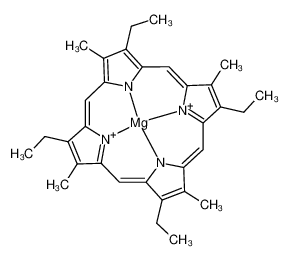
- 15006-36-7
- C32H36MgN4
- 500.96000
- All (0)
- China (0)
- (0)
- 74434-07-4
- AgAlH5MgO
- 180.19400
- All (0)
- China (0)
- (0)
- 89700-45-8
- AlH5HgMgO
- 272.91600
- All (0)
- China (0)
- (0)
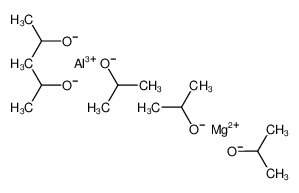
- 69207-83-6
- C24H56Al2MgO8
- 550.97000
- All (0)
- China (0)
- (0)
- 50853-21-9
- AlMgO4P-
- 146.25800
- All (0)
- China (0)
- (0)
- 99670-23-2
- Al2H12Mg3O24Si8
- 895.79696
- All (0)
- China (0)
- (0)
- 125715-50-6
- AlH3Mg
- 54.31040
- All (0)
- China (0)
- (0)
- 144134-22-5
- AlH5MgNaOSn
- 214.01600
- All (0)
- China (0)
- (0)
- 395650-23-4
- AlH10MgO7Zn
- 238.74200
- All (0)
- China (0)
- (0)
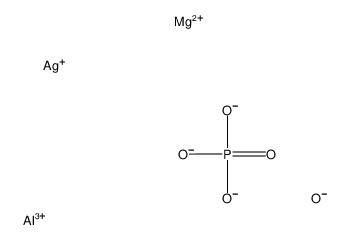
- 1042667-92-4
- AgAlH3MgO8P2
- 352.12100
- All (0)
- China (0)
- (0)
Related Products More >

- CNY Request For Quotation
- 14783-68-9
- CNY Request For Quotation
- 14783-68-8
- CNY Request For Quotation
- 14783-68-7
- CNY Request For Quotation
- 869-06-9
- CNY Request For Quotation
- 869-06-8
- CNY Request For Quotation
- 869-06-7
- CNY Request For Quotation
- 3344-18-3
- CNY Request For Quotation


To answer the initial query, indeed, magnesium has a higher first ionization energy than aluminum. Magnesium, with an atomic number of 12, has an electron configuration of 1s²2s²2p⁶3s². Its outermost electrons are in the 3s orbital, and this orbital is completely filled with two electrons. In the realm of atomic structure, a completely filled orbital is a highly stable configuration. The electrons in this 3s² state are held relatively tightly by the nucleus, and a significant amount of energy is needed to disrupt this stable arrangement and remove one of these electrons.
The variation in ionization energy between these two metals can be further understood through the concept of effective nuclear charge and electron shielding. Both magnesium and aluminum are in the third period of the periodic table, meaning they have the same number of electron shells between the nucleus and the outermost electrons. As we move from left to right across a period in the periodic table, the atomic number increases, which means the number of protons in the nucleus increases. In theory, this should lead to a greater attraction between the nucleus and the outermost electrons, increasing the ionization energy.
However, the situation is more complex due to electron shielding. Inner electrons shield the outermost electrons from the full pull of the nucleus. In magnesium, the two 3s electrons experience a certain level of shielding from the inner electrons. But in aluminum, although the nuclear charge is greater by one proton compared to magnesium, the 3p electron in aluminum is in an orbital that is more diffuse and farther from the nucleus on average compared to the 3s electrons. The 3s electrons in both elements shield the nucleus effectively, and the 3p electron in aluminum doesn't penetrate as close to the nucleus as the 3s electrons do. So, the effective nuclear charge that the 3p electron in aluminum "feels" is not as large as one might expect based solely on the increase in the number of protons. This results in a lower ionization energy for aluminum despite the increase in nuclear charge from magnesium.
Periodic table trends play a significant role in understanding this difference, although the case of magnesium and aluminum represents a minor deviation from the general trend. Generally, as we move from left to right across a period, ionization energy increases due to the increasing nuclear charge and the relatively constant shielding effect. But there are exceptions at certain points, often related to stable electron configurations such as full or half - full orbitals. For example, nitrogen (with an electron configuration of 2s²2p³, a half - filled 2p orbital) has a higher ionization energy than oxygen (2s²2p⁴) for similar reasons. The stability of the half - filled 2p orbital in nitrogen makes it more difficult to remove an electron compared to oxygen.
In the case of magnesium and aluminum, the stable 3s² configuration of magnesium causes it to deviate from the otherwise smooth increase in ionization energy across the third period. After aluminum, as we continue across the period, the ionization energy resumes its upward trend as more electrons are added to the 3p orbital and the elements move towards more stable configurations.
To measure and compare the ionization energies of magnesium and aluminum experimentally, several methods are available. One of the most common techniques is photoelectron spectroscopy (PES). In PES, a sample of gaseous atoms (either magnesium or aluminum) is bombarded with high - energy photons. When a photon with sufficient energy strikes an atom, it can eject an electron from the atom. By measuring the kinetic energy of the ejected electron, and knowing the energy of the incident photon, the ionization energy can be calculated using the principle of conservation of energy. PES is a powerful tool as it can provide detailed information about the ionization energies of electrons in different orbitals, allowing for a precise comparison between the 3s electrons of magnesium and the 3p electrons of aluminum.
Another method is the use of electrical discharge techniques. In an electrical discharge experiment, a high voltage is applied across a sample of gaseous atoms. When the voltage reaches a certain critical value, electrons can be stripped from the atoms, creating ions. By measuring the minimum voltage required to start this ionization process, the ionization energy can be determined. This method is useful for obtaining a quick estimate of the first ionization energy and can be used to compare the ionization energies of different elements, including magnesium and aluminum.
These experimental methods have provided conclusive evidence that magnesium has a higher first ionization energy than aluminum, confirming the theoretical predictions based on electron configuration, effective nuclear charge, and periodic table trends. The study of ionization energy not only helps us understand the properties of individual elements but also provides a foundation for predicting chemical reactions and the formation of chemical bonds.
Another experimental approach involves the study of atomic emission and absorption spectra. When atoms are heated or subjected to an electric discharge, the electrons in the atoms can be excited to higher energy levels. When these excited electrons return to their lower - energy, or ground - state, levels, they emit photons of specific energies. By analyzing the wavelengths of these emitted photons using spectrometers, scientists can determine the energy differences between the various energy levels in the atom. These energy differences are related to the ionization energy, as the energy required to remove an electron completely from the atom is part of this energy - level structure. Similarly, in atomic absorption spectroscopy, when light of various wavelengths is passed through a sample of gaseous atoms, the atoms will absorb light at specific wavelengths corresponding to the energy required to excite their electrons to higher levels. By measuring these absorption wavelengths, information about the ionization energy can be inferred, providing another means of comparing the ionization energies of magnesium and aluminum.
On the other hand, aluminum, with an atomic number of 13, has an electron configuration of 1s²2s²2p⁶3s²3p¹. After filling the 3s orbital with two electrons like magnesium, the additional electron in aluminum goes into the 3p orbital. The 3p orbital has a slightly higher energy level compared to the 3s orbital. Moreover, having just one electron in the 3p orbital means it is in a less stable configuration compared to a filled or half - filled orbital. This single 3p electron is not as strongly bound to the nucleus as the electrons in the filled 3s orbital of magnesium. As a result, it is easier to remove this electron from aluminum, requiring less energy, and thus aluminum has a lower first ionization energy.
When examining the electron configurations of these two elements, a clear picture begins to form. Magnesium, with an atomic number of 12, has an electron configuration written as [Ne] 3s². Here, the [Ne] represents the core electrons with the configuration of the noble gas neon, and the 3s² indicates that in the outermost principal energy level (the third shell), there are two electrons occupying the s orbital. This fully filled 3s orbital gives magnesium a certain degree of stability. Electrons in s orbitals are found in a spherical - shaped region around the nucleus, and when the s orbital is filled with two electrons, these electrons can effectively shield each other from the positive charge of the nucleus to some extent.
On the other hand, aluminum, with an atomic number of 13, has an electron configuration of [Ne] 3s² 3p¹. After filling the 3s orbital with two electrons, the additional electron in aluminum goes into the 3p orbital. P orbitals have a different shape compared to s orbitals; they are dumbbell - shaped and have a different spatial orientation around the nucleus. The 3p electron in aluminum is at a slightly higher energy level than the 3s electrons. It is also less effectively shielded by the inner electrons. The 3s electrons in both magnesium and aluminum provide some shielding, but for the 3p electron in aluminum, the shielding is not as efficient as the full - shell shielding in magnesium's 3s² configuration. As a result, it is easier to remove the 3p electron in aluminum, which translates to a lower ionization energy.
In the con of the periodic table, ionization energy generally increases as we move from left to right across a period. This is because, as we progress from one element to the next across a period, the number of protons in the nucleus increases, leading to a greater nuclear charge. At the same time, the electrons are added to the same principal energy level, so the shielding effect by the inner electrons doesn't increase significantly. This results in a stronger attraction between the nucleus and the valence electrons, making it more difficult to remove an electron and thus increasing the ionization energy.
However, magnesium and aluminum present an interesting exception to this general trend. Aluminum has one more proton in its nucleus than magnesium, which, based on the general trend, might suggest that aluminum should have a higher ionization energy. But the unique electron - configuration - based stability of magnesium's 3s² state overrides the effect of aluminum's additional proton. The stability of a fully filled s orbital is a significant factor in determining ionization energy, and this stability requires more energy to disrupt than the relatively less - stable 3p¹ configuration in aluminum.